
Understanding Your Attachment Style
· The Four Styles in Detail
Understanding Avoidant Attachment: When Intimacy Feels Overwhelming
Discover avoidant attachment, where a deep need for independence can make closeness feel suffocating. Learn to recognize its patterns, understand deactivating strategies, and see that distancing often masks deep feeling, not an absence of it.
Listen — audio overview
What you'll learn
Recognise the avoidant attachment pattern in everyday behaviour
Name the deactivating strategies avoidant attachment uses to create distance
Understand that avoidance is a protection pattern, not an absence of caring
When Closeness Feels Like Pressure: Understanding Avoidant Attachment
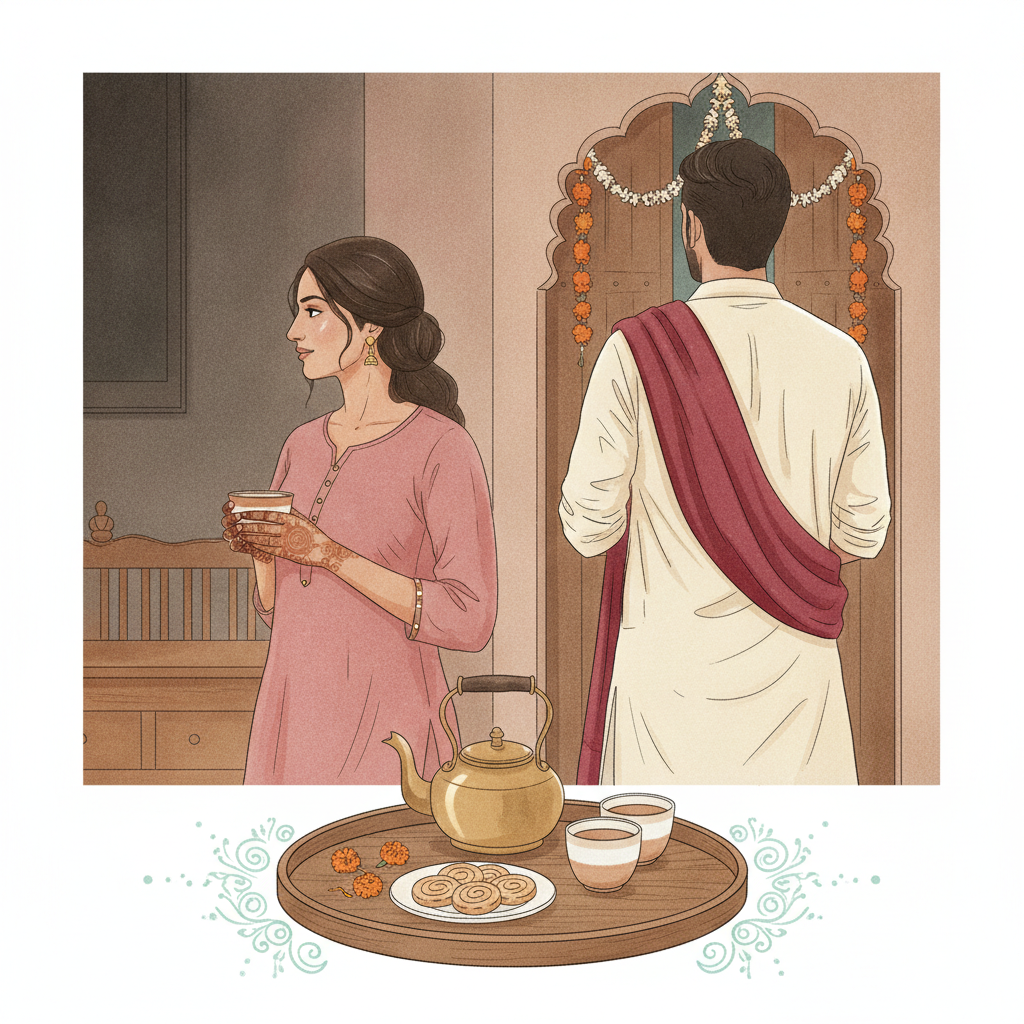
Imagine a Sunday afternoon in Bengaluru. Rohan, a 30-year-old marketing manager, is sipping chai with his fiancée, Priya, in their new apartment. They’ve been together for two years, and wedding plans are moving swiftly, encouraged by both families. Priya, beaming, starts talking about their post-marriage life: "Rohan, my parents are suggesting we consider a larger deposit for a flat in Indiranagar, closer to them, especially once we have children. And about the joint family trip to Himachal next year, I was thinking…" As she speaks, Rohan feels a sudden, inexplicable tightness in his chest. His mind races, not with excitement, but with an urge to escape. He finds himself reaching for his phone to check "urgent" emails, or suddenly remembering a critical task at work. A coldness, a quiet distance, descends. Priya, sensitive to these shifts, might feel a wall going up, just when she was trying to build their shared future.
The Inner World of Avoidant Attachment
This scenario is a classic example of an avoidant attachment pattern at play. For someone with an avoidant style, genuine closeness, intimacy, and the prospect of deep emotional interdependence can register as a profound threat. It's not that they don't value connection; it's that their nervous system interprets such profound connection as engulfment — a loss of self, a threat to their autonomy and independence. To feel safe again, their system automatically pulls back, creating distance. This isn't a conscious choice to be uncaring or distant; it's an ingrained protection mechanism, developed from early experiences where attempts at closeness might have been met with rejection, inconsistency, or overwhelming demands. They learned early on that relying on others could be unsafe or lead to disappointment, and that self-sufficiency was the most reliable path to security.
The Art of Creating Distance: Deactivating Strategies
When this internal alarm bells rings, individuals with an avoidant attachment style often unconsciously employ deactivating strategies. These are mental and behavioural moves designed to lower the intensity of intimacy and create emotional space. You might see these manifest in various ways:
- Focusing on a partner’s flaws: Suddenly, Rohan might find Priya's enthusiasm about family or her habit of humming while she works incredibly irritating. These minor annoyances become magnified, serving as reasons to feel justified in pulling back or creating internal critiques that keep intimacy at bay. "How can I commit fully when she doesn't even organise her wardrobe properly?"
- Going quiet or withdrawing: Instead of engaging in a conversation about their future, an avoidant individual might become unresponsive, give one-word answers, or simply become emotionally unavailable. They might physically remove themselves by "needing to work late" or by burying themselves in hobbies.
- Keeping busy and prioritizing independence: Work, friends, personal projects – anything can become a convenient shield. While healthy independence is good, here it’s taken to an extreme. A 28-year-old woman in Hyderabad might continuously cancel dates for "urgent client meetings" or spend hours planning solo trips, even when her partner is available.
- Mentally "keeping an exit in mind": Even in committed relationships, there can be a subtle, underlying thought of "what if this doesn't work out?" or "I can always leave if things get too intense." This mental reservation prevents full emotional investment and maintains a sense of control and independence.
This reliance on self-sufficiency, often pushed to an extreme, is known as pseudo-independence. It’s a self-sufficiency used as armour, a declaration of "I don't need anyone" that protects against the vulnerability of truly needing or being deeply needed by another.
Beyond the Myth: Avoidant Hearts are Not Cold
One of the most painful misconceptions about individuals with an avoidant attachment style is that they are cold, unemotional, or simply don't care as much. This is rarely true. In reality, avoidant individuals often feel intensely, but they've learned to suppress or intellectualize these feelings as a survival mechanism. The very act of pulling away is often precisely because the feelings of closeness, love, and interdependence are so strong they feel overwhelming and threatening. It's like a pressure cooker – when the internal pressure builds, the valve (the deactivating strategy) releases steam to prevent an explosion.
A 35-year-old man in Delhi might genuinely adore his wife and children, but the thought of a deeply emotional conversation or prolonged physical affection can make him stiffen. He might express his love through acts of service – ensuring financial stability, handling logistics for the family's annual trip to their ancestral village – rather than verbal affirmations or sustained emotional intimacy. His love is present and deep, but its expression is filtered through his need for space and control over his internal emotional landscape.
The Quiet Strength of an Avoidant Partner
While navigating an avoidant attachment style can present challenges, it also brings unique strengths to a partnership. An avoidant partner often embodies:
- Steadiness and self-sufficiency: They are genuinely self-reliant, often highly capable, and bring a strong sense of independence to the relationship. You won't find them demanding constant emotional reassurance or clinging.
- Calm under ordinary stress: When faced with everyday practical challenges or minor relationship bumps, they can often remain remarkably calm and rational, providing a stable anchor.
- Respect for personal space: They naturally understand and respect the need for individual space and autonomy, both their own and their partner's. This can be a huge asset in contexts like joint families, where personal boundaries can be challenging to maintain.
- A partner who will not collapse into you: They encourage and often require their partner to maintain their own hobbies, friendships, and sense of self, fostering two whole individuals rather than enmeshed identities.
A Small Step Towards Closeness
Recognising your (or your partner's) avoidant patterns is the first step towards creating more secure connections. The next time you feel that familiar urge to create distance when intimacy approaches – perhaps during a heartfelt conversation about family expectations or a moment of deep connection – try this small practice. Internally, name what's happening: "I'm pulling away because this feels close." Then, instead of immediately acting on the urge to distract, withdraw, or nitpick, commit to staying present for just five more minutes. Just five. Breathe. Observe. This simple act of conscious awareness and brief intentional delay can begin to rewire the automatic pull-away response, slowly building new neural pathways for connection. It creates an opening to explore what those feelings of closeness bring up for you, which is precisely what your reflection prompt invites you to consider.
Key concepts
Avoidant
Values independence, uncomfortable with too much closeness. Reads bids for connection as pressure or engulfment.
Deactivating strategies
Mental and behavioural moves that lower closeness — focusing on a partner's flaws, going quiet, staying busy, keeping an exit in mind.
Pseudo-independence
Self-sufficiency used as armour — "I don't need anyone" as a way to avoid the risk of needing someone.
Reflect
Think of a recent situation where you or a partner felt a strong urge to pull away during a moment of closeness or potential commitment. How did it feel internally, and what deactivating strategies might have been at play?
Quick check
Answer all questions, then submit to mark this lesson complete.
1. A 29-year-old software engineer, Amit, feels overwhelmed when his fiancée, Sanjana, starts talking about their joint financial future and moving into a bigger apartment together after marriage. What is Amit most likely experiencing?
2. After a particularly intense family discussion about wedding preparations, Priya finds herself suddenly fixating on her fiancé Rohan's habit of leaving his shoes by the door, feeling disproportionately irritated. What is this an example of?
3. Which statement best describes the concept of pseudo-independence in avoidant attachment?
4. A common misconception about people with an avoidant attachment style is that they are cold or don't feel deeply. What does this lesson clarify about their emotional experience?
Know someone who needs this?
Send them the lesson.
Read more on this
How Emotional Budgets Define a Marriage More Than Money
This article unpacks the emotional budget—your finite capacity for handling daily stress. Learn to spot the difference between solving a problem and managing the reaction to the problem.
How Your Birthday Becomes an Indian Marriage Deadline
This article shows how the pressure of a birthday becomes your own internal deadline. We explore how that urgency can make you mistake your own impatience for a potential partner's readiness.
Why a "Problem-Free" Match Is the Biggest Problem of All
That unnerving feeling of "nothing" for a "perfect" match is a symptom, not a diagnosis. Learn to deconstruct it into three specific absences to tell a quiet connection from a missing one.