
Foundations of Healthy Relationships
· The Practice of Choosing Well
Observe & Understand: Uncovering Authentic Behavior in Partner Selection
Learn powerful 'no-question' observation methods to uncover a potential partner's true character. Move beyond superficial conversations to understand how they genuinely behave in real-world situations, from handling stress to treating others.
Listen — audio overview
What you'll learn
Distinguish observational data from interview data
Use four "no-question" methods to learn how a partner actually behaves
Practice noticing without performing the noticing
The Limits of Direct Questions in Partner Selection
In the journey of finding a life partner, especially within the Indian matrimonial context, we often rely heavily on conversations. We ask direct questions: "Are you a patient person?" "Do you get angry easily?" "How do you handle stress?" While these questions seem logical, the answers you receive are almost always the same: "Yes, I'm very patient." "No, I rarely get angry." "I handle stress quite well."
Why are these answers so predictably positive? Because everyone, consciously or subconsciously, presents their best self, especially when a significant life decision like marriage is on the table. In a formal meeting, whether it's over chai or a video call, individuals are performing. They are showcasing the version of themselves they believe you want to see. This is self-report: what a person says about themselves. While useful for gathering basic information, it is inherently biased. Relying solely on self-report can leave you with a polished facade rather than a true understanding of their character.
The Power of Observation: Beyond Words
True insight into someone's character doesn't always come from their spoken words. More often, it emerges from their actions, their reactions, and their habits. This is observation: watching real behaviour in real situations. It’s the most reliable signal because actions often speak louder and more truthfully than carefully crafted responses. Instead of asking "Are you adaptable?", you watch how they adapt. Instead of asking "Are you respectful?", you observe their respect in action.
Here are four powerful "no-question" methods to help you observe a potential partner's true nature without needing to conduct an interrogation:
1. Observe How They Treat Those Who Can't Help Them Back
This is a classic test of character. How does your potential partner interact with individuals from whom they gain nothing – people in service roles, or those perceived to be in a junior position? Think about a waiter at a restaurant, a taxi driver, a security guard, or even a domestic worker. Do they speak politely, with gratitude? Or do they become dismissive, demanding, or impatient? A 28-year-old woman in Bengaluru once shared how she learned about her prospective match's true colours when he rudely snapped at a cafe attendant for a minor delay. This seemingly small incident revealed a significant detail about his underlying respect for others, a trait he claimed to possess during their polite conversations. Someone who shows consistent kindness and patience to those in service roles demonstrates genuine humility and respect, rather than a performative kindness reserved only for equals or superiors.
2. Plan a Small Inconvenience Together
Life is full of unexpected twists and turns. Observing how someone handles minor frustrations can be incredibly revealing. This doesn't mean orchestrating a disaster, but rather putting yourselves in situations where small things might go wrong. Perhaps a pre-booked auto-rickshaw doesn't show up, you get stuck in unexpected Delhi traffic, a movie ticket gets mixed up, or a restaurant order is incorrect.
Watch their recovery process. Do they immediately blame others? Do they become visibly agitated or passive-aggressive? Or do they calmly assess the situation, look for solutions, and maintain their composure? A partner who can navigate a missed train connection with a collaborative spirit, suggesting alternatives and keeping spirits light, is showing you a valuable skill for a lifetime of shared challenges. This isn't about finding someone who never gets stressed, but someone who manages stress constructively and doesn't let minor issues derail their mood or mistreat others.
3. Introduce Them to Your Closest Friend
Your closest friends know you best. They understand your quirks, your values, and what makes you truly happy. When you introduce a potential partner to one of your closest friends – someone whose opinion you deeply trust – pay attention to the energy. Does your partner make an effort to engage your friend, asking questions and listening actively? Do they seem genuinely interested in the conversation, or do they dominate it?
More importantly, observe your friend's reaction. Friends often pick up on subtle cues that you might overlook, especially when you’re emotionally invested. They can sense authenticity, a lack of engagement, or even a mismatch in energy. You might notice your friend sharing a thoughtful glance with you, or hear their insightful feedback later. A good sign is when your friend tells you your potential partner made them feel comfortable and listened to, indicating a capacity for genuine connection.
4. Bring Them into a Small Family Decision
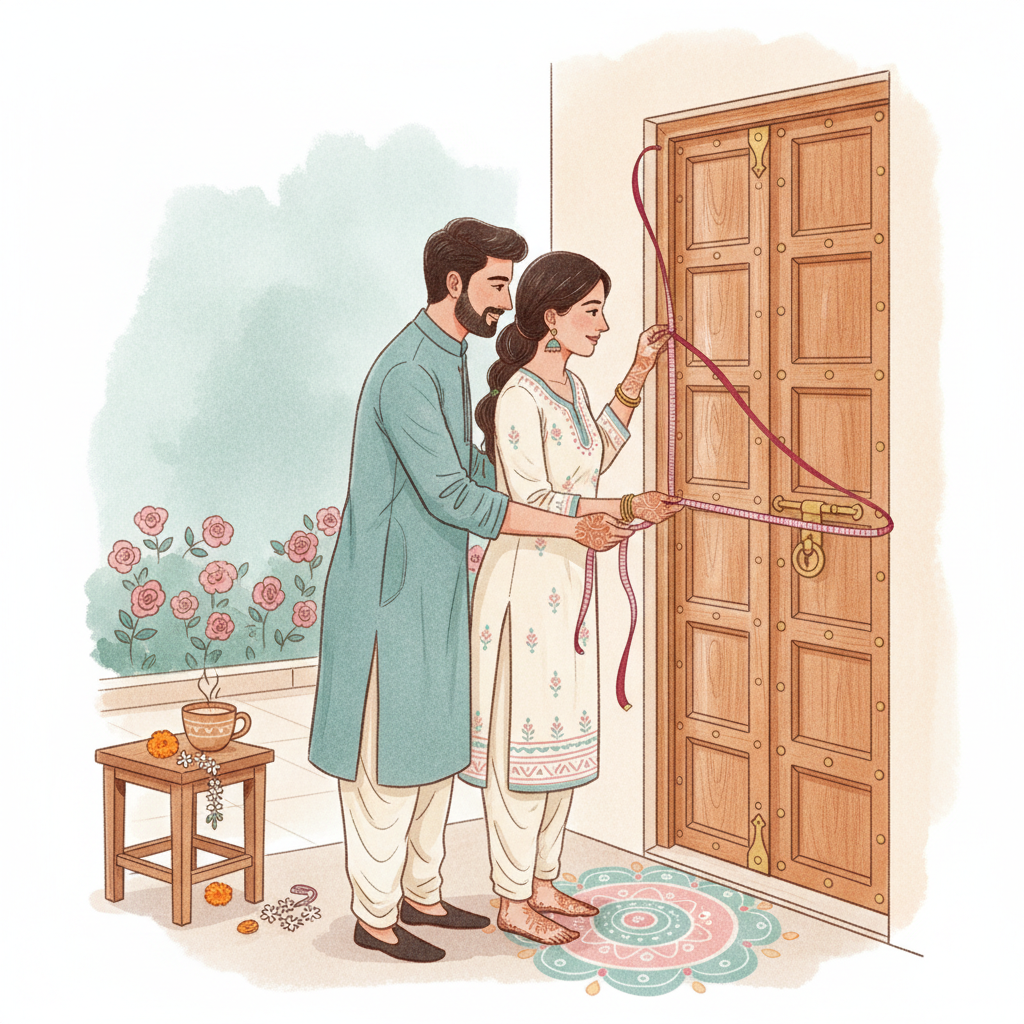
In India, marriage isn't just about two individuals; it's about two families. Observing how a potential partner engages with your family, even in a minor decision, offers invaluable insight into their capacity for collaboration and respect within a family unit. This could be something as simple as choosing a colour for new curtains for a common area, or deciding on a menu for a small family gathering.
Watch whether they listen actively to the opinions of your parents, siblings, or other elders. Do they offer their perspective respectfully, or do they try to impose their will? Do they adapt their suggestions based on family preferences, or do they push their own agenda? This method reveals their approach to joint decision-making, their comfort with family dynamics, and their ability to integrate into a new family structure – a crucial aspect of many Indian marriages. Someone who gracefully navigates these small family interactions demonstrates an understanding of the give-and-take required in a joint-family setup.
The Unveiling Power of Friction
You might meet someone for three calm, pleasant meetings and leave feeling impressed. But what have you truly learned? A calm, controlled environment doesn't test anything. It's like observing a car in a showroom – you see its shine, but you learn nothing about its handling on a bumpy road.
Stress, friction, and mild inconvenience are the true revealing agents. These moments, however small, strip away the polished facade and expose a person's underlying coping mechanisms, emotional regulation, and authentic responses. When things don't go perfectly, how do they react? This is when you truly see their character, their patience, their problem-solving skills, and their empathy. These are the qualities that will sustain a marriage through its inevitable challenges, not just the honeymoon period.
Observation vs. Surveillance: An Ethical Line
It’s important to understand that these methods are not about sneaky surveillance or trying to trick someone. You are not planting hidden cameras or digging for dirt. Instead, you are simply paying attention to what is already in the open, what is naturally occurring. The information about a person's character is constantly being broadcast through their actions and reactions. You are merely choosing to be present, to notice, and to interpret these publicly available signals. This approach empowers you to gather authentic data about a potential partner, enabling you to make a more informed and confident decision, rather than relying solely on their carefully curated self-presentation.
Your Next Step: Practice Noticing
For the next month, pick one of the four observation methods we discussed. It could be noticing how a potential partner interacts with service staff, or observing their reaction to a small, unexpected change in plans. Consciously practice noticing what you see that you would have missed in a typical "interview-style" conversation. Reflect on how these observations deepen your understanding of their character. This practice will sharpen your awareness and equip you with a powerful tool for discerning true compatibility.
Key concepts
Observation
Watching real behaviour in real situations. The most reliable signal.
Self-report
What a person says about themselves. Useful but biased; everyone presents their best version, especially in matrimonial settings.
Reflect
Consider a past interaction with a potential partner or even a friend. How might you have applied one of the 'no-question' observation methods, and what new insights do you think you would have gained about their character?
Quick check
Answer all questions, then submit to mark this lesson complete.
1. A potential partner tells you, "I am a very calm and patient person." Which of the following best exemplifies an observational method to verify this claim?
2. Which of the following is NOT one of the "no-question" observation methods discussed in the lesson for understanding a potential partner's character?
3. The lesson explains that small inconveniences and friction are valuable for revealing a potential partner's true character. Why is this considered more insightful than many calm, pleasant meetings?
Know someone who needs this?
Send them the lesson.
Read more on this
When a Correction Isn't About a Fact, It's About Equality
How a person responds to a small correction reveals their capacity for an equal partnership. It shows whether they can make space for your view, or can only defend their own.
The Direction of Apology and Anger Reveals a Family Map
A short temper is rarely random; it follows a precise map of power. Observing the direction of their anger and apologies reveals this map and your future place within it.
The 'Fixer' Impulse vs. The Foundation of Partnership
Learn to distinguish a shared struggle, which builds intimacy, from a delegated one, which builds resentment. This is the difference between finding a partner and taking on a permanent project.