You Don't Marry a Person, You Marry a Daily Routine
You’ve talked about the big things: where you’ll live, whether you want children, how you’ll merge your careers. You’ve met the families. The chemistry is there. On paper, and in your heart, it feels right. But a marriage is not lived on paper. It’s lived on a Tuesday morning, a Thursday evening, a Saturday afternoon. The long-term success of your partnership will be decided not by how you handle the big crises, but by the texture of your ordinary, unglamorous days.
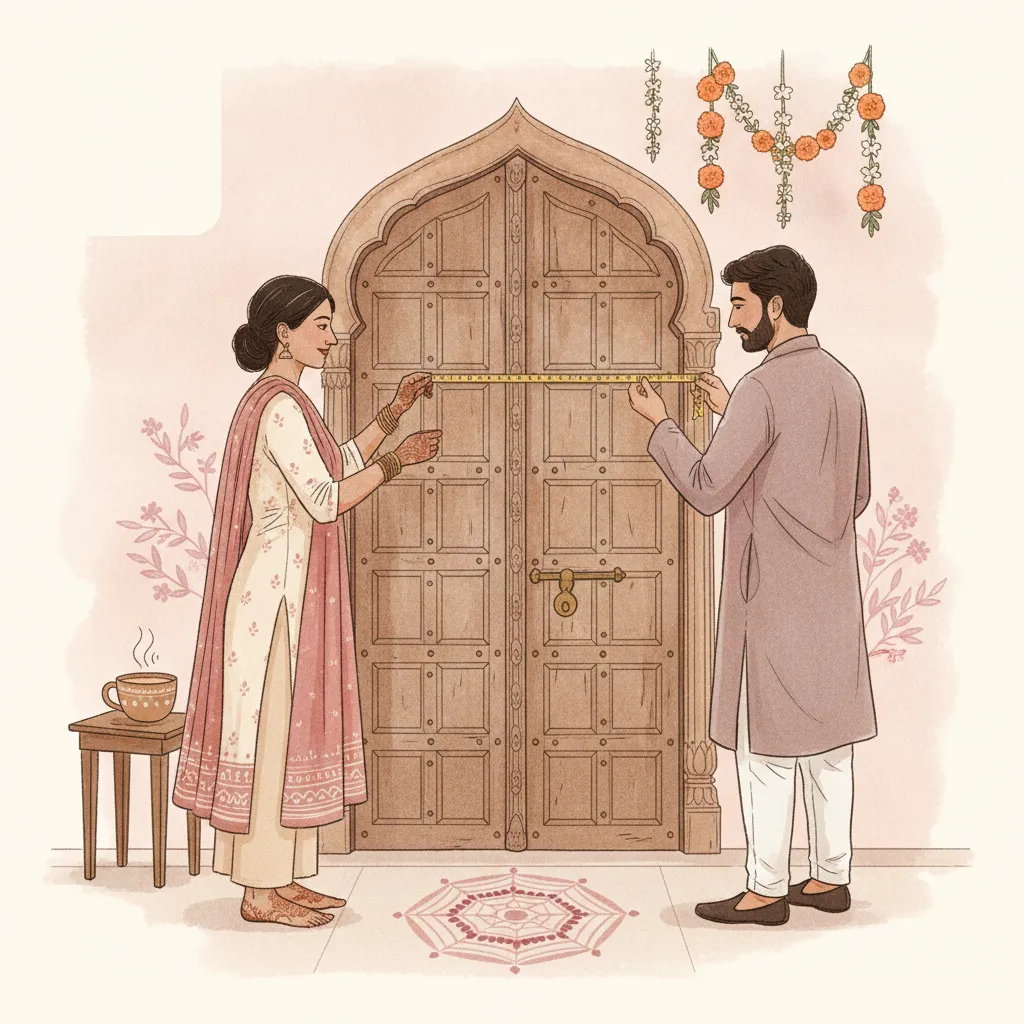
Before you agree to a lifetime of those days, you need to be able to imagine them in high resolution. This isn't about fantasy; it's about architecture. You are designing the container that will hold your life. Doing this work now isn't a sign of doubt. It's the work of building something that is designed to last, a structure with room for two whole people to live and grow.
The Tuesday Blueprint
Couples spend hours discussing their five-year plan and almost no time discussing their 8 PM plan. The five-year plan is a dream. The 8 PM plan is your actual life.
The most powerful exercise you can do is to design a typical weekday and a typical weekend in your future marriage. Forget grand gestures and exotic holidays. Get specific. Get boring.
Imagine a Tuesday, three years from now.
- Mornings: Who wakes up first? Is there a shared coffee, or is it a frantic rush to get out the door? Who is responsible for making sure the milk doesn't run out?
- Workday: Do you text during the day? Do you have lunch together if you work nearby? Or is there a respectful silence until you’re both home?
- The Re-entry: The first thirty minutes after you both get home are a critical transition. Is it a time for connection, where you both unload the day’s stress? Or is it a time for decompression, where you each need an hour of silent space before you can be a person again? There is no right answer, but a mismatch here creates daily friction.
- Evenings: Do you cook together? Eat with family? Watch a show? How do you decide what to watch? What does "downtime" look like? Is one person reading a book while the other is on a work call?
Now, do the same for a Saturday.
- Mornings: Is it for sleeping in, a workout, or running errands? If one of you is a morning person and the other isn't, how does that play out?
- Social Life: How much time is spent with your family, his family, mutual friends, and your own separate friends? A common point of failure is not a lack of love, but the slow erosion of a woman’s personal friendships. How will you protect that time, for both of you?
- Chores & Life Admin: When does the grocery shopping, cleaning, and bill-paying happen? This conversation lands differently depending on your circumstances. For some couples, it's about who cleans the bathroom; for others, the question is how to manage household help or divide tasks in a joint family where a mother-in-law already has her own system. The underlying principle is the same: if these tasks are left to whoever "has time," they will land on the person with more flexible hours or a greater sense of responsibility—often, the woman.
Consider Riya, a 31-year-old schoolteacher in Indore, meeting a man who runs his family’s successful electronics shop. He talks about wanting an "equal partner," and she believes him. But as they talk more, she notices an absence: he has a detailed vision for their financial future, but has never once asked her what she hopes an ordinary evening will feel like. His blueprint for their life is all about the destination, with no thought given to the journey.
The Conversations That Build the Floorplan
Bringing this up doesn't have to feel like an audit. Frame it as collaborative curiosity. You’re not presenting a list of demands; you’re inviting him to design the life with you.
Try opening with something like, "I was thinking about what an average weekday would look like for us a year after getting married. Can we try to imagine it together?"
This conversation isn’t about getting everything you want. It’s about discovering the underlying assumptions you both hold. A small, seemingly trivial detail can reveal a deep-seated expectation about roles and responsibilities.
Here is an exchange between Karthik, a 27-year-old software architect in Hyderabad who is divorced, and Priya, a 23-year-old bank officer he’s been dating for six months:
Karthik: "So, what’s your ideal weekend? Are you a go-out-and-do-things person or a stay-home-and-relax person?"
Priya: "A mix, really. I love a good long drive or a movie, but I also really need my quiet time. A Saturday morning to just read and be by myself recharges me for the whole week."
Karthik: "That’s good. My family has a big get-together for lunch every Sunday. It’s a pretty mandatory thing for me, especially after my divorce. It’s important for my parents. Takes up most of the afternoon."
Priya: "Okay. And what does that mean for Saturdays? Is that more our time, then?"
Karthik’s family obligation isn’t good or bad, but it’s a non-negotiable fixture. Priya’s response is a subtle and intelligent piece of architecture. Instead of challenging his fixed point, she immediately does two things: she accepts its reality, and she uses it to define the space around it. Her move accomplishes a specific goal. The potential risk is that she is setting a precedent that she is the sole person responsible for flexibility, the one whose needs are modular and must fit around his pre-existing structures. But the interaction also offers a moment of profound clarity. By offering this accommodation, she creates an opening to see how he understands partnership. What does he do with the space she has just created? Does he recognize her flexibility and offer a reciprocal gesture, signaling that he sees them as co-builders? Or does he simply accept her accommodation as his due, assuming his structures are the permanent foundation and her role is to arrange her life within them? Her question has yielded a small piece of ground, and in doing so, it reveals whether he understands that they are meant to be building something together.
Reading the Reactions: Collaboration vs. Compliance
How a potential partner responds to this design process tells you more than the answers themselves. You’re looking for a collaborator, not someone who wants to approve or reject your plan. Watch for these common patterns.
One of the most disarming responses is blanket agreement. When you outline a need, the response is utter, frictionless compliance. Imagine Sameer mentions wanting to save aggressively for a down payment, which would mean fewer weekend trips for a while. Anjali’s response is, “Whatever you want, I’m happy. Your happiness is the most important thing.” It sounds supportive. But it can be a subtle way to opt out of the real work of navigating trade-offs.
This move accomplishes something specific: it transfers the entire responsibility for the relationship's financial design, and its future happiness, onto Sameer. If, a year from now, Anjali is unhappy with their constrained lifestyle, it’s easier to frame it as a failure of his plan, the one she so generously agreed to. It is a passive abdication of responsibility. Described here with a woman offering easy agreement, but the dynamic is identical when the roles are reversed—it is a posture, not a trait of a gender.
A simple counter is to gently hand the pen back. “That’s kind of you to say, but a life we build together needs both our ideas. What's one trip you’d really be sad to miss out on this year?” This isn’t a test; it’s an invitation to be a co-designer. A partner who is genuinely flexible will be able to name a specific need.
Of course, sometimes the response isn’t evasion, but a genuine "I've never thought about this before." How do you perceive the difference between a truly blank slate and a passive-aggressive refusal to engage? The distinction emerges in their response to your invitation. A blank slate meets the question with curiosity. They might not have answers, but they are willing to think about the questions with you, perhaps saying, "I've never considered that, tell me what you're imagining." The passive-aggressive partner, however, will try to change the subject or treat your practical questions as a source of stress. You can see the pattern clearly: one is willing to learn how to draw, while the other wants you to put the pencil away.
A second pattern is what you might call "future discounting." You raise a small, concrete, present-day need, and he dismisses it with a grand, vague promise about the future.
If you say, "I'm a little worried about how we'll manage chores since my nursing shifts are so irregular," and the response is, "Don't worry about all that. Once we're married, everything will be amazing. We'll have it all figured out."
This can have an innocent twin. The impulse might come from genuine optimism, a deep-seated belief that love conquers all practical problems, or even a simple anxiety about conflict. The crucial perception is whether this is an optimistic feeling or an evasive strategy. You can bring clarity to the intention by gently bringing the conversation back to the present. Try saying, "I know we'll be amazing. It would just make me feel so much more relaxed now if we could brainstorm a few ideas. We don’t have to solve it, just talk about it."
If the optimism is genuine, your partner will likely engage, reassured that this is a low-pressure brainstorm. If it’s a strategy to avoid responsibility, they will deflect again. And if this becomes a pattern, run the tape forward: today, your practical concern is dismissed as needless anxiety. Six months into the marriage, your exhaustion is met with, "Why are you always so negative?" In three years, any attempt to fix the imbalance is treated as a criticism of the marriage itself. The habit of using a vague future to invalidate a specific present is a powerful tool for maintaining an unfair status quo.
What Gets Defended, What Gets Dismissed
Pay close attention to the topics where your potential partner’s easy-going flexibility suddenly vanishes. A person’s true, non-negotiable priorities are not revealed by what they say they value, but by what they instinctively protect when the conversation gets specific.
As you design your life together, notice what they, their family, or even you, treat as immovable objects.
- Financial Lines: Where is the boundary absolute? Is it the amount sent to parents, the budget for personal hobbies, or investments for a future you haven’t yet co-designed? Defending the money sent to parents, for example, isn't just about financial priority; it's a mechanism to signal that their family of origin's claim on their resources may always supersede the new family unit's claims. True financial compatibility is more than a high salary; it's about shared values expressed through spending.
- Family Rituals: Is the weekly family dinner a joyful gathering, or a rigid command performance? The tell isn’t the event itself, but the negotiation around it. A caricature of rigidity is, “You have to come. They’re expecting us.” A more subtle, and common, form of pressure sounds like this: "Of course, if you're really too tired from your shift, we can skip it... it's just that my mom has been cooking all day and she'll be so disappointed." This isn't a simple request; it's a mechanism that uses guilt to make your needs seem like a direct harm to a beloved family member. The key is to see if this is a pattern. A one-time moment of stress is human. A recurring strategy where family happiness is consistently positioned as being in opposition to your well-being is a map of a rigid system you will be expected to bend to.
- Personal Space and Time: What part of their schedule is completely off-limits? The morning workout, the Sunday cricket match, the evening video games? Everyone needs sacrosanct personal time. The question is whether that time is presented as a wall or a window. The mechanism of declaring a part of their life "non-negotiable" is to establish a zone of unilateral control, a space exempt from the collaborative process of the partnership. Does they talk about why it recharges them, inviting you into their internal world, or simply state it as an unchangeable fact?
- The Narrative of Self: Notice how they react if you gently question or add a detail to a story they tell about themselves. Is it met with curiosity, or with defensiveness? Someone whose self-image is brittle will treat a minor factual correction as a major personal attack. The mechanism here is to control the story of who they are. By resisting co-authorship, they are signaling that the relationship must conform to their fixed self-concept, rather than their identity being allowed to grow and evolve with you. You are not just marrying a person; you are marrying their story of who they are. Make sure it's a story with room for a co-author.
The Single Action That Changes the Picture
Before your next meeting or your next serious conversation, set aside one hour. No phone, no distractions. Just you and a notebook.
Write out your ideal Tuesday.
From the minute your alarm goes off to the moment you turn out the light. Be excruciatingly specific. What do you have for breakfast? What music is playing? What’s the first text you send? What do you do for the fifteen minutes after you get home from work? What does the room feel like? Who speaks first? What do you talk about before you fall asleep?
This blueprint is not a list of demands to be presented to a partner. It is for you.
Its purpose is to make your own needs and desires concrete in your own mind. It is the act of articulating your vision that gives you clarity. Once you know, with this level of detail, what you are trying to build, you will find it much easier to see who is willing and able to build it with you. You will know what a "yes" to him requires a "no" to for yourself. This clarity is the foundation of choosing freely, powerfully, and well. It is how you move from being chosen to being the one who chooses.