It starts with a feeling of being uniquely, breathtakingly seen. The “good morning” text arrives before your alarm. The second meeting ends with them confessing they feel like they’ve known you forever. A gift shows up at your office — not just flowers, but the expensive headphones you mentioned once, in passing. It’s intoxicating. In the whirlwind of the Indian matrimonial search, with its brisk timelines and family expectations, this intensity can feel like a sign: finally, someone who gets it. For those re-entering this world after a divorce or a long absence, whose calibration for normal pacing might be skewed, it feels like a miraculous shortcut to the connection you’ve been missing. This isn’t just a good match; it’s destiny.
This is also, however, the precise architecture of a trap.
Real connection is built, not declared. It grows quietly in the space between meetings, in remembered details, in the slow alignment of two lives. The flood of overwhelming, premature affection is something else entirely. It’s an attempt to manufacture intimacy at speed, creating a powerful sense of obligation and connection before the foundations of trust, respect, and genuine knowledge have even been laid. It’s designed to make you feel too special to ask hard questions and too indebted to slow down, especially when your family is watching, delighted by the apparent seriousness of the match.
Learning to tell the difference between healthy enthusiasm and engineered intensity is not about becoming suspicious. It is about becoming a better, clearer chooser. It is the skill of recognising a story that is being written for you, and insisting, instead, on writing one with someone.
The Mechanics of an Emotional Flood
When someone showers you with attention, gifts, and declarations of a soulmate connection within the first week or two, it is doing something very specific to the dynamic between you. It is not just affection; it is a strategy, whether conscious or not.
Let’s be precise about the move. It’s the constant stream of texts that leaves no room for your own thoughts. It’s the conversation that leaps from “What do you do for a living?” to “I’ve never felt this way about anyone” in a single evening. It’s what happened to Anjali, a 32-year-old lawyer in Bangalore. On her third meeting with Rakesh, he didn't just bring her a gift. He brought an expensive Kanjeevaram sari, telling her, "This is for your mother. I just know we’re going to be family, and I wanted her to have it." Anjali was floored. A ₹40,000 gift for her mother, a woman he had never met, felt too significant to accept but too churlish to refuse.
The immediate effect is to create an emotional debt. A thoughtful gift is a pleasure; a gift so extravagant it feels unearned creates an obligation. You now owe them gratitude, reciprocity, and, most importantly, the benefit of thedoubt. When a small inconsistency appears later, a part of your mind will whisper, But he bought that sari for my mother. But she said I was her soulmate. Don’t be difficult. This manufactured intimacy serves as a shield against future scrutiny.
This behaviour is also a probe. By flooding you with intensity, a person is measuring your boundaries. Do you accept the excessive gift? Do you match their declarations of “forever” with your own? Do you let your own schedule be completely consumed by their constant need for contact? If you accept it all without a pause, you have taught them that your boundaries are soft, that you can be rushed, and that grand gestures are a reliable way to bypass not just your critical thinking, but your family's as well.
Consider Sameer, a 34-year-old architect from Mumbai. He met Priya, a marketing head, through a family introduction. By their second meeting, she was talking about which neighbourhood would be best for their future children and sending him lavish gourmet food baskets at his office. He was flattered, but also vaguely unsettled.
Priya: “I cancelled my weekend trip to Goa. I’d rather just be here, talking to you. I feel like this is it, you know?” Sameer: “Wow, that’s… a big deal. You didn’t have to do that.” Priya: “For my future husband? Of course, I did. I can’t believe we wasted all this time not knowing each other.”
The conversation feels like a romantic scene from a film, but it’s tactically brilliant. Priya has framed her intensity as a sacrifice for him. She has unilaterally declared him her “future husband,” making it awkward for him to dial back the seriousness without appearing to reject her entire gesture. This dynamic is described with a woman initiating and a man observing, but it runs just as often, and just as powerfully, in the other direction. Read the pattern, not the parts.
Of course, the incentive isn’t always predatory. Sometimes, it’s profound anxiety. A person who fears being left may front-load the relationship with so much intensity that they believe it will be too big to fail. It can also be a learned script from their family or from movies—a flawed idea of what grand romance is supposed to look like.
But whether the motive is control or insecurity, the effect on you is the same: you are being hurried past the vital, data-gathering stage of a relationship into a conclusion that you haven't had time to verify.
The Arc: From Pedestal to Project
The person who idealises you at speed is often the one who will devalue you with the same velocity later. The initial flood of praise is not about seeing you clearly; it’s about casting you in a role. This pedestal phase is built with dazzling speed, often using a technique called mirroring. Suddenly, they adore that obscure indie band you love; they share your exact, nuanced political opinion; they even start using your specific verbal tics. It creates a powerful, artificial feeling of having found your one true soulmate. They aren’t getting to know you; they are becoming a perfect reflection of you. At the same time, they are performing for your family, charming your parents with impeccable manners and pronouncements of serious intent, effectively recruiting them as allies.
The turn comes quietly, almost imperceptibly. After weeks of being told you are perfect, the first crack appears as a loving suggestion. “You’re so smart, you’re above gossiping with friends like that,” they might say with a smile. Or, “That kurta is nice, but the blue one I like makes you look so much more professional.” Because of the intense bond they manufactured, you’re inclined to see it as caring advice. It feels like a small thing to adjust.
But soon, the suggestions are no longer suggestions. They become expressions of disappointment, a tool to manage you. “I was telling my mother what a great cook you are, and then you just want to order in tonight?” The praise, once a constant flood, is now conditional—a reward for conforming to the image they built. The very things they once mirrored and claimed to love are reframed as problems. Your ambitious career, once a source of their admiration, now takes too much time away from them. Your close friends, who they initially worked so hard to charm, are now viewed with suspicion if they question the relationship's pace. Doubts from your support system are dismissed as jealousy: "They just don't understand a connection like ours." The pedestal is revealed to have been an audition stage, and now you are a project to be endlessly improved. The person who once worshipped you now seems perpetually disappointed, and the constant texts are no longer about adoration, but about checking up on you.
The speed of the beginning was designed to obscure this destination. It created a powerful momentum that made each small, early concession feel trivial. But a thousand trivial concessions build a cage.
The Essential Move: Deliberately Slowing Down
Your single most powerful tool is time. A person who is genuinely interested in building a life with you will respect your need for it. A person who is trying to rush you past your own judgment will not.
The key is to apply the brakes gently but firmly. This is not a confrontation; it is a clarification of your own process. The goal is to set a boundary and observe the response. Their reaction is the most reliable data you will get.
What to Actually Say
Here are three lines you can adapt. They are polite, they affirm your interest, and they clearly state a need for a different pace.
- To slow down constant communication: "I love hearing from you, but I'm useless at texting during the day. Can we save it for the evening? I want to give you my full attention then."
- To refuse an overly extravagant gift: "This is so incredibly generous, thank you. But for me, it feels a bit too fast. Right now, I’d be much happier if we just focused on enjoying our time together."
- To temper premature future-planning: "I'm really happy with how things are going too. But I'm a one-step-at-a-time person and I'm not ready to talk about marriage just yet. Let's just keep getting to know each other."
Reading the Response: The Most Important Test
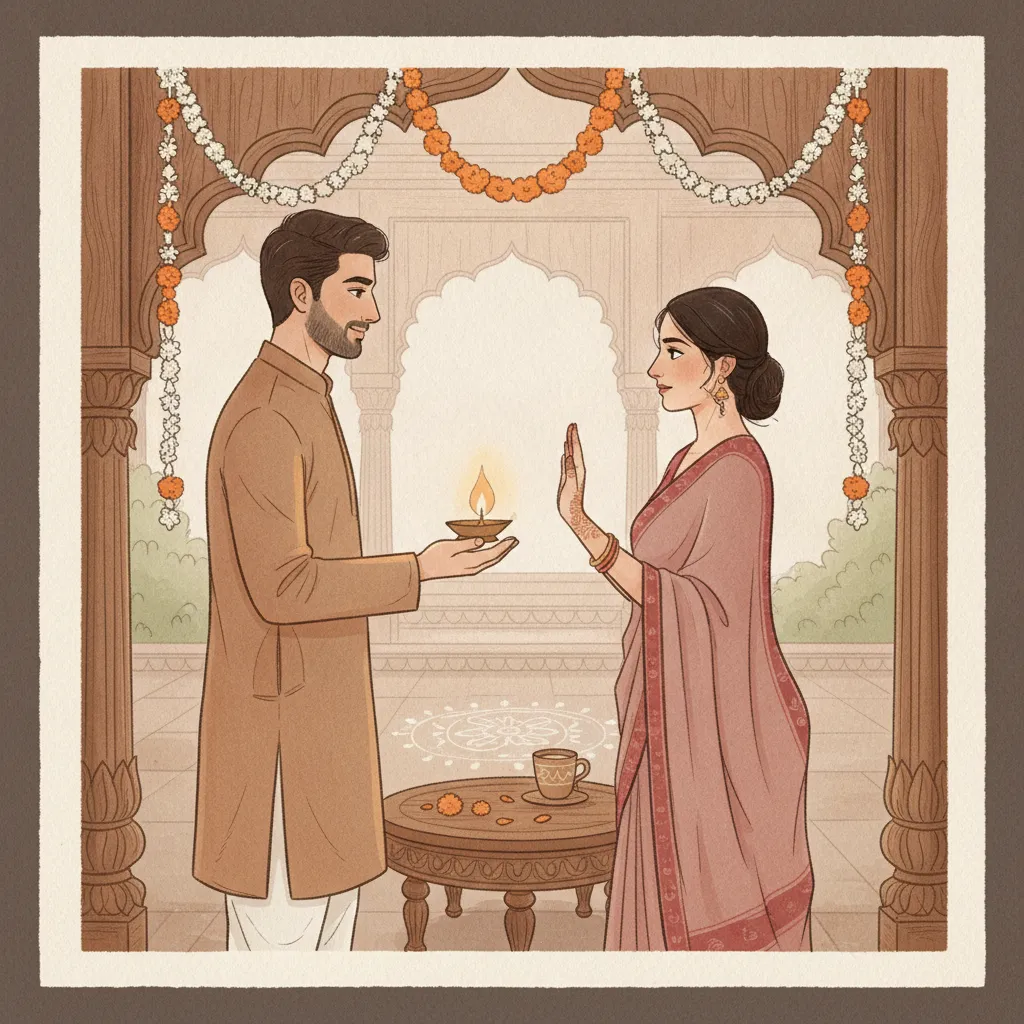
A secure, well-adjusted person’s response will sound something like this: "Of course, I completely understand. I was just very excited. Whatever pace you're comfortable with is the right pace for us." They hear your boundary, respect it, and adapt. Their interest in you is not fragile; it can withstand a request for normality.
The response of someone whose intensity is a tool for control will be markedly different. Watch for one of three reactions:
- Guilt: “I’m sorry. I was just trying to show you how much I care. I guess I’m just not very good at this.” This puts you in the position of having to reassure them, effectively punishing you for stating your need.
- Sulking: They agree in the moment, but then their communication becomes cold or they withdraw for a day or two. This is a passive-aggressive way of demonstrating that your boundary has displeased them and that their affection is conditional on your compliance.
- Escalation: “If you really felt the connection I do, you wouldn't need to slow down. Maybe I misread this.” This is a direct challenge, an attempt to frame your reasonable request as a sign of insufficient feeling.
If you are met with anything other than simple acceptance, pay very close attention. You have just been given a clear preview of how your needs and boundaries will be treated in the marriage. If stating a simple need for a slower pace produces a Sulking, it is crucial to understand that leaving such a relationship later on can be a high-risk moment. Confide in friends or family you trust before making any major decisions.
Patterns to Recognise: Enthusiasm vs. Engineering
Most matches on a platform like TrueSoulMatch are genuine. People get excited. Nerves can make them overeager. The goal is not to pathologise enthusiasm but to distinguish it from a pattern of emotional engineering. TrueSoulMatch’s mandatory ID and photo verification confirms you are speaking to the person they claim to be, but character is revealed only in behaviour over time.
Listen for the texture of their interest. Genuine enthusiasm sounds like curiosity. It asks questions and wants to know you, specifically. They remember the name of your nephew, ask about the work project you were stressed about, and bring up the small town your family is from. Engineered affection, by contrast, sounds like declaration. It relies on generic, high-stakes compliments like, “You’re the most amazing woman I’ve ever met,” or “You are my destiny.” It is a script, and you are being slotted into the leading role. A tell-tale sign is when you realise, after three long conversations, that they have done 90% of the talking or that you have learned very little about their inner life beyond their feelings for you.
Similarly, watch how they treat time. A person building a real connection is focused on the present; they are enjoying this date, this conversation. Their excitement is an invitation: "I'd love to see you again soon." The choice is yours. Someone manufacturing a fantasy is obsessed with the future and treats your time as theirs to claim. They will talk endlessly about "our" home and "our" children before they’ve even learned how you take your coffee. Their desire to meet feels like a demand, not an invitation: “I’m free Tuesday, Wednesday, and Friday night, which one works for you?” A healthy partner matches your pace; an unhealthy one resents it. This isn't romance; it's an attempt to create a shared future you feel you can't back out of.
Ask Yourself This Week
Take a step back from the flattering words and the grand gestures. Look at the negative space.
- What important question about my life have they consistently not asked?
- When I talk about something difficult—a family conflict, a professional setback—do they lean in with curiosity, or do they change the subject back to something more pleasant, like us?
- Does my feeling of connection to them come from shared experiences and mutual understanding, or does it come from the intensity of their declarations about me?