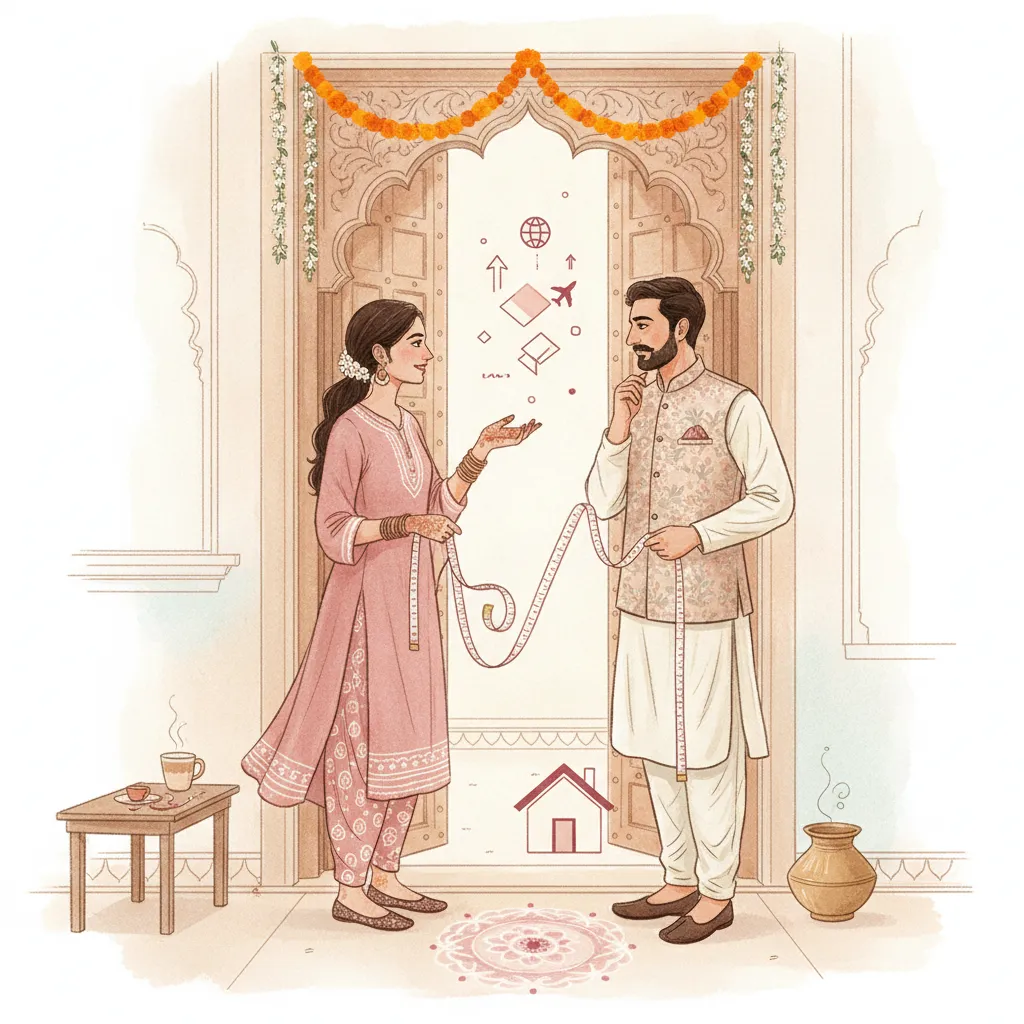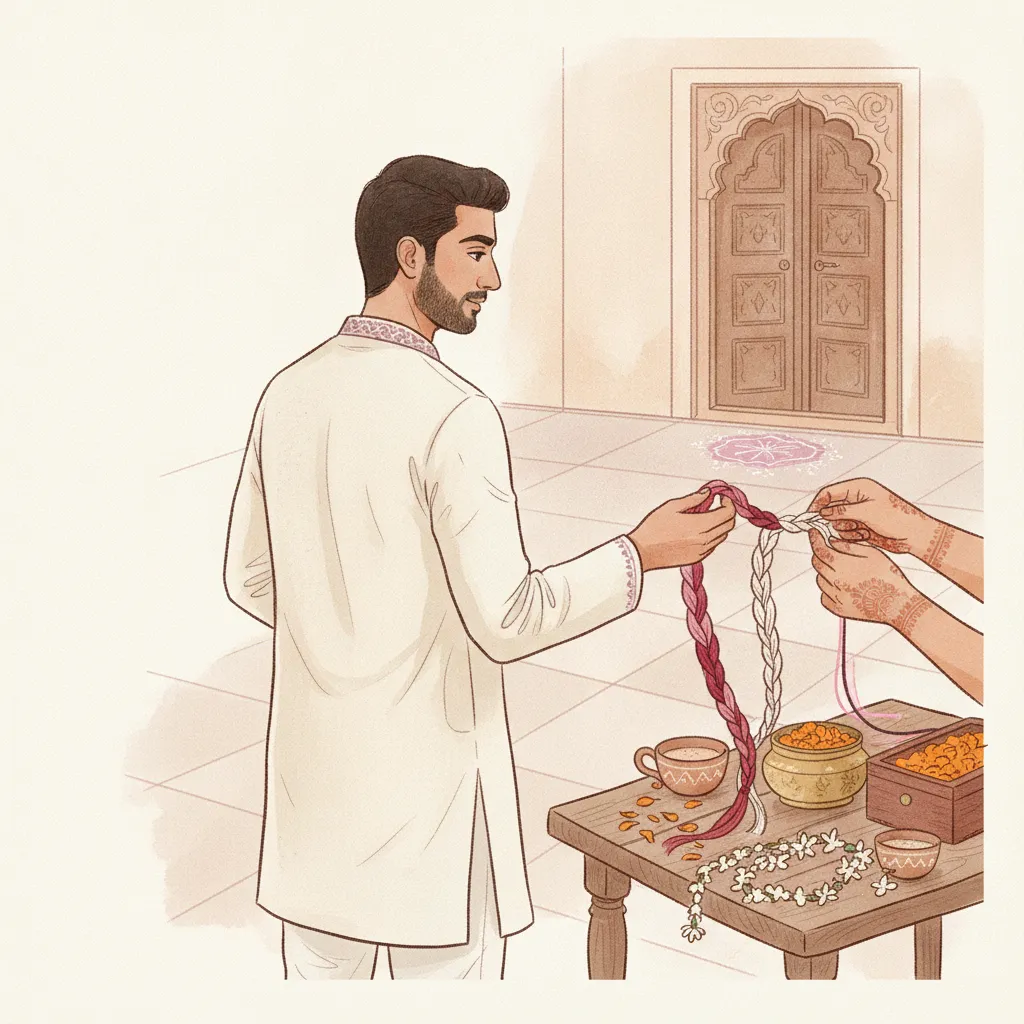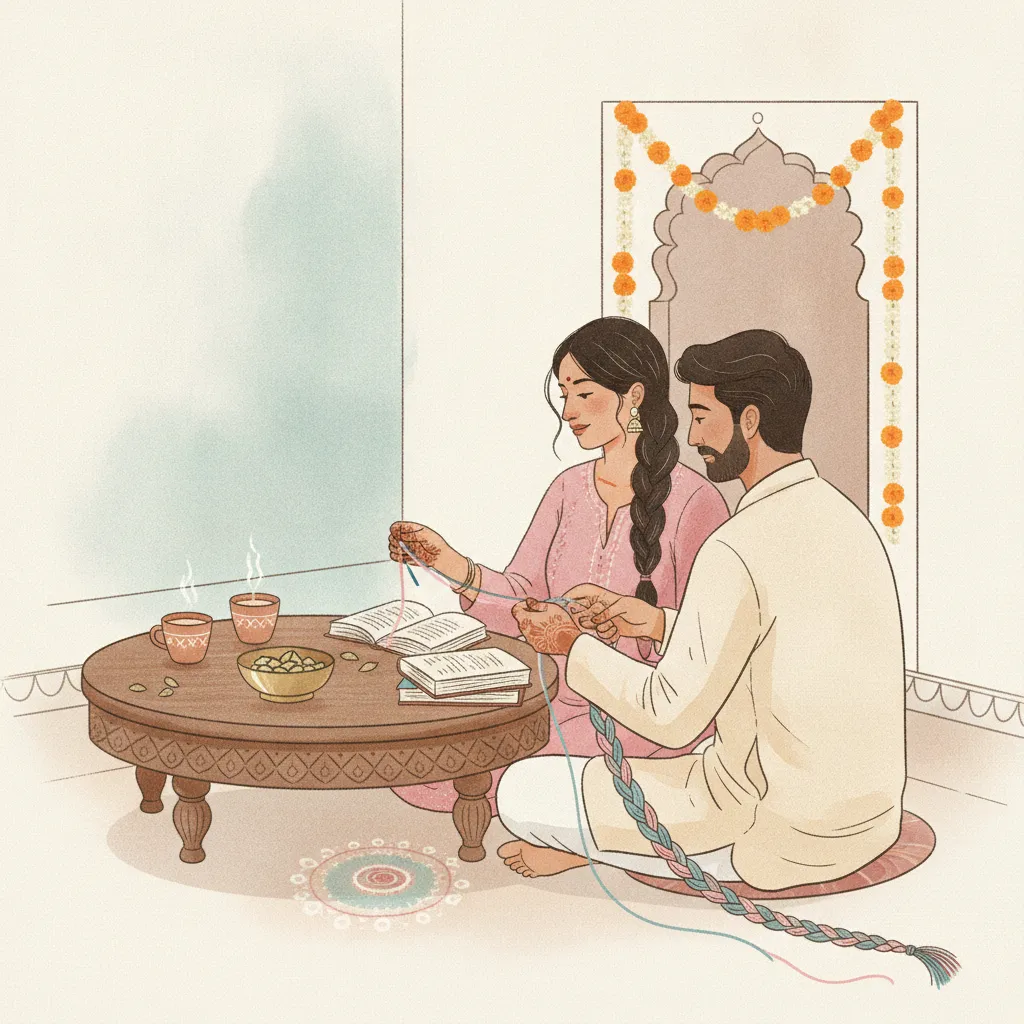
After the whirlwind of the roka, the endless outfit trials, and the negotiations over catering, it’s easy to feel like the hardest parts are over. Your families have met, the date is set, and the two of you are on a clear path to building a life together. But the single most important preparation for marriage is the one most couples skip. It isn’t finalising the guest list; it’s building the blueprint for your life after the guests go home.
This article is that blueprint. By the end of it, the two of you will be able to see pre-marital counseling not as a sign of trouble, but as a mark of wisdom. You will understand exactly what happens in those sessions, how to distinguish a great counsellor from a mediocre one, and how to have conversations now that will protect your marriage for decades to come. This isn't about airing doubts; it's about building unshakeable confidence in your shared future.
The Stigma is Real. The Logic is Flawed.
Let’s be direct. For many Indian couples, the suggestion of “counseling” lands with a thud. It carries the weight of unspoken assumptions: that something is wrong, that you’re not happy, that your match is flawed. The fear isn't just personal; it's social. What will our parents think? Will they worry we’re having second thoughts?
This stigma is based on a fundamental misunderstanding of what pre-marital counseling is for. It’s not emergency surgery for a relationship on the verge of collapse; it’s a preventative health check-up for a relationship on the verge of a lifelong commitment. You get your finances in order before marriage. You plan the logistics of your new home. Why wouldn’t you do the same for your emotional and communicative foundation?
The misplaced logic is that a "good" or "natural" relationship shouldn't need this kind of help. This is a romantic fantasy that crumbles under the real-world pressures of marriage, especially within the Indian context. You are not just two individuals coming together; you are two families, two sets of expectations, and two histories merging. The timeline of an arranged or fast-paced match often means you’re still learning about each other’s core beliefs when you’re already deciding on a future together. Counseling simply provides a structured, neutral space to accelerate that understanding safely.
The non-obvious truth is this: the real risk isn't going to counseling. The real risk is discovering a fundamental, unresolvable difference in values—on money, children, or family obligations—two years after the wedding, when untangling your lives is infinitely more painful and complex. A few sessions with a professional is a small, private investment to protect your enormous public and emotional one.
Consider Meera, a 29-year-old designer in Pune, engaged to Ritesh, a 30-year-old marketing head. Their courtship was wonderful, filled with laughter and shared interests. But Meera noticed a pattern. When they discussed their future, Ritesh’s questions were always practical: "How much will your new project pay?" or "Will your firm give you a bigger bonus this year?" He never asked, "Does this project excite you?" or "Are you feeling fulfilled by your work?" When Meera gently raised the idea of a few pre-marital sessions to discuss their financial goals, Ritesh was initially defensive. "Are you saying we have money problems already?" She reframed it. "No," she said. "I'm saying I want our 'money conversations' for the next fifty years to be about our dreams, not just our budgets. Let's learn how to do that from an expert." By framing it as skill-building, not problem-fixing, she made it a team project. They went, and it was the first time Ritesh understood that for Meera, her career was about purpose, not just a paycheque—a revelation that fundamentally strengthened their partnership.
Beyond "Communication": What You'll Actually Talk About
Many people imagine pre-marital counseling as a vague, awkward conversation about "feelings." The reality is far more structured and practical. A good counsellor acts as a guide, leading you through conversations you need to have but may not know how to start. They provide the vocabulary and the safety net to discuss topics that are often emotionally charged.
Think of these sessions as covering the five critical, often-unspoken contracts of a marriage.
The Financial Contract
This goes far beyond "What's your salary?" It's about your entire philosophy around money. A counsellor will help you explore:
- Your Money Story: Was your family frugal or free-spending? Was money a source of stress or security? These "money scripts" from childhood dictate your behaviour today.
- Practical Management: Will you have joint or separate accounts, or a combination? Who pays which bills? How will you make major purchasing decisions (a car, a flat) over, say, ₹1,00,000?
- Family Obligations: How will you support your respective parents? What if a family member needs significant financial help? This needs to be an explicit conversation, not a hidden assumption.
- Debt and Assets: Full transparency is key. This includes student loans, credit card debt, and personal assets like property or investments, including any stridhan (a woman's own, absolute property) she brings to the marriage.
The Conflict Contract
Every couple disagrees. The goal is not to eliminate conflict, but to learn how to handle it constructively. Instead of a vague goal to "communicate better," a counsellor gives you tools. They might introduce you to concepts like:
- "I" Statements vs. "You" Statements: Saying "I feel worried when the credit card bill is high" is received very differently from "You are so irresponsible with money." The first shares an emotion; the second hurls an accusation.
- The Gentle Start-Up: Learning to raise an issue softly, without blame, to prevent your partner from becoming defensive.
- Repair Attempts: What do you do after an argument to reconnect? Does one of you need space? Does the other need immediate reassurance? Knowing this about each other is a game-changer.
The Family & In-Laws Contract
In India, you don’t just marry a person; you marry their family. Counseling provides a neutral space to navigate this complex reality.
- Boundaries: How much involvement will your families have in your day-to-day decisions? If you live in a joint family, what are the expectations around your time, household responsibilities, and privacy?
- Parental Care: What is the long-term plan for caring for ageing parents? This is one of the most significant emotional and financial responsibilities a couple will face, and it must be discussed openly.
- Cultural & Religious Differences: If you come from different backgrounds, how will you celebrate festivals? How will you raise children? Agreeing on a respectful approach upfront prevents years of friction.
The Intimacy & Affection Contract
This is about more than just physical intimacy. It’s about how each of you feels loved and appreciated. One of you might feel loved through words of affirmation ("You did such a great job on that presentation"), while the other feels it through acts of service (making a cup of chai without being asked). A counsellor can help you identify and communicate these needs, so you’re not speaking different emotional languages.
The Life Vision Contract
This is the "big picture" stuff. Do you want children? If so, when, and what are your parenting philosophies? What are your individual career ambitions, and how will you support each other’s growth? Where do you see yourselves living in five or ten years? Having this conversation ensures you are both rowing in the same direction.
Patterns to Recognise
While most pre-marital work is about building positive skills, it can also illuminate patterns that require serious attention. A neutral third party can help you see what you might be too close to notice.
- Consistent Invalidation: One partner regularly dismisses the other's feelings or experiences ("You're being too sensitive," "That's not what happened").
- Control Disguised as Care: This can be subtle. It's not just "You can't go out with your friends." It can sound like, "I'm worried about you being out so late, why don't you just stay home?" or "Are you sure you want to spend money on that? Let me handle our finances, I'm better at it."
- The Inability to Apologise: A partner who can never admit fault or take responsibility, instead consistently shifting blame.
- Stonewalling: When a difficult topic is raised, one partner completely shuts down, refuses to engage, or leaves the room. This makes resolving conflict impossible.
- Contempt: This is the most serious sign. It involves sarcasm, name-calling, eye-rolling, and a general attitude of disgust or disrespect. It goes beyond criticism to attack a person's character.
A note on safety: If you recognise severe patterns of control, intense jealousy, or contempt, it is crucial to proceed with caution. The goal is not to "fix" this person in counseling. Your priority is your own safety. Do not announce a plan to leave or confront the person without first speaking to a trusted family member, a friend, or a support organisation. The most dangerous time can be the point of leaving.
Finding the Right Guide for Your Journey
Finding a qualified counsellor is crucial. This is not the time for a well-meaning relative or a "life coach" with a weekend certification. You are looking for a trained mental health professional.
Credentials That Matter
Look for someone with a Master's degree (M.A. or M.Sc.) in Psychology (specifically Clinical or Counseling Psychology) or a Master's in Social Work (MSW). They should have specific training and supervised experience in couples or family therapy. Don't be shy about asking directly: "What is your educational background?" and "What specific training do you have in working with couples?"
Crucially, you want someone who is "culturally competent"—they should understand the nuances of Indian family structures, the pressures of arranged matches, and the importance of community without being old-fashioned or imposing their own values.
The First Session: A Two-Way Interview
The first session is less about "therapy" and more about assessment. The two of you are assessing the counsellor, and they are assessing your situation. Here’s what to expect:
- Housekeeping: They will explain their process, fees, cancellation policy, and, most importantly, the rules of confidentiality.
- Your Story: They will likely ask how you met, what you admire about each other, and what you love about your relationship. This isn't just small talk; it establishes a foundation of positivity.
- The "Why Now?": They will ask what brought you to counseling. Be honest. Is it a specific recurring argument, or a general desire for preparation?
- Goal Setting: A good counsellor won't impose a plan. They will ask, "What are your hopes for our sessions? What would you like to be different by the end?"
The most important non-obvious thing to look for is this: Does the counsellor create a sense of balance? Both of you should feel equally heard and respected. If you feel the counsellor is consistently taking one person's side, or letting one person dominate the entire session, they are not the right fit. A good counsellor is not a judge who decides who is "right." They are a facilitator who helps you understand each other's perspective.
Imagine Aisha, a 30-year-old lawyer in Delhi, and Vikram, 32, who works in finance. They have a recurring fight about punctuality. In their first session, the counsellor, Dr. Khanna, asks them each to describe the last time they were late for an event. Vikram explains his frustration about leaving late. Aisha, instead of getting defensive, is able to say, with Dr. Khanna's gentle prompting, "When you get angry with me about being five minutes late, I feel like you're not seeing how hard I'm trying to wrap up my work call. It feels like I'm failing." Dr. Khanna doesn’t say, "Aisha, you need to be on time," or "Vikram, you need to be more patient." Instead, she says, "So for Vikram, this is about respect for time. And for Aisha, this is about feeling appreciated for your effort. You're having two different conversations. Let's work on how you can both solve the problem of time, while also meeting the emotional need for respect and appreciation." That is the work.
Ask Yourself This Week
You don’t need to be in a counsellor's office to begin this process. Your marriage preparation starts now, with the two of you. This week, set aside one hour. Put your phones in another room. Make tea. Sit down and ask each other one of these questions. Listen to the answer without interrupting.
- "What is one unstated expectation you have of me after we get married? What is one you think I have of you?"
- "Thinking about how your parents handled disagreements, what is one thing you want our arguments to be like, and one thing you want to do differently?"
- "What does 'supporting each other’s careers' look like to you in a practical, day-to-day way?"
Choosing to go to pre-marital counseling is not an admission of weakness. It is one of the first, most powerful decisions you can make as a team. It's a declaration that your marriage is worth protecting, your foundation is worth strengthening, and your future is worth building with intention, skill, and care. You are not just planning a wedding; you are laying the groundwork for a lifetime. Start here.