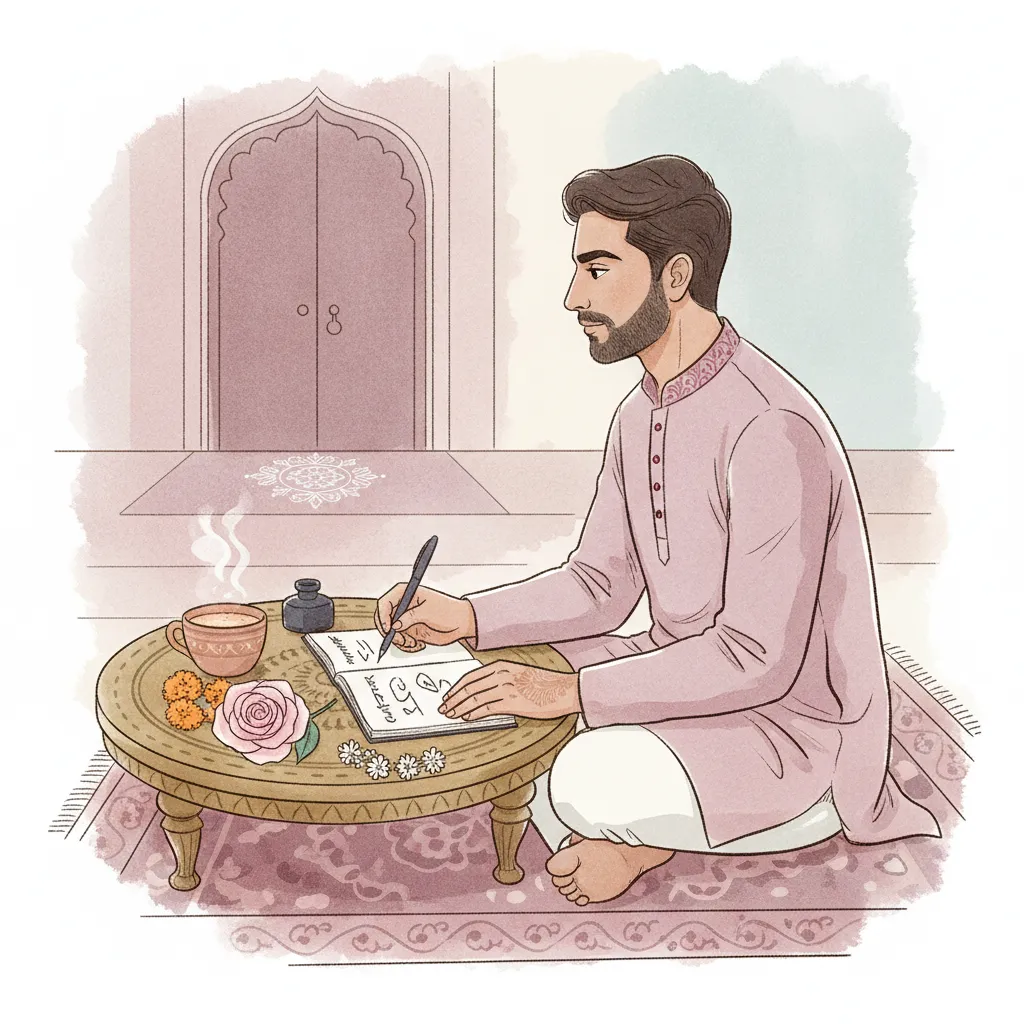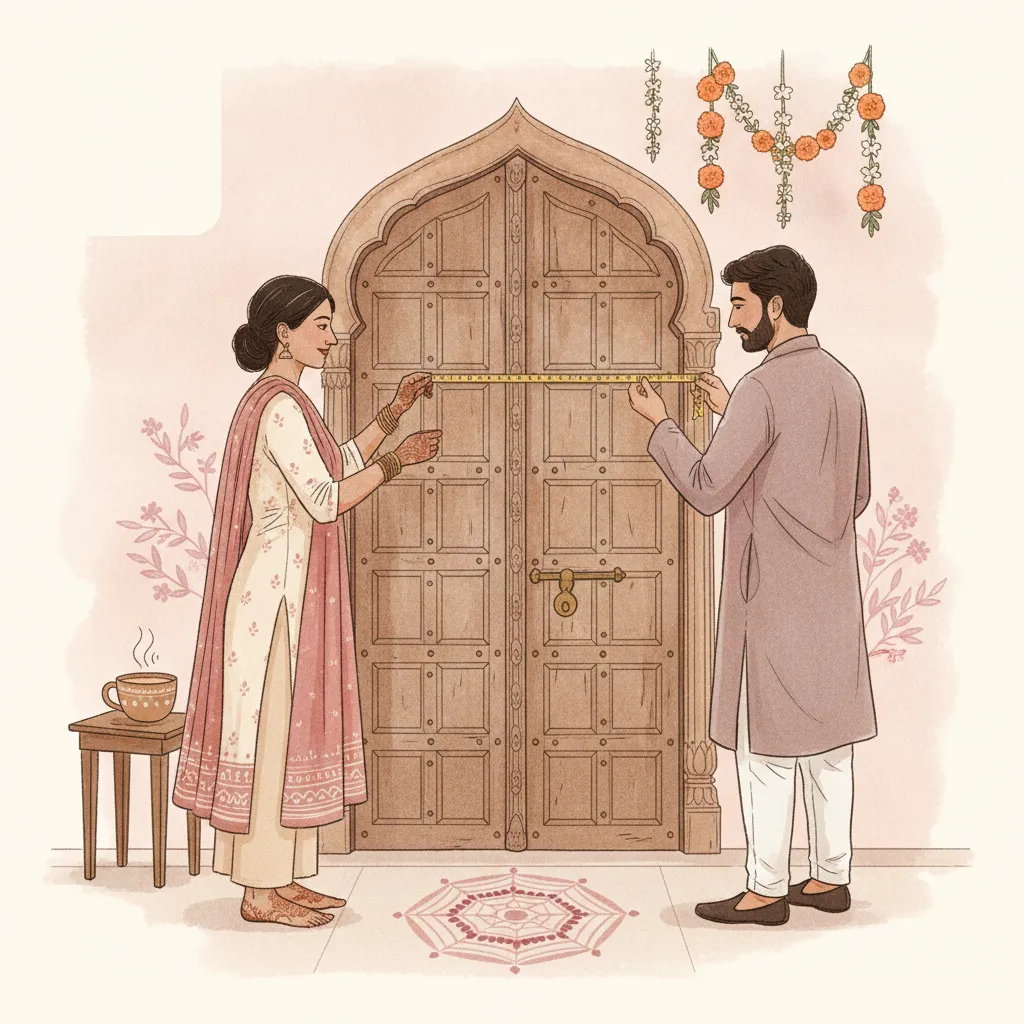
In the intense, compressed timeline of a matrimonial search, your focus is sharp. You are learning to read a near-stranger for signs of their character, their temperament, their capacity for partnership. You are watching their actions, listening to their words, and trying to build a picture of a life you might share. This is necessary and difficult work.
But there is another set of signals being sent in every meeting, signals that are often harder to read because you are the one sending them. The search for a partner is also a search for self-awareness. The behaviours that quietly push a good match away often operate outside our own notice. This isn’t about fixing fatal flaws. It’s about understanding the unifying mechanism behind them: all are dysfunctional strategies for managing your own anxiety about the process. These strategies, while protective in the short term, can inadvertently sabotage the very connection you hope to build.
Recognising these patterns in yourself is not an exercise in self-criticism. It is the most powerful move you can make. When you see your own behaviour clearly, you can choose it deliberately. And a person who is self-aware is the most reassuring partner one can find.
The Caretaker Who Is Actually a Controller
It begins with care. Sameer, a 39-year-old architect in Jodhpur, is speaking with Priya, 36, who runs a successful home bakery. He learns she often works late, baking through the night to meet orders. On their third call, he says, “You really shouldn’t be staying up so late. It’s not good for your health in the long run. Have you considered rescheduling your orders to bake in the mornings?”
He sounds concerned, and he may well be. But watch what the behaviour does. It re-frames her professional life as a health problem he needs to solve. It assumes his five-minute analysis is superior to her years of experience running her own business. When Priya says she’s managed this schedule for a long time, Sameer persists. “I’m just worried about you. A family life will need a different rhythm.”
This is a probe, a test of boundaries. His concern is the vehicle, but the destination is control. His response to her reassurance (“I have this handled”) is the critical data point. A person genuinely offering support would have accepted her answer. A person seeking control will push past it. He is learning something important from her reaction: does she defer to his judgment? Does she thank him for his intervention? Her response teaches him how permeable her boundaries are and whether his ‘concern’ is an effective tool for influencing her decisions. The dynamic described here uses a man's behaviour for illustration; reverse the roles and the mechanism of control-as-care remains identical.
The incentive for this can be innocent; he might be repeating a script he learned from his own family about how a husband "looks after" his wife. This is often how how your family's blueprint shapes your partner choice plays out in real-time. But the extractive motive is a desire to reshape her life to better fit his, before the life has even begun.
The innocent version of this sounds different. It asks instead of tells. “Those hours sound demanding. How do you manage to sustain that?” It offers help without taking over: “Is there anything that would make that schedule easier for you?” It respects an answer and drops the subject. The difference is between offering a hand and taking the wheel.
If you find yourself offering unsolicited, persistent advice under the guise of concern, pause. Ask yourself:
- Did they ask for my opinion?
- Have I listened to their own assessment of the situation, or am I waiting for a chance to present my solution?
- What happens if they say “No, thank you” to my advice? Does it make me feel anxious or dismissed?
Your desire to help and protect is a good impulse. Your need for your advice to be followed reveals more about your need for control than your capacity for care.
And if you find yourself on the receiving end of such 'care'? You can test the dynamic with a gentle boundary: “I appreciate you thinking about it. For now, this is what works for me.” Their reaction to this polite refusal will tell you everything you need to know. Do they back off graciously, or do they escalate their 'concern'? The response isn't about your schedule; it's about their respect for your autonomy.
The Invisible Ledger of Who Owes Whom
We keep a silent, internal account of who did what, who sacrificed more, who is currently ‘in credit’. This impulse often comes from a deep-seated fear of being taken advantage of, a fear that can be especially potent for those who have been let down before. It is an anxious attempt to impose order and fairness on the inherently unpredictable terrain of a new relationship.
Anjali is 45, a widow with a teenaged son, running her family’s textile shop in Coimbatore. She is meeting Rakesh, a 46-year-old widower. She is cautious and determined to be treated as an equal. After their first two meetings, a coffee and a movie, she has kept a mental running tab. She sends him a text: “I really enjoyed the film. Just so we are clear, you paid for the coffee (₹480), and I paid for the tickets and popcorn (₹950). So we are about even for next time!”
Her intention is fairness. The effect, however, is to turn courtship into an audit. It replaces the spirit of generosity with the precision of accounting. A gesture is no longer a gift; it is a transaction that creates a corresponding debt. If you receive a text like Anjali's, your response sets a precedent. A good path is to gently reframe the interaction: "I'm not keeping a scorecard, and I hope you don't feel the need to either! My treat was just a treat. I'm happy to go dutch next time if that makes you more comfortable, just let me know." This addresses the behavior without accusation, offering a path back to generosity.
This accounting is rarely limited to rupees. The ledger can track any currency: time, effort, even emotional labour. You find yourself thinking not, "I'm tired of cooking; I'll ask if he can handle dinner tonight," but, "I've cooked the last three times; it's his turn to suggest ordering in." A benign offer to listen to a partner’s work problem becomes a deposit, creating an expectation that they now 'owe' you an equivalent amount of listening time, regardless of what the day holds. The focus shifts from mutual support to meticulous balancing, turning a partnership into a zero-sum game.
The person keeping score is probing for compliance. Will the other person accept these terms? Will they agree to live in a world of measured, reciprocal exchange? The innocent incentive is a defence mechanism, born of a genuine desire for balance. The more corrosive possibility is a fundamental lack of trust, an inability to believe in a partner’s goodwill without a balance sheet to enforce it.
The healthy alternative is not a refusal to discuss money. On the contrary, open conversations about financial compatibility is more than a high salary are vital. The calibration is in the spirit. It’s the difference between “You got the last one, let me get this” and a line-item accounting. One is a rhythm of generosity, the other is a closing of the books. A marriage founded on ensuring you never give more than you get will never feel safe enough for true generosity.
The Emptiness of a Question Never Asked
Sometimes the most telling sign is an absence. It is the follow-up question that is never asked, the curiosity that is never expressed. This pattern is quieter than overt criticism, but it can be more damaging. It teaches you, slowly and subtly, that your inner world is not of interest.
Aditya, a 24-year-old in Patna, is on his third and final attempt at the civil service exams. The pressure from his family is immense, and his life is a cycle of studying and stress. He is talking to Neha, a 23-year-old a family friend introduced. He tries to be honest about his reality. “It’s a difficult phase,” he says. “Some days the sheer volume of it feels overwhelming.”
Her response is not unkind. On the surface, it sounds supportive. “Oh, but you’re so smart,” she says, with a bright, encouraging smile. “I know you can do it. You just need to get out of your own head.” She gives his hand a little pat. “Anyway, I was just looking at this heritage hotel in Jaipur for a weekend trip, it looks amazing...” She’s already pulling up photos on her phone.
Her reaction is a complete shutdown of the vulnerability he offered. She didn't ask, “What part feels most overwhelming?” or “What do you do to manage the stress?” She heard his expression of difficulty not as a bid for connection, but as a threat to the cheerful mood she needs to maintain—a problem to be solved with a quick platitude so she can manage her own discomfort.
What can Aditya do? He has a choice. He can accept the conversation's new direction, learning that his internal life is off-limits. Or he can make one more gentle bid for connection: “I appreciate the vote of confidence. It’s just something that’s on my mind a lot.” If she pivots again, he has his answer, not from a single dismissive comment, but from a repeated pattern of avoidance.
Over time, this pattern has a powerful effect. Aditya will learn that sharing his anxieties with Neha leads to a dead end. He will stop bringing them up. A wall will be built, not out of anger, but out of the silence where a question should have been. The probe here is subtle: is he willing to accept her preferred emotional reality? Will he keep his "negative" feelings to himself to maintain her comfort? The end result is a partnership where vast areas of life are off-limits for discussion, and where true intimacy is impossible. A strong marriage needs what you might call a healthy unseen emotional currency, and this pattern prevents it from ever being minted.
The Question to Ask Your Mirror
Self-reflection is hard, and our own blind spots are, by definition, invisible to us. If you truly want to know what signals you might be sending, the most effective method is to use a mirror—a trusted friend or family member who has your best interests at heart and a reputation for honesty.
This is not about asking for their approval of a potential match. It is about asking for their observation of you. The next time you speak to this person after a meeting or a series of calls, ask this exact question:
“Putting aside your opinion of the person I just met, when I talk to you about my matrimonial search, have you noticed any patterns in what I consistently complain about, worry about, or focus on?”
Then, listen. Do not defend, do not explain. Just listen. There are two kinds of answers you might get.
-
An evasive or purely reassuring answer sounds like this: “Oh, don't worry about it so much. It's a stressful process for everyone. You’re doing great, and you’ll find the right person soon.” This answer, while kind, is not useful. It prioritises your immediate comfort over your growth.
-
A useful, illuminating answer sounds like this: “That's an interesting question. Now that you mention it, I have noticed that with the last three people you’ve spoken to, you’ve brought up how they manage their money within the first two conversations. You seem very anxious about finding someone irresponsible.”
This second answer is pure gold. It’s not a judgment; it's a reflection. It gives you a piece of data about your own anxieties and how they are showing up in your search. Perhaps your focus on finances is so intense it’s preventing you from seeing other qualities. Perhaps your fear of irresponsibility is making you seem interrogating or distrustful.
This is not a flaw to be fixed. It is a fear to be understood. Your patterns are not your character; they are your strategy for managing anxiety. And once you see your strategy, you can finally ask if it is getting you the result you truly want: a partner who sees you, and whom you can see, clearly.