You have found a partner whose values mirror your own. You agree on children, on money, on where to live. You both want to care for your parents. The bio-data is a perfect match; the families are delighted. And yet, six months into marriage, you might be profoundly unhappy.
The reason is often a mismatch nobody tests for, hidden beneath the visible architecture of a life plan. It is not about whether you disagree, but about what happens after. When a conflict ends, one of you feels fine in twenty minutes, ready to move on. The other needs two full days of quiet processing to feel safe again.
The first person, recovering quickly, sees the other’s lingering distance as a punishment, a deliberate withholding of affection. “Why are you still angry? It’s over.” The second, still feeling the physiological echo of the argument, sees the first person’s swift recovery as proof they never cared that much to begin with. “How can you just act like nothing happened?”
Both are behaving reasonably. Neither is wrong. And in that gap between their internal clocks lies a source of daily friction more corrosive than any rare, dramatic clash of values. This is compatibility on the level of the nervous system. You can’t see it on a profile, and it only reveals itself under pressure. Learning to read it is one of the most crucial skills in your search.
The Four Facts That Matter More Than the Topic
When you have your first real disagreement, the subject matter is the least interesting data point. Whether it was about a forgotten promise, a comment from a relative, or plans for the weekend is just the container. The valuable information is in the process. You are looking for the unwritten rules of conflict that will govern your shared life. Remember that your partner is not coming to this marriage alone; they are bringing the entire conflict culture of their parents' home with them. How they saw their parents handle disagreements for twenty-five years is a more powerful predictor of their behaviour than anything they say they believe.
The Recovery Clock: How Long Until You're Both Genuinely Fine?
The first and most important metric is time. After the disagreement has ended—not just paused, but resolved—how long does it take for each of you to return to a state of normal, warm connection? Not just politeness, but genuine ease.
A mismatch here is not a dealbreaker, but it is a critical piece of operational logistics you will have to manage for decades. If Rohan needs an hour to process and feels better after a walk, while Priya needs a day of quiet and feels pressured by attempts to talk too soon, they are not incompatible. They are simply discovering the shape of the problem they need to solve together.
A poor version of this is one where the person with the shorter clock bullies the person with the longer one. They treat the other’s need for space as a personal failing or an attack, using phrases like “You’re dragging it out” or “Just get over it.” A good version is one where both people can state their needs without apology. “I’m still feeling it. I need a little quiet. Can we check in after dinner?” This is not a sign of trouble; it is the sign of a healthy, self-aware system being built.
The Argument's Leash: Does It Stay on Topic or Recruit the Past?
A healthy disagreement is about one thing at a time. An unhealthy one is a magnet, pulling in every past grievance. Watch how one person broadens the scope of a conflict until it’s impossible to solve. A discussion that starts with a specific, manageable problem—"Should we give my younger brother ₹50,000 or ₹75,000 for his wedding?"—suddenly becomes something much larger and more dangerous. “It’s not just the money,” one person says, their voice rising. “It’s that your family’s needs always come first. Remember what your mother said about my cooking last week?”
In that moment, the original, solvable problem of a wedding gift is buried under the weight of an unsolvable one: “Your family doesn’t respect me.” The goal is no longer to agree on a rupee figure, but to litigate years of perceived slights. It shifts the argument from fixing a mistake to defending one’s entire character, or one’s family. And the nature of the fight changes completely if the audience changes. That same argument, conducted quietly in a bedroom, is a negotiation. But if it happens in the living room, where the mother-in-law in question might overhear, it becomes a performance. Now, "winning" isn't about resolution; it’s about saving face, consolidating family alliances, and demonstrating loyalty. A partner who keeps the argument on a tight leash, focused on the present issue, is a partner who is genuinely interested in a resolution with you, not a victory in front of an audience.
The Open Hand: Can They Receive an Apology?
Almost everyone learns, eventually, how to offer an apology. The far rarer and more valuable skill is knowing how to gracefully receive one.
When you apologise, does it end the conflict, or does it simply give them a stronger position from which to continue it? Some people use an apology as an admission of guilt that licenses them to keep punishing you, now with the moral high ground.
Here is a typical exchange:
Neha: “You’re right. I’m sorry. I was distracted with my presentation and I completely forgot to book the train tickets for your parents. I will do it right now.”
Aditya: “It’s not just about the tickets. It’s the fact that I have to remind you about everything. If it were your parents, you would have remembered.”
Neha: “I said I was sorry. I made a mistake.”
Aditya: “A ‘mistake’ is what you call it. I call it a pattern.”
Neha’s apology, which was a bid to repair, was not accepted. It was used as fuel. Aditya is not interested in the resolution of the ticket problem; he is using the moment to litigate a larger perceived imbalance. The person who cannot accept a sincere apology is telling you that for them, conflict is not a problem to be solved, but a territory to be won.
The Fight's Purpose: What Is This Disagreement For?
A disagreement is almost never about what it seems to be about. Before you analyse the logic of your partner’s argument, ask yourself a more fundamental question: what is this fight for? While some fights are for winning, or for punishment, or even for solving a problem, the most misunderstood purpose is to reconnect. The argument itself is a clumsy, desperate bid for attention when all other bids have failed. It is a way of saying, “I feel distant from you. Fight with me so I can know we’re still connected enough to affect each other.” The yelling is preferable to the silence.
This desperation looks and feels like irrationality. The topic of the fight will shift wildly, because the topic is irrelevant. The goal is not to prove a point, but to provoke a strong emotional response—any response. They are testing the connection, poking it to see if it’s still alive. They are asking, “Do I still matter enough to you to make you angry?” The fight is not the problem; it’s a symptom of a deeper, unspoken loneliness.
The in-the-moment self-check to run is: “What would make this end right now?” If the answer is a practical solution, the fight is for resolution. If the answer is an admission of fault, it’s for winning. If the answer is the other person feeling bad, it’s for punishment. But if the honest answer, beneath the anger and the words, is a hug—it’s for reconnection.
The Anatomy of Silence
One of the most confusing moments in a conflict is when a partner shuts down completely. They stop talking, turn away, and refuse to engage. This silence can feel identical whether it is a hostile act or a physiological one, and guessing wrong makes everything worse.
Patterns to Recognise: Flooded vs. Stonewalling
A flooded shutdown is a biological event. The person is overwhelmed by stress hormones (like cortisol and adrenaline) and their body’s fight-or-flight system has taken over. Their capacity for rational thought literally goes offline. They are not trying to punish you; they are trying not to drown.
- The Tells: They may look distressed, pale, or shaky. They often disengage physically—turning away, covering their face. Crucially, a flooded person will often try to signal their state constructively. They might say, “I can’t talk about this right now” or “I need a break.” They are asking for a pause, not a permanent end to the conversation.
Hostile stonewalling, by contrast, is a strategic move. It is a refusal to engage, used to control the situation and punish the other person. This is one of the behaviours most predictive of a relationship’s failure. It is an assertion of power that communicates contempt.
- The Tells: The silence is cold, not distressed. It is often accompanied by dismissive body language: an eye-roll, a sneer, physically walking out of the room mid-sentence. They are not overwhelmed; they are in command. Their silence is a wall you are expected to exhaust yourself against. For clarity, we’ve sketched this out with a woman doing the stonewalling and a man trying to read it; swap the people and the dynamic is exactly the same.
The Incentive Inversion: From the stonewaller’s perspective, your attempts to re-engage are a test. When you plead, get angry, or eventually give up and apologise just to end the silence, you are teaching them something. They learn that their silence is a tool of immense power. They learn that if they can just wait you out, you will not only concede on the original topic, but you will effectively take the blame for their withdrawal. Your response calibrates how long they will hold out the next time.
The correct response to flooding is to give space, respectfully and with a clear plan to return. “Okay. I can see you need a break. Let’s talk in an hour.”
The correct response to hostile stonewalling is to name it, calmly and without aggression, and to set a boundary. “When you refuse to speak, it’s not possible to solve anything. I’m going to go into the other room. I’m ready to talk when you are.” This must be said from a place of self-respect, not anger. If this behaviour is a pattern, especially during the evaluation phase of a match, it warrants serious reconsideration.
The Language of Repair
How a person repairs damage tells you everything about whether they see you as a teammate or an opponent. Many people focus on the formal apology, but this can be misleading. Watch out for the apology that creates a debt. This is an apology offered not as a gift of repair, but as a transaction. They say “I’m sorry,” and in return, they expect to be granted immediate forgiveness and a complete cessation of your hurt feelings. If you are still sad or cautious ten minutes later, you are now the one in the wrong. You are “not accepting their apology.” You are “holding a grudge.” This move cleverly reframes them as the victim of your refusal to instantly feel better, putting you in their debt. They have paid their dues with the words “I’m sorry”; now you owe them a return to normalcy.
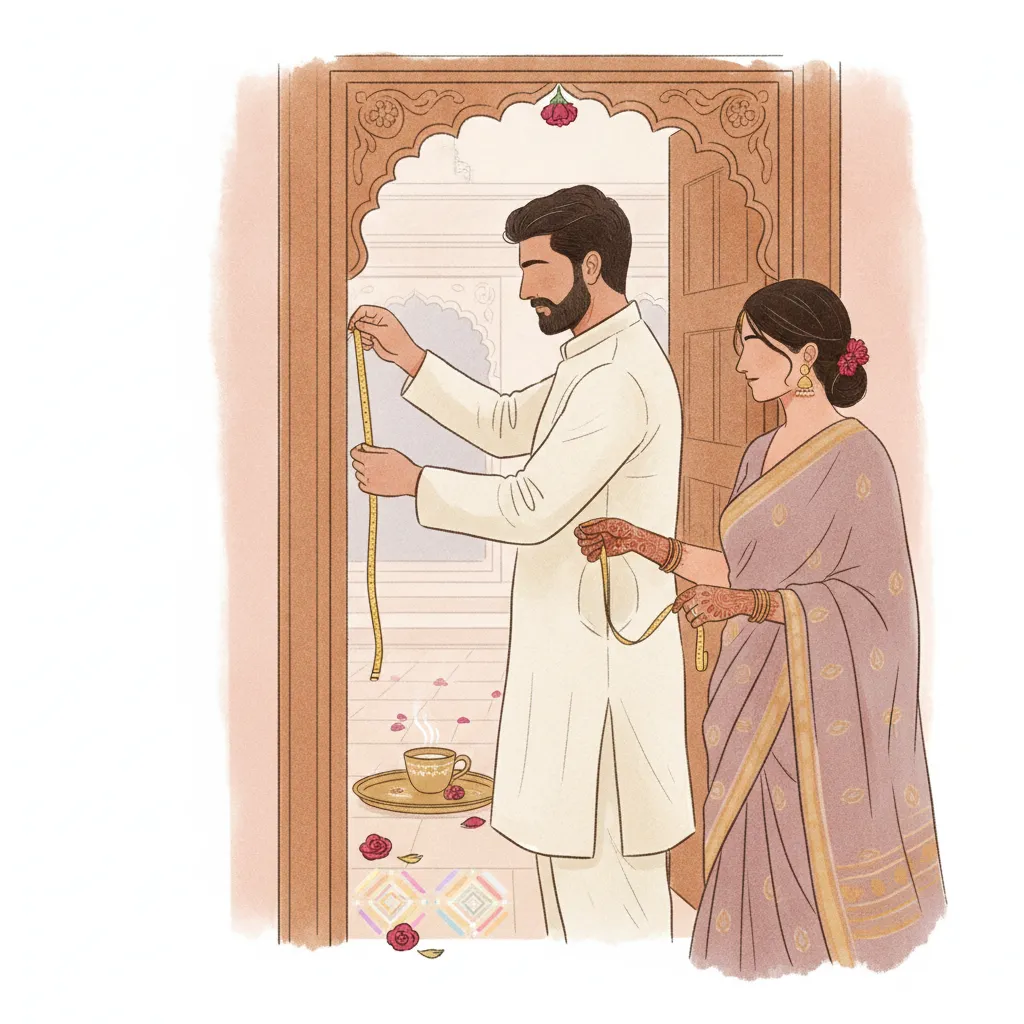
The real test of a relationship's health is not the grand, formal apology, but the constant flow of small, informal ‘repair bids.’ These are the tiny gestures of peace offered during and after a conflict: a self-deprecating joke that breaks the tension, a hand on your arm, the simple offer of a cup of tea. These are not admissions of guilt, but affirmations of connection. They say, “We are in a fight, but we are still a ‘we’.” How these bids are offered—and more importantly, how they are received—is a much deeper measure of compatibility than the most perfectly worded formal apology. A person who can accept the offered tea is a person who is willing to stay on the same team, even when you disagree.
A related pattern is the Third-Party Habit. When you have a disagreement, who do they call? Does your private conflict become information for their mother or best friend within the hour? A partner who immediately triangulates conflict by bringing in outsiders is signalling that your unit is not the primary one. It makes honest, vulnerable conversation inside the marriage almost impossible, because you know every misstep will be audited by a third party who has only heard one side of the story.
From Problem to Protocol
If you discover that you and your potential partner have mismatched recovery clocks, do not panic. This is not a sign of fundamental incompatibility. It is a logistical problem that two willing and aware people can solve.
The solution is to agree on a protocol in advance, when you are both calm. The goal is to honour both needs: the need for space and the need for connection.
A good protocol looks like this: The person who needs space is responsible for calling the pause. They must do it verbally, not by just shutting down. And they must give a specific return time.
“I’m feeling overwhelmed and I can’t think clearly. I need thirty minutes. Let’s please talk again at 8 PM.”
The person who needs connection is responsible for honouring the pause. This is an act of trust. They must resist the urge to follow, to text, to force a resolution. They must trust that their partner will come back, as promised. During the pause, no decisions are made. The status of the relationship is not in question. It is simply a shared breath.
What to Actually Do This Week
This is not a theoretical exercise. After your next disagreement—no matter how small—wait a day. Then, find a quiet moment and try this.
Both of you, on separate pieces of paper, write down the answer to this question: “From the moment the argument stopped, how long did it take you to feel genuinely okay and reconnected with me again?”
Compare your answers. Not as a scorecard, but as a piece of data. Is one of you writing down “ten minutes” and the other “six hours”? There is no right or wrong number. But for the first time, you will have made the invisible visible. And that is the first step to building a life that can withstand the friction of reality, not just the perfection of a plan.