Before or After? Aligning on Physical Intimacy Without Judgment
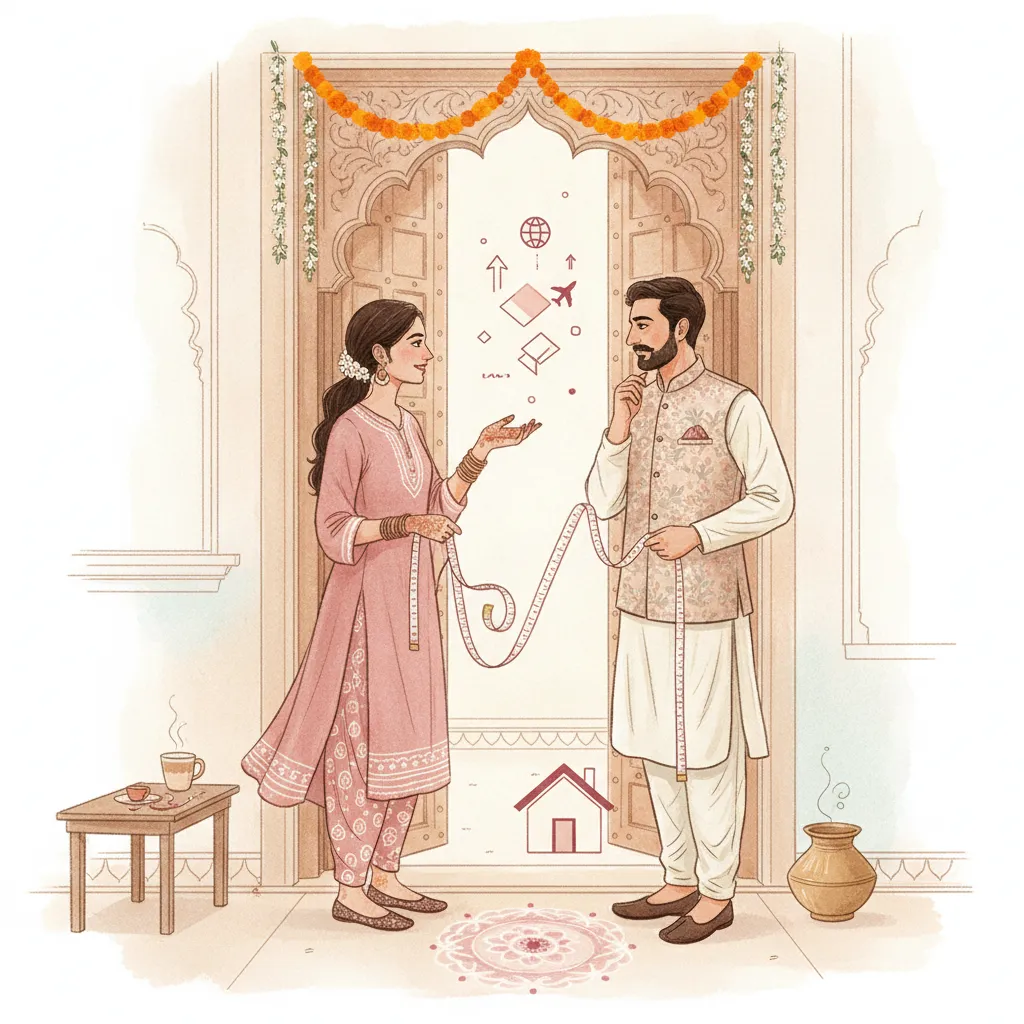
This is one of the most charged, unspoken questions in the Indian matrimonial search. The headline alone invites a debate, a taking of sides. But if you are reading this, you are not here for a debate. You are here to build a life with someone.
So let’s be direct: this article will not tell you whether physical intimacy belongs before or after the wedding. There is no single "correct" answer that applies to every person, every relationship, and every value system in India. The right answer for you is a deeply personal one, shaped by your faith, your family, your lived experience, and your private convictions.
Our goal here is not to give you an answer to believe in. It is to give you a process to discover if you and a potential partner believe in the same one. Because it is rarely the choice itself that creates a crisis in a marriage; it is the shock of discovering, months or years too late, that you were both operating on two completely different, unspoken rulebooks. This conversation is your first, best chance to see if you can write a shared one.
The Three Paths: Understanding the Spectrum of Belief
In the accelerated world of matrimonial meetings, it’s easy to assume everyone falls into one of two camps: "traditional" or "modern." The reality is far more nuanced. Most people you meet will be on one of three paths, and each path deserves to be understood, not judged.
Path 1: Intimacy as a Sacred Bond Reserved for Marriage
For many, this is not a choice but a core conviction. It is a belief, often rooted in religious teaching or a strong personal moral code, that physical intimacy is a unique and powerful act of union that is sanctified and protected by the commitment of marriage. For someone on this path, waiting is not about being "old-fashioned" or shy; it is an active expression of their values. It is about honouring a boundary they believe gives the act its deepest meaning. They see it as the final piece of commitment that unlocks only after the vows are taken, a treasure to be shared exclusively within the marital space. Approaching this topic with them requires respecting the profound significance they place on this boundary.
Example: Imagine a 32-year-old architect from Chennai. Raised in a family where faith was a quiet but constant presence, he has always viewed marriage as a spiritual as well as a social contract. For him, physical intimacy before the wedding feels like reading the last chapter of a book first. He believes the emotional, intellectual, and familial connection should be fully built and celebrated through marriage, with physical union being the final, sacred step in that journey. His stance is not born of inexperience, but of a deeply held principle.
Path 2: Physical Compatibility as a Prerequisite for Commitment
For others, physical connection is a vital language of love and an essential component of compatibility. People on this path believe that to commit to a lifetime together without knowing if you are physically compatible is a significant gamble. For them, intimacy is intertwined with emotional connection, communication, and vulnerability. It is a way to understand a partner on a different level—how they express care, how they handle closeness, and whether a fundamental sense of chemistry exists. This is not about casualness; it is about due diligence. They believe that a healthy, satisfying physical relationship is a pillar of a strong marriage, and they want to ensure that pillar can be built before laying the foundation.
Example: Consider a 29-year-old marketing head in Pune. She has been in a long-term relationship before that ended partly due to a fundamental mismatch in physical and emotional expression. She now believes that physical chemistry is not something that can be assumed or "worked on" after the fact. For her, understanding this aspect of a partner before committing is as crucial as aligning on financial goals or family values. It’s a key data point in determining long-term compatibility, and she feels it's irresponsible to enter a marriage without it.
Path 3: The Unexamined Middle
This is perhaps the largest and quietest group. It consists of individuals who may have a vague preference but have never had to truly examine it until now. Their views have been shaped by a mix of movies, conversations with friends, and parental guidance, but it has always been theoretical. Now, faced with a real, promising person, the question becomes urgent and personal. They may feel a pull towards tradition but also a curiosity about exploring compatibility. They might be open to waiting, but also open to not waiting if the connection feels right. People in this group are not indecisive; they are actively forming their conviction in real-time. Their answer often depends less on a pre-existing ideology and more on the specific person they are with and the level of trust and security they feel.
Example: A 28-year-old software engineer in Bengaluru has, until now, navigated his social life within clear boundaries set by his family and community. He has always assumed he would "do the right thing" and wait until marriage. But after several long, meaningful conversations with a woman he met through TrueSoulMatch, he feels a connection that is deeper than any he has known. The abstract rule he lived by is now colliding with a powerful, real-world emotion. He finds himself asking: What do I actually believe? Is my old rule an authentic reflection of me, or is it a default I never questioned? His journey is one of self-discovery, prompted by the possibility of a genuine partnership.
The Two Conversations You're Actually Having
In the Indian context, aligning on intimacy is rarely a simple, private decision between two people. Every couple has to successfully navigate two distinct conversations, one spoken and one often silent.
The Private Conversation: What You and Your Partner Truly Believe
This is the core alignment. It is about your personal values, your comfort levels, and your mutual consent. It's the conversation where you discover if you are both on the same path from the spectrum described above. Can you arrive at a shared agreement that you both feel good about, free from pressure or resentment? This is the foundation. If you cannot agree here, in private, the public dimension becomes almost impossible to manage.
This is part of the essential set of deep discussions every couple must have. Just as you would in our "50 Questions to Ask Before You Say Yes" guide, this conversation requires radical honesty. It is also a precursor to the frank discussions outlined in "Talking About Sex and Intimacy Without Shame," because how you handle this question predicts how you will handle those conversations within marriage.
The Public Conversation: What Your Families Expect and Assume
This is the uniquely Indian layer of complexity. You and your potential partner might privately agree to wait until marriage. Or you might privately agree that exploring physical intimacy is important to you both. But your families operate on their own set of assumptions about how a "respectable" courtship proceeds.
Their rules might be about chaperoned dates, curfews, or the absolute prohibition of overnight trips. A couple can be in perfect private alignment but find themselves in constant conflict with their families' expectations. This creates a stressful dynamic of secrecy and potential discovery that can strain the relationship before it even begins. You are not just managing your relationship; you are managing your families' perception of it. Therefore, you must discuss this as well: How will we, as a couple, navigate our families' expectations during this time? What are our shared boundaries?
Example: A couple meeting in Delhi—both in their early thirties—privately agree that they want to spend a weekend away together to see how they fare outside the structured environment of family-supervised meetings. They feel it is a mature step towards understanding their compatibility. However, both their families would be horrified by this. The conversation they must have is not just about their desire to take the trip, but a practical, strategic one: "How do we manage this? What do we tell our parents? What is the risk if they find out, and are we both prepared to handle that fallout together?" The success of their plan depends on their ability to operate as a unified team against external pressures.
How to Have the Conversation Without the Awkwardness
Knowing you should talk about it and knowing how are two different things. This conversation requires tact, courage, and a safe environment.
When to Bring It Up
This is not a first-call topic. The first few conversations are for establishing basic rapport and shared interests. But do not wait too long. A good time is after you have both established clear, mutual interest in moving forward and have spent some meaningful time talking (whether over several long phone calls or a few meetings). It should be raised early enough that the answer can genuinely inform your decision to proceed, before deep emotional attachment makes a fundamental misalignment too painful to address.
What to Actually Say
The goal is to invite a discussion, not to issue a demand or an ultimatum. Frame the conversation around mutual understanding and honesty.
Lead with a preface that signals the seriousness and sensitivity of the topic:
- "I really value the honesty we've been building, and there’s something important I’d like for us to discuss openly, without any pressure."
- "As we think about a future together, I want to make sure we're on the same page about our values. One area that's important to be clear on is our expectations around physical intimacy before marriage."
Then, ask an open-ended question that focuses on their perspective, not just a yes/no answer:
- "Could you share your thoughts or feelings on this? I'm interested in understanding your perspective, whatever it is."
- "For me, it’s important we talk about what we both feel is the right path for us as a couple regarding physical intimacy during this courtship phase. What feels right to you?"
How to Listen to the Answer
The content of the answer is important, but the way they answer is even more revealing.
- Are they thoughtful? Do they take a moment to consider the question, or do they give a knee-jerk, rehearsed response?
- Are they curious about your view? After sharing their thoughts, do they ask for yours with genuine interest? A good partner wants to understand you, not just be understood.
- Is their reasoning based on conviction or fear? Are they explaining a deeply held value ("I believe it's special and reserved for marriage") or are they expressing a fear ("What will people say?")? Both are valid, but it tells you what motivates them.
- Do you feel safe and respected? Regardless of their answer, do you feel they are honouring your right to ask the question?
A partner who can navigate this conversation with maturity and respect, even if their initial view differs from yours, is showing you they have the skills for a healthy marriage.
Patterns to Recognise
A partner's reaction to this conversation can reveal critical information about their character. Consent, mutual respect, and the freedom to say "no" without punishment are non-negotiable. If their response includes any of the following, see it as the serious red flag it is.
- Pressure or Guilt-Tripping: Phrases like, "If you really loved me, you would..." or "After all this time, you should be ready." This is a coercive tactic, not an expression of love.
- Contempt or Shaming: Mocking your view, whether it's more conservative or more liberal than theirs. "You're so naive/old-fashioned," or "Wow, I didn't realise you were that type." A partner who shames you for your values will not respect you in a marriage.
- Punishment or the Silent Treatment: If you set a boundary they dislike and they respond by withdrawing affection, becoming cold, or ignoring your calls, they are punishing you for not complying. This is a classic manipulation technique.
- Dismissiveness: Refusing to discuss it at all. "We'll cross that bridge when we come to it," or "That's not something proper people discuss." A partner who cannot handle this vulnerable conversation will be unable to handle the many others a marriage requires.
A crucial note on safety: If you recognise these coercive patterns in a potential partner and decide to end the relationship, please prioritise your safety. Inform a trusted friend or family member of your decision first. The moment you state your intention to leave can sometimes be a high-risk one. You do not need to manage their reaction alone.
The Real Test of Your Partnership
Ultimately, this conversation was never really about the "before or after" timeline. That is just the topic.
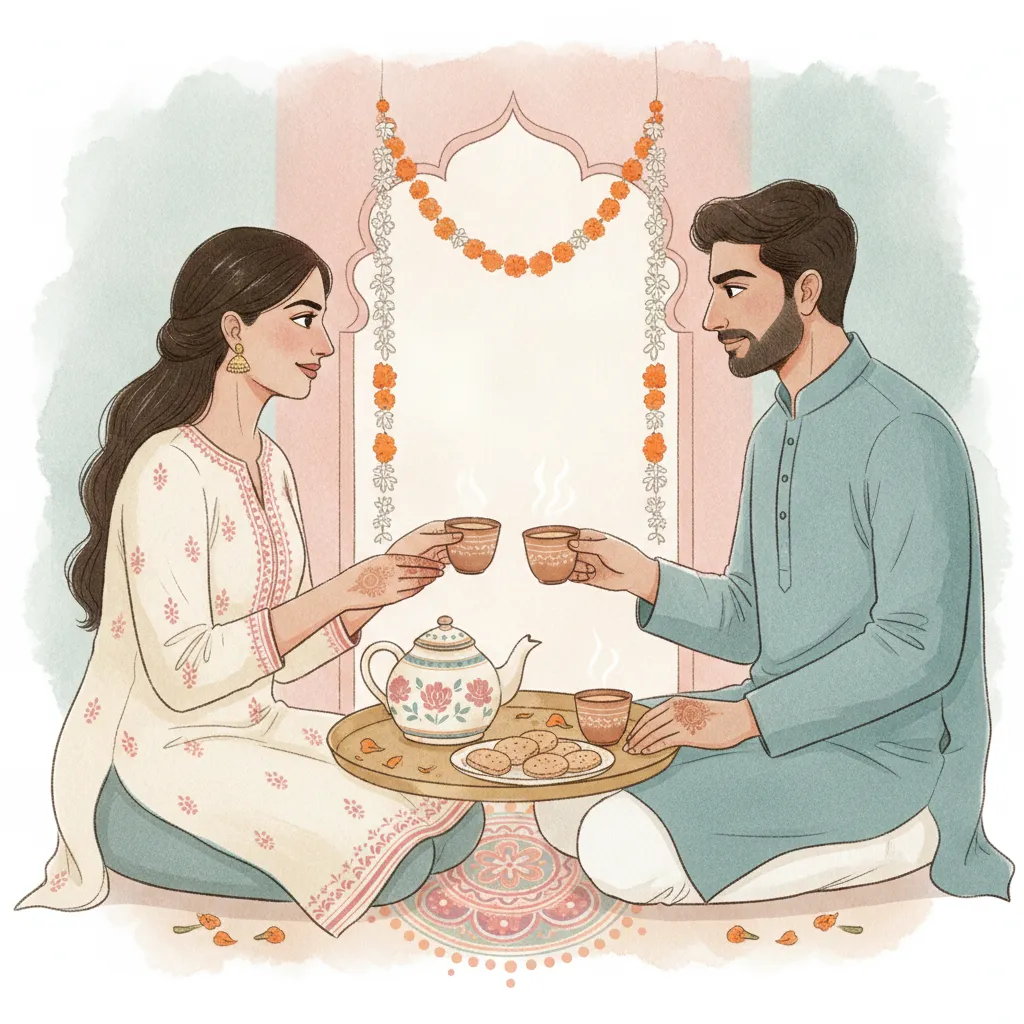
The real test is this: can the two of you, as potential life partners, take on a vulnerable, emotionally charged subject, listen to each other with respect, and build a shared path forward that you both own?
A couple that can start from different points—one wanting to wait, the other hoping to explore compatibility—and have a respectful conversation about their reasons, fears, and hopes, can find a third way. This might be a compromise, or it might be one person thoughtfully and freely coming around to the other's perspective. The outcome matters less than the process.
If you can do it on this topic, you can do it when you disagree about money, about how to raise children, or about how to care for ageing parents. You are building the muscle of your partnership. The ability to turn a potential "me vs. you" conflict into a "how do we solve this?" collaboration is the single most important skill a marriage needs to survive and thrive.
That is the true prize. Not winning an argument, but building a team.
Ask Yourself
Before you have this conversation with anyone else, have it with yourself. Take a few minutes this week to reflect, away from the pressure of family or a specific match.
- What do I truly believe about physical intimacy and marriage, and why?
- Where did this belief come from? My faith? My family? My personal experiences?
- Is this belief a firm conviction or a flexible preference?
- What would I need to feel safe, respected, and ready with a partner, regardless of the timeline we choose?
Knowing your own mind is the first step to being able to discuss it clearly and confidently with the person who might one day be your partner for life.