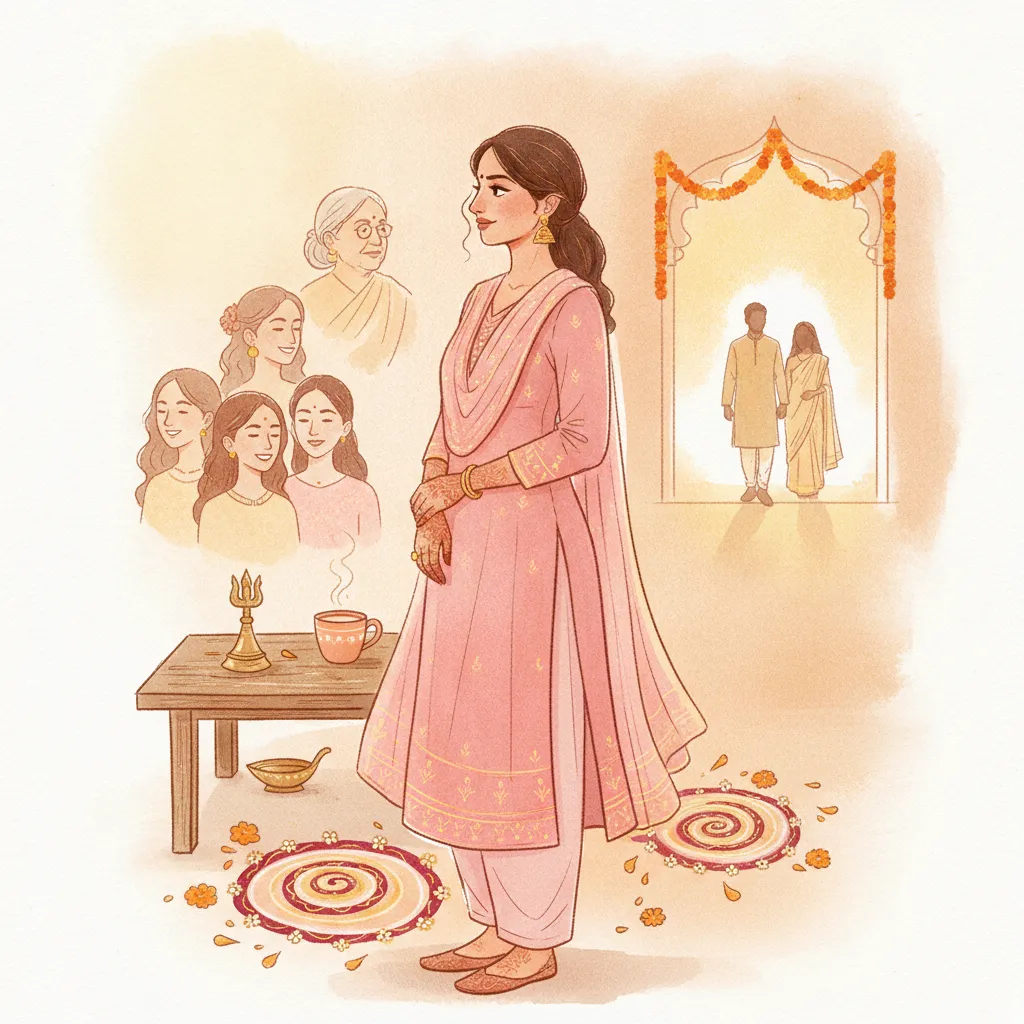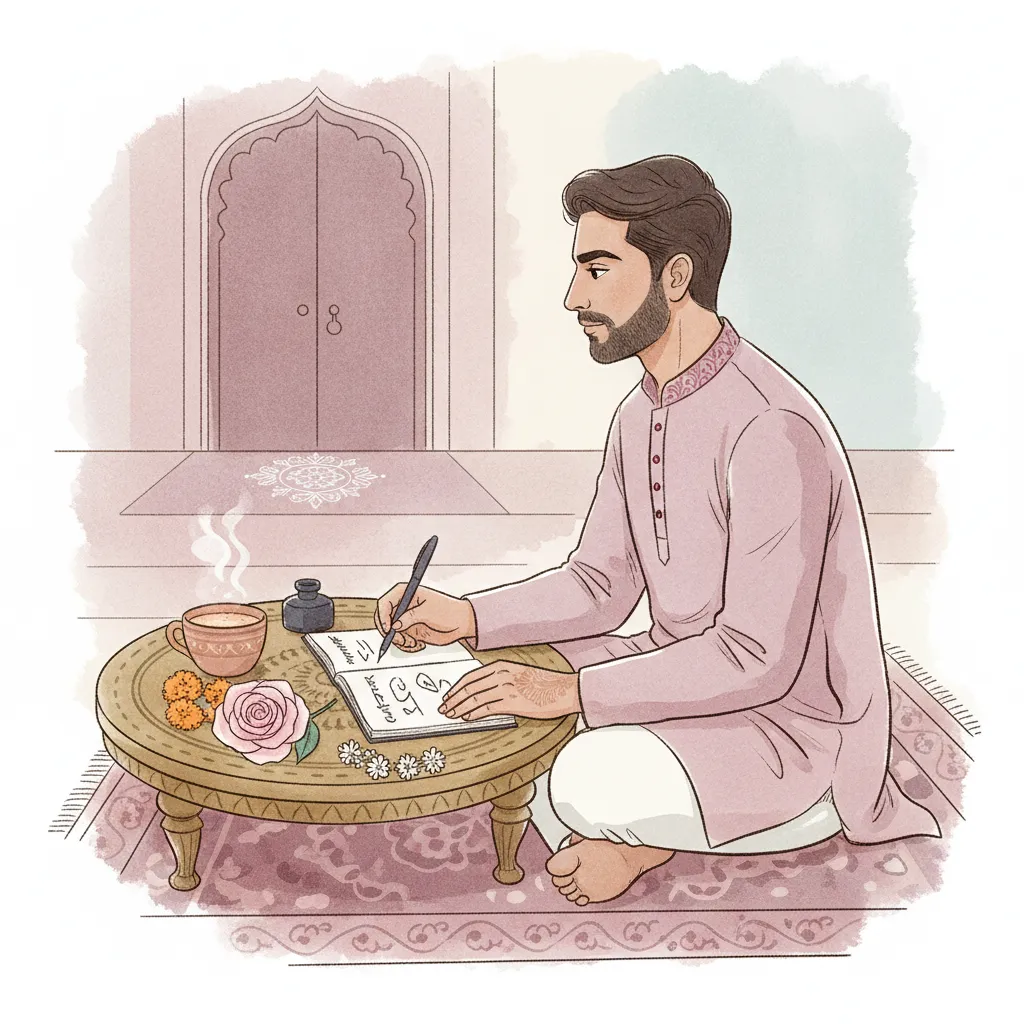
Imagine a couple, Rina and Akash, five years into their marriage in a bustling Mumbai apartment. Tonight, they’re facing a familiar challenge: a disagreement about how to support Akash’s younger sister, who’s struggling with her college studies. Rina feels they should offer practical help, like tutoring fees, while Akash, influenced by his parents, believes they should also bring her to live with them for a semester. The air is thick with unspoken family expectations and differing ideas of support.
But instead of a shouting match or silent resentment, Rina pauses. "Akash," she says gently, "I understand your loyalty to your sister and your parents' wishes. But earlier, when we first met, we talked about our boundaries regarding extended family living with us, and we agreed on a plan for handling financial support for siblings. How do you feel about revisiting that agreement now, considering the new situation?"
Akash takes a deep breath. He recalls their early conversations, not just about finances, but about their core values: mutual respect, clear communication, and the importance of their shared vision for their own immediate family. They had actively sought out these conversations, not shied away from them. He responds, "You're right. Let's look at the financial aspect again and talk about what we both feel is the best way forward, without making assumptions."
This isn't a fairy tale. This is the reality of a marriage built on intentional choice, not just being chosen. Rina and Akash understood that a lifelong partnership requires constant navigation, not just initial compatibility. They built their marriage by actively looking for substance, by asking the hard questions, and by prioritising their own alignment over external pressures. This article is about empowering you to do the same.
The Cultural Framing: "What Do They Want In Me?" vs. "Do I Actually Want Them?"
In the vibrant tapestry of Indian matrimonial searches, a common thread weaves through countless conversations: "What are they looking for?" "Will I meet their family's expectations?" "Am I fair, tall, educated, settled, traditional, modern, compliant enough?" From the moment a profile is created to the first family meeting, the focus often leans heavily on presenting oneself as the "ideal" candidate – someone who is pickable, desirable, and acceptable to the other family.
This cultural emphasis is understandable. Family honour, social standing, and collective harmony often dictate the initial parameters of a match. You’re often taught, implicitly or explicitly, to tailor your aspirations, even your personality, to fit a mould designed by others. A young man might downplay his artistic ambitions if the family values a stable corporate job; a young woman might hesitate to express her desire for an independent career if the expectation is a more domestic role, especially within a joint family setup. The pressure to secure a "good match" quickly, to avoid delaying the process, further amplifies this "being chosen" mindset.
Consider a 28-year-old woman in Bengaluru, Meena. She’s a successful software engineer with a passion for trekking and a desire for an equal partnership. Yet, as she prepares for matrimonial meetings, her family gently advises her to speak more about her cooking skills than her hiking adventures, and to imply a willingness to "adjust" to any living situation, even if she secretly hopes for more independence. Meena finds herself rehearsing answers, not to express her true self, but to become what she perceives the other family wants. She's focusing on their criteria, not her own.
But a truly fulfilling marriage is a collaboration, a shared journey, not a transaction where one party is merely selected. This journey begins with a profound shift in perspective: from asking "What do they want in me?" to "Do I actually want them? Do they align with my values, my vision for a shared life, my emotional needs?" This isn't about selfishness; it's about self-awareness and the foundational integrity required for a lasting partnership.
This shift empowers you. It turns you from a passive applicant into an active evaluator. It means understanding that while family approval is important, your inner conviction and genuine desire for that specific person are paramount. Because when the initial excitement fades, when life throws its inevitable challenges, it will be the strength of your shared values and mutual respect that sustains you, not how perfectly you fit someone else's checklist.
What to Actively Look For and Like in a Partner – Not Just Things to Avoid
Once you've made the crucial shift to actively choosing, the next step is knowing what to look for. This isn't about a superficial checklist of height, salary, or city – though those are often initial filters. It's about delving into the heart of a person's character and how they navigate the world. Beyond avoiding "red flags" (like anger issues or financial instability), what are the "green lights" that signal a potentially thriving partnership?
Think about the texture of daily life, the unseen qualities that make a home feel safe, supportive, and joyful.
What to look for:
- Emotional Intelligence and Self-Awareness: Do they understand their own emotions and how they impact others? Can they reflect on their actions, apologize sincerely, and express empathy? This is not just about being "nice," but about a capacity for deep connection and repair.
- Example: During a conversation, perhaps about a past disagreement they had with a friend, do they only blame the other person, or do they show some understanding of their own role and how they might have contributed?
- Respect for Autonomy and Boundaries: Do they respect your choices, your career aspirations, your friendships, and your need for personal space? Do they listen without interrupting or trying to control the narrative? This is especially vital in an Indian context where individual boundaries can often be blurred by family expectations.
- Example: You mention a desire to pursue further education after marriage. Do they genuinely engage with this, discussing practicalities and support, or do they subtly shift the conversation to household responsibilities or future children, hinting at a lack of support for your independent goal?
- Growth Mindset and Adaptability: Life is change. Does your potential partner show a willingness to learn, adapt, and grow, both individually and as a couple? Are they open to new experiences and perspectives, or rigid in their views?
- Example: They talk about a past challenge – a job loss, a family crisis – and describe not just the difficulty, but what they learned from it and how they changed their approach subsequently.
- Demonstrated Kindness and Compassion: How do they treat service staff, their elders, animals, or even strangers? True kindness isn't reserved for those they want to impress. It's a consistent characteristic.
- Example: You observe them interacting with a waiter at a restaurant. Do they speak politely and show appreciation, or are they dismissive or demanding?
- Shared Vision for Family Life and Responsibilities: This is crucial. Discussing expectations around joint vs. nuclear family living, roles in childcare, division of household labour, and involvement with in-laws (especially for the woman's stridhan and financial autonomy) is non-negotiable.
- Example: A 30-year-old man in Pune talks about his expectation that his wife will primarily manage the household, even if she works, because "that's how it's always been in my family." This isn't necessarily a "red flag" if you share that vision, but it's a clear signal to evaluate against your own vision for partnership. If your vision is one of shared responsibility, this is a misalignment.
- Financial Maturity and Transparency: How do they manage their money? Are they fiscally responsible, or do they have significant undeclared debts? Are they open to discussing financial planning as a joint venture, or do they keep finances opaque?
- Example: When the topic of finances comes up, do they offer generalities, or are they willing to discuss their approach to savings, investments, and how they envision shared financial decisions? This isn't about asking for bank statements immediately, but about their attitude towards financial partnership.
- Ability to Handle Conflict Constructively: Disagreements are inevitable. Do they shut down, become aggressive, or can they engage in respectful dialogue, even when upset? Do they aim for resolution or simply to "win" an argument?
- Example: They recount a conflict with a sibling or friend. Do they frame it as a learning experience or simply express anger and resentment, showing no personal accountability?
These are not easy traits to assess in a few meetings, but they are the bedrock of a lasting partnership. They require keen observation and, importantly, the courage to ask probing questions.
How to Ask Hard Questions in Early Meetings Without Being Seen As "Too Much" – And Why Being Seen As "Too Much" Is Itself a Useful Filter
In the accelerated timeline of many Indian matrimonial searches, there's often an unspoken pressure to keep conversations light, positive, and focused on superficial compatibility. Asking direct, "hard" questions might feel pushy, inappropriate, or even make you worry about being perceived as "too much" – too demanding, too intense, too unfeminine/unmasculine.
However, these early meetings are your only opportunity to gather crucial information before making a life-altering decision. Frame your questions not as an interrogation, but as a genuine attempt to understand their perspective, values, and how they navigate life's complexities. This demonstrates maturity, intentionality, and a commitment to building a solid foundation.
Here’s how to approach it, along with examples:
-
Frame it in terms of "understanding alignment" and "future vision":
- Instead of: "Are you okay with me working after marriage?"
- Try: "My career is very important to me, and I envision continuing to grow professionally even after marriage. How do you see our professional and personal lives blending and supporting each other's aspirations?"
- Scenario: A 29-year-old woman in Hyderabad, aspiring to a leadership role, brings this up. The potential match might respond by saying, "I admire ambition. My only concern is how we'd manage family responsibilities. What are your thoughts on sharing household duties?" This opens a productive conversation. Or, they might say, "Well, typically, after marriage, women tend to focus more on the home. We can discuss it then." The latter response is a clear signal of differing expectations.
-
Use hypothetical scenarios to gauge their values and problem-solving approach:
- Instead of: "Will you support me if my parents need financial help?"
- Try: "Family responsibilities are significant in our culture. Imagine a situation where one of our parents faces a sudden health crisis and needs financial support. How would you envision us approaching that discussion and making decisions together?"
- Scenario: A potential match is asked this. They might immediately say, "Of course, my parents come first," or "We'll cross that bridge when we come to it." A more aligned answer would be, "That's a difficult situation, but one we'd need to face as a team. I'd want to discuss our joint resources, consider what's fair and sustainable, and make a decision we both agree on."
-
Address joint family dynamics directly, but respectfully:
- Instead of: "Will your parents interfere in our lives?" (Too accusatory)
- Try: "I value family deeply, and I respect the importance of elders in our culture. As we build our own life together, how do you envision the balance between our immediate family decisions and the guidance or involvement of our parents and extended family?"
- Scenario: A 27-year-old man from a joint family in Jaipur is asked this. He might explain his family's traditions, but also share his personal views on balancing respect with autonomy. His comfort in discussing this openly, rather than becoming defensive or dismissive, is a key indicator.
-
Inquire about financial philosophy, not just income:
- Instead of: "How much do you earn?" (Usually considered impolite initially)
- Try: "Financial stability and planning are important for a shared future. Could you share a bit about your philosophy towards savings, investments, and how you see us managing our finances as a couple?"
- Scenario: A match might reveal their disciplined saving habits or their desire for financial independence, or they might evade the question or become uncomfortable. Their comfort and transparency in this area speaks volumes.
Why Being Seen As "Too Much" Is a Useful Filter
This is perhaps the most crucial insight. If someone is put off by your earnest desire for clarity, by your willingness to discuss the real issues of a shared life, then they are not the right partner for you. Their reaction is not a reflection of your inadequacy, but a vital piece of information about their readiness for a deep, honest, and mature partnership.
- If they get defensive: It might indicate an unwillingness to be vulnerable, a lack of self-awareness, or a preference for avoiding conflict rather than resolving it.
- If they dismiss your concerns as "trivial": It suggests they may not respect your needs or take your perspective seriously.
- If they become angry or controlling: This is a significant red flag. A partner who reacts with anger or attempts to shut down genuine inquiry is signaling a potentially unhealthy power dynamic. If you ever find yourself in a situation where a potential partner reacts with anger, threats, or attempts to control you, always prioritize your safety. Confide in trusted friends or family, and seek professional support if you feel threatened or unsafe. Leaving such a situation can be a high-risk time, so plan carefully and seek support.
- If they try to pressure you into silence: This shows a lack of respect for your voice and autonomy.
Consider the example of a 32-year-old man in Delhi, Suresh, who believes women should always prioritize family over career after marriage. When his potential match, Priya, respectfully inquires about his views on shared financial responsibilities and her career growth, Suresh becomes visibly uncomfortable, saying, "Why are you asking such difficult questions? Don't you trust me? These things can be figured out later." Priya might feel like she's "too much" in that moment. But in reality, Suresh has just revealed that he is not a partner who will openly discuss and respect her aspirations, making him a mismatch for her vision of marriage. He filtered himself out.
Embrace being "too much" for the wrong person. It saves you years of misunderstanding and potential heartache. The right person will appreciate your thoughtfulness, your depth, and your commitment to building a solid, transparent foundation.
What to Actually Do This Week
This week, identify one "hard question" that is genuinely important to you for a long-term partnership (e.g., approach to finances, expectations around career, family involvement, or conflict resolution). Practice phrasing it respectfully and openly. In your next conversation with a potential match, or even in a reflective journal, ask yourself this question from the perspective of "Do I actually want them?" Pay less attention to their initial answer, and more attention to how they respond – their body language, their willingness to engage, their tone, and whether they reciprocate with questions about your perspective. This exercise will begin to rewire your focus from being chosen to actively choosing.
A great marriage isn't a lottery win; it's a meticulously crafted edifice, built brick by brick on a foundation of shared values, open communication, and mutual respect. The initial choices you make, the questions you dare to ask, and the clarity you seek, determine the strength of that foundation. Imagine Rina and Akash, twenty-five years later, still navigating life's complexities, perhaps even watching their own children make these critical choices. Their ability to do so will be rooted in the courage they found early on to choose deliberately, not just to be chosen.