In the journey towards finding a life partner on TrueSoulMatch, much emphasis is rightly placed on understanding your prospective match as an individual. You spend time discerning their values, aspirations, and personality. However, in the rich tapestry of Indian society, marriage is never solely about two individuals; it is the merging of two families, two systems. When you say "yes" to a partner, you are also, in many ways, saying "yes" to their family.
This article is designed to equip you with a discerning eye for those crucial first meetings with a prospective partner's family. Far from being a mere formality, these interactions offer a unique window into the daily realities of the home and family culture you might soon join. By the end of this read, you will feel more confident in recognising patterns of interaction, understanding the subtle cues of family dynamics, and making a more informed decision about your future. You will learn to look beyond the immediate hospitality and observe the underlying currents that truly define a household.
Watch how they speak to their parents (respect vs fear vs contempt)
The way an individual interacts with their parents is one of the most direct reflections of their upbringing, their personality, and crucially, their potential behaviour within a marital relationship. In the Indian context, where reverence for elders is deeply ingrained, observing these interactions goes beyond mere politeness. It reveals the true nature of their respect, the presence of any unresolved conflicts, or perhaps, a troubling undercurrent of fear or disdain.
Consider the spectrum:
- Genuine Respect: This manifests as attentive listening, polite disagreement (if at all), an eagerness to help, and a tone that is warm and considerate. They might offer opinions respectfully, even if differing, but always maintain a courteous demeanour. They value their parents' wisdom and experience but are also capable of independent thought.
- Fear: This is often seen in a partner who is overly compliant, avoids eye contact, speaks softly to the point of being hesitant, or quickly changes their own stance to mirror their parents' opinions. While it might superficially look like respect, it often stems from a fear of disapproval, criticism, or emotional withdrawal. Such an individual may struggle with autonomy and may find it challenging to stand up for their spouse in future family discussions.
- Contempt/Disregard: This can be subtle but damaging. It might appear as impatience, frequent eye-rolling (even if quick), interrupting parents, dismissive gestures, or a condescending tone when parents share an opinion. They might speak about their parents negatively when out of earshot, or outwardly express frustration over minor requests. This indicates a deeper lack of esteem and can suggest a person who struggles with empathy or respectful communication more broadly.
Scenario for Observation:
Imagine you are visiting the family of a prospective match, a 28-year-old software engineer in Bengaluru. His mother asks him to fetch a particular file from his room.
- Genuine Respect: He might say, "Of course, Amma," and promptly go, perhaps offering to do anything else needed while he's up.
- Fear: He might freeze slightly, his eyes darting to his father, before quickly saying, "Yes, Amma," and hurrying off, perhaps looking stressed.
- Contempt/Disregard: He might sigh audibly, roll his eyes subtly at you or his father, and respond with a grudging, "I just sat down, Ma," before slowly getting up with a noticeable lack of enthusiasm.
Patterns to recognise:
- Verbal Cues: Listen for tone of voice (gentle, firm, aggressive, mocking), choice of words (respectful address vs. casual dismissiveness), frequency of interruptions, and how disagreements are handled. Does your prospective partner shout, sulk, or engage in calm discussion?
- Non-Verbal Cues: Observe body language – eye contact (direct vs. avoiding), posture (relaxed, tense, defensive), facial expressions (smiles, frowns, smirks), and gestures (supportive vs. dismissive).
- Decision-Making: Who initiates decisions, and whose opinion carries the most weight? Does your prospective partner respectfully voice their own opinion, or do they always defer to their parents without genuine thought?
- Handling of Mistakes/Criticism: How does your match react when a parent points out a mistake or offers criticism? Do they accept it gracefully, explain respectfully, or become defensive/sullen?
How parents speak to staff, neighbours, and you (a tell of the home culture you are joining)
Beyond the interactions within the immediate family, pay close attention to how the parents of your prospective partner treat those outside their inner circle. This offers profound insights into the underlying values and emotional climate of the home you might be entering. True character is often revealed not in how one treats equals or superiors, but in how one treats those perceived to be "below" them, or those with whom they have no direct familial obligation.
The way parents interact with domestic staff, drivers, delivery personnel, watchmen, or even neighbours and extended relatives, speaks volumes about their empathy, humility, and sense of fairness. Are they respectful and polite, or do they display condescension, impatience, or even outright rudeness?
Similarly, how they speak to you during your initial meetings is critical. While hospitality is a cornerstone of Indian culture, look beyond the surface warmth. Are their questions genuinely curious and warm, or are they probing and intrusive? Do they listen to your answers, or are they waiting for their turn to speak or judge?
Scenario for Observation:
Consider a family gathering at a prospective partner’s home in Chennai. Tea and snacks are being served by the domestic help.
- Respectful Home Culture: The parents might thank the help, engage in a brief, polite exchange, and ensure everyone is served. They might even offer the help a snack or drink. Their tone would be appreciative and gentle. Later, they might speak of a neighbour's family, expressing genuine concern for a recent health issue or celebrating a professional achievement, rather than gossiping or judging.
- Dismissive Home Culture: The parents might bark orders, speak to the help without making eye contact, or complain loudly about a minor delay. Their tone could be demanding or dismissive. When discussing neighbours or relatives, they might engage in gossip, share private details, or express superiority or disdain, even if subtly.
Patterns to recognise:
- Treatment of Domestic Staff/Service Providers: Observe the tone of voice, level of patience, and general demeanour. Do they use respectful terms of address? Are requests framed politely or as commands? Do they acknowledge their humanity and efforts?
- Conversations about Others: Listen to how they discuss neighbours, distant relatives, or people from different social or economic backgrounds. Is there empathy, respect, or a tendency towards judgment, gossip, or superiority? This reflects their broader worldview and how they might perceive your own family or future friends.
- Hospitality vs. Interrogation (towards you): Are they genuinely interested in getting to know you, or are their questions framed to extract information for judgment? Do they listen actively, or are they dominating the conversation? Do they respect your boundaries if you politely decline to answer a personal question?
- Financial Disclosures: Do they subtly (or overtly) discuss their own wealth or others' financial struggles in a boastful or demeaning way? This can indicate a focus on material status over character.
What healthy boundaries look like in an Indian joint-family context, and what enmeshment red flags look like
The concept of "boundaries" can sometimes feel Western or individualistic, especially within the closely-knit fabric of Indian joint families. However, healthy boundaries are not about creating distance or disrespect; they are about fostering mutual respect, clear communication, and allowing space for individual growth and the flourishing of the marital bond, even within a collective unit. They define where one person ends and another begins, ensuring personal space and autonomy are preserved without undermining familial ties.
In an Indian joint-family context, healthy boundaries might look like:
- Respectful Autonomy: While major life decisions (like career changes or buying property) might involve family discussions, the ultimate decision-making power rests with the individual or couple. Parents offer advice, not mandates.
- Space for the Couple: The newly formed couple is given the physical and emotional space to build their own relationship, make joint decisions, and nurture their intimacy without constant parental oversight or interference. This includes respecting their privacy.
- Mutual Support, Not Dependence: Family members support each other through challenges, but individuals are encouraged to be self-reliant and emotionally independent. Adults do not rely solely on parents for emotional regulation or decision-making.
- Clear Roles: While roles can be fluid, there's a clear understanding of who is primarily responsible for what, avoiding constant undermining or cross-talk.
- Respectful Disagreement: It’s understood that family members may have differing opinions, and these can be expressed respectfully without leading to guilt-tripping or emotional blackmail.
Enmeshment, on the other hand, describes a family system where boundaries are blurred or non-existent. Individual identities are merged with the family identity, often leading to a lack of personal space, emotional over-involvement, and difficulty in achieving autonomy. This is a significant red flag in the matrimonial search because it directly impacts the ability of the prospective couple to form their own independent unit.
Scenario for Observation:
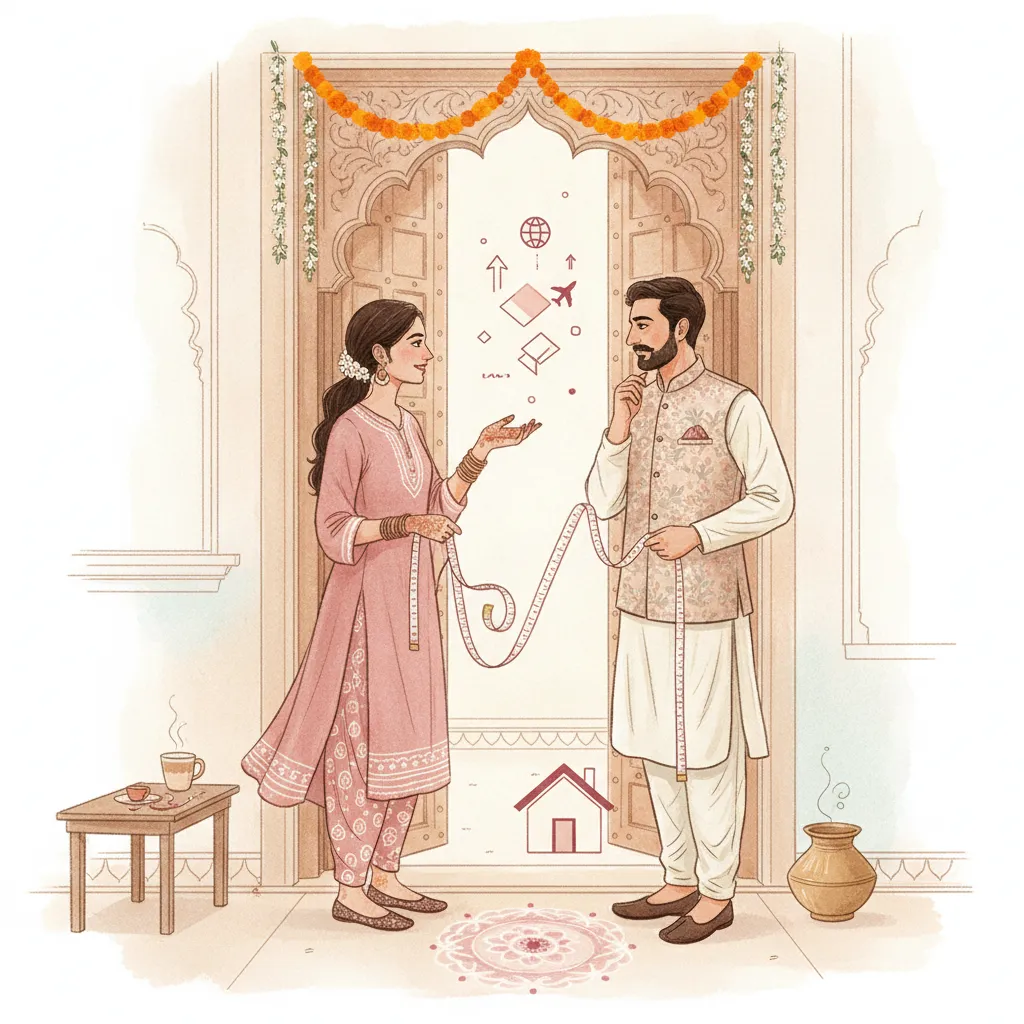
Imagine you are having a conversation with your prospective partner and their mother about where you both might live after marriage, assuming you have an apartment preference in mind.
- Healthy Boundaries: Your prospective partner might say, "Amma, we've been discussing this, and while we appreciate your input, we're leaning towards the apartment in Koramangala because of its proximity to our workplaces. We'd love for you to visit often." The mother might express her preference but ultimately respect their decision, perhaps saying, "I understand your reasons; as long as you're both happy."
- Enmeshment Red Flag: Your prospective partner might immediately defer to their mother, saying, "Amma knows best, whatever she decides is fine." Or, the mother might interject, "Nonsense, that area is too far. You will live in the family home/the apartment next door, as we discussed," without allowing her child or you to voice an opinion. The prospective partner might then look uncomfortable but say nothing in response to their mother's firm directive, or quickly agree.
Patterns to recognise (Enmeshment Red Flags):
- Lack of Privacy: Do parents frequently enter their adult child's room without knocking, listen in on phone calls, or expect to be privy to all personal conversations?
- Emotional Over-involvement: Do parents display excessive anxiety or distress over their adult child's minor issues, or demand constant emotional reassurance? Is guilt a common tool used to influence decisions?
- Decision-Making Control: Do parents dictate major life choices (career, finances, residence, even daily routines) for their adult children without their genuine input or consent? Is the prospective partner unable to make a decision without explicit parental approval?
- Financial Dependence/Control: Is the adult child completely financially dependent on parents, even when earning, or do parents exert undue control over their adult child's finances? (This is different from healthy financial planning within a joint family, which involves transparent discussion and mutual agreement).
- Lack of Independent Identity: Does the prospective partner primarily define themselves through their family roles ("my father's son," "my mother's daughter") rather than as an individual with distinct aspirations and opinions?
- Triangulation: Instead of directly addressing an issue with their child, do parents involve a third party (like an aunt, uncle, or even you) to communicate their desires or express their displeasure?
- "We" instead of "I": While a sign of family unity, an excessive use of "we" (e.g., "We believe...", "We want...") when discussing personal preferences or decisions of the prospective partner can indicate a lack of individual autonomy.
What to actually do this week:
Before your next family meeting, reflect on what your ideal family dynamic looks like. What level of independence and shared decision-making do you hope for in your marital home? During the meeting, actively observe without judgment initially. Afterwards, take some time to jot down specific instances you observed related to each point discussed:
- How did your prospective partner respond to a parent's request or opinion?
- How did the parents treat a service provider or speak about a neighbour?
- Did you notice any subtle cues about decision-making authority or privacy within the family?
Ask yourself: Do these observations align with the kind of family environment you wish to be a part of? Can you envision yourself thriving and building a strong, independent marital bond within these dynamics?
Choosing a life partner is a profound decision, and understanding the family system you will be integrating into is as crucial as understanding the individual. By becoming a keen observer, you empower yourself to make a choice that supports not just your partner, but your entire future life together. Focus on recognising the patterns that will sustain a fulfilling marriage, allowing you to build a foundation of true connection and mutual respect.