You are at her parents’ house in Kochi for the second time. The conversation is easy, the food is excellent, and you find yourself relaxing. This feels promising. Then, her father makes a sharp comment about her younger brother’s choice of career—he’s a musician, not an engineer. You watch, waiting for the explosion.
It never comes. Her brother deflects with a joke. Her mother changes the subject. And your potential partner says nothing at all, her expression unreadable. Later, she tells you, “That’s just how Papa is. It’s easier to let it go.”
Many men, conditioned to seek a peaceful, agreeable home, would file this away as a positive sign. She’s not argumentative. She respects her elders. She keeps the peace. But what you have just witnessed is not peace. It is a conflict management strategy. And it is the single most reliable piece of data you will get on how disagreements in your own future home will be handled.
The goal is not to judge her family. It is to understand the toolkit she was given. When a disagreement arises between you and her, or between her and your mother, she will reach for the tools she knows how to use. The scene at her family’s table is a preview of her entire workshop. Your job is to look inside it, and to consider how her tools will mesh—or clash—with the ones you were given in your own family.
The Four Family Operating Systems for Disagreement
Every family has a default way of handling conflict. It’s their 'operating system'. It runs in the background, so ingrained that they often don’t see it as a choice, but simply as “the way things are.” Your task is to observe which system her family—and by extension, she—runs on. Most fall into one of four categories.
The Open Forum: Direct and Respectful Assertion
In these families, disagreement is normal and not a crisis. Opinions are stated, even if they conflict with an elder’s. The key is that the conflict is about the issue, not the person. Voices might get a little louder, but names aren't called, and old grievances aren't brought up.
- What it looks like: Her father says he thinks her plan to take a sabbatical from her teaching job to get a master's is a financial mistake. She responds, calmly, "I understand your concern about the money, Papa, but I've run the numbers. The higher salary post-degree will make up for the lost income in three years. I've brought my spreadsheet to show you."
- What it predicts: This is the gold standard for collaborative problem-solving. It tells you she has the tools to state her needs, to hear your concerns without seeing them as an attack, and to work towards a solution. She will expect you to do the same. But this style isn't without its own potential pitfalls. For someone raised in a more emotionally expressive (or volatile) family, the Open Forum can feel slow, overly procedural, and emotionally detached. When you’re upset, you may want a fight and a resolution, not a meeting with an agenda and a spreadsheet. Overused, it can feel less like an intimate partnership and more like a business negotiation, prioritising process over passion.
The Pressure Cooker: Passive Complaint and Triangulation
Here, direct confrontation is avoided at all costs. Instead, dissatisfaction is expressed through sighing, complaining to a third party, or making passive-aggressive remarks. The problem is never addressed with the person who could solve it.
- What it looks like: Her mother is unhappy that your family wants the wedding in your hometown of Guwahati. She doesn't say this to your potential partner or to you. Instead, she spends the evening complaining to her son about the price of air tickets and how difficult travel is for old people. Your potential partner, overhearing this, just looks stressed.
- What it predicts: This is a pattern of indirect communication that creates allies and enemies instead of solutions. In your marriage, when she is upset with you, she may complain to her mother or her best friend rather than to you. She may try to get your parents on her side in a disagreement. This isn't malicious; it's the only way she's learned to have her needs met—by gathering support and applying pressure from the outside.
The Battlefield: Open Hostility and Personal Attacks
Some families operate in a state of constant, low-level warfare. Disagreements escalate quickly into shouting matches. The goal is to win, often by making the other person feel small. Personal history is weaponised, and apologies are rare.
- What it looks like: A simple discussion about who was supposed to pick up a relative from the station turns into a shouting match between her parents. "You always do this!" one says. "You're just as useless as your brother!" the other retorts. Your potential partner either jumps in with equal fire, or withdraws completely, looking exhausted.
- What it predicts: She has learned that love and conflict are loud, painful, and personal. She may either replicate this pattern, believing that shouting is how you show you care, or be so conflict-averse that she shuts down at the first sign of a raised voice. A person raised in a warzone either becomes a warrior or a refugee. Neither is a foundation for partnership.
- The Calibration: One terrible argument does not make a pattern. The threshold is recurrence and irrelevance. If you see this level of hostility erupt on two separate occasions over unrelated issues—one about picking up a relative, another about a financial decision—you are seeing the system, not a bad day. Don't mistake this for its innocent twin: the passionate family. Passionate families argue loudly, wave their hands, and talk over each other, but the fight is about the issue at hand. They resolve it, they apologize, and ten minutes later they are laughing and reconnecting. The Battlefield family doesn’t resolve anything; they just wound each other, leaving the original problem unsolved and adding new resentments to the arsenal for next time.
The Silent Truce: Total Conflict Avoidance
This is the most deceptive pattern, the one most often mistaken for harmony. In these families, nothing is ever wrong. Unpleasant topics are avoided, anger is suppressed, and agreement is the highest social virtue. The family maintains a fragile, smiling peace by never addressing anything real.
- What it looks like: You are back at the table in Kochi. The father makes his sharp remark. The brother deflects. The mother changes the subject. Your potential partner goes silent. The topic is now closed. The price of this "peace" is the brother's feelings and her authentic opinion.
- What it predicts: This is a blueprint for resentment. Problems that are not spoken about do not disappear; they go underground and fester. A partner from this system has learned that negative emotions are unacceptable. When you have a serious issue—about money, about children, about your parents—her instinct will be to pretend it doesn't exist. She will say "It's fine," when it is not fine. This creates a marriage where you are never sure where you stand, because the surface is always calm, even if the foundations are rotting away. As explored in Why a "Problem-Free" Match Is the Biggest Problem of All, the absence of conflict can be a more dangerous sign than its presence.
Deconstructing the Patterns That Seem Positive
The biggest mistakes in a matrimonial search are made when we misinterpret a behaviour. Two patterns, in particular, often read as "green flags" to men who have been taught that an "adjusting" wife is the ideal. They are, in fact, signs of a difficult future.
The Performance of Constant Complaint
Priya is a 45-year-old widow with a teenage son, working as a senior nurse in Indore. She’s meeting Rakesh, 48, a widower who runs a successful hardware business with his brother. Over dinner, Rakesh talks at length about how his brother is too conservative, holding the business back from real growth. He isn't angry; he’s weary, resigned, painting a picture of himself as the forward-thinking partner stymied by his family. He looks to Priya for sympathy, and she gives it.
What just happened? This performance of grievance is designed to create a rapid, artificial intimacy. By casting you as the sympathetic ear, he instantly enrolls you on his team against the "difficult" people in his life. You feel special, trusted, like you're the only one who truly understands him. This is a probe, meant to discover if you will be a suitable emotional caretaker. Your sympathetic listening, without questioning why he doesn't act to change his situation, signals that you are a safe place to vent. The incentive can be a genuine feeling of powerlessness, but often it's a search for an emotional dumping ground—a way to offload the stress of a problem without ever doing the hard work of solving it. Run the tape forward: in six months, the target of his weary complaints will be his boss. In three years, it might be your family. Eventually, it will be you. The pattern is not about the person he complains about; the pattern is recruiting an audience to validate his inaction. While this scene is described with a man demonstrating the pattern and a woman observing it, the mechanism is entirely independent of gender.
The Silence That Isn't Peace
Sameer, 39, runs his family's textile business in Jodhpur and is looking for a stable, calm partner. He's meeting Anjali, 34, a schoolteacher he finds appealingly serene. At her home, her father dominates every conversation. Anjali never once contradicts him. Even when her father makes a political statement that Sameer knows Anjali disagrees with, she just nods and keeps serving the food. Sameer feels a wave of relief. No drama.
Sameer is making a classic mistake, interpreting a survival strategy as a personality trait. Anjali's silence isn't a sign of an agreeable nature; it’s the result of a lifetime spent learning that arguing with a dominant figure is pointless and painful. The immediate effect is that peace is kept, but at the cost of her voice. The real probe here is not from her, but in Sameer's reaction. His relief unconsciously signals that he, too, values the absence of conflict over her authentic opinion. He is green-lighting this dynamic for his own future home.
The key question is whether this learned submission is her only tool. A person's family programming is not necessarily their destiny. Has she developed a different style with her peers? Watch how she handles a disagreement with a friend on the phone. Does she state her opinion clearly and respectfully? At her job, has she learned to advocate for herself? If she has consciously built a different, more assertive toolkit for her adult life, then her silence at the family dinner table is a sign of her past, not a blueprint for your future. But if she is silent everywhere, with everyone she perceives as an authority figure, she is showing you that her only strategy for dealing with disagreement is to yield completely.
A Practical Way to See the System in Action
You cannot ask "So, do you engage in open hostility or passive complaint?" But you can create an opportunity to observe the system. This is not about engineering a test, but about asking a perfectly reasonable question and seeing what happens.
Your tool is a simple, low-stakes disagreement.
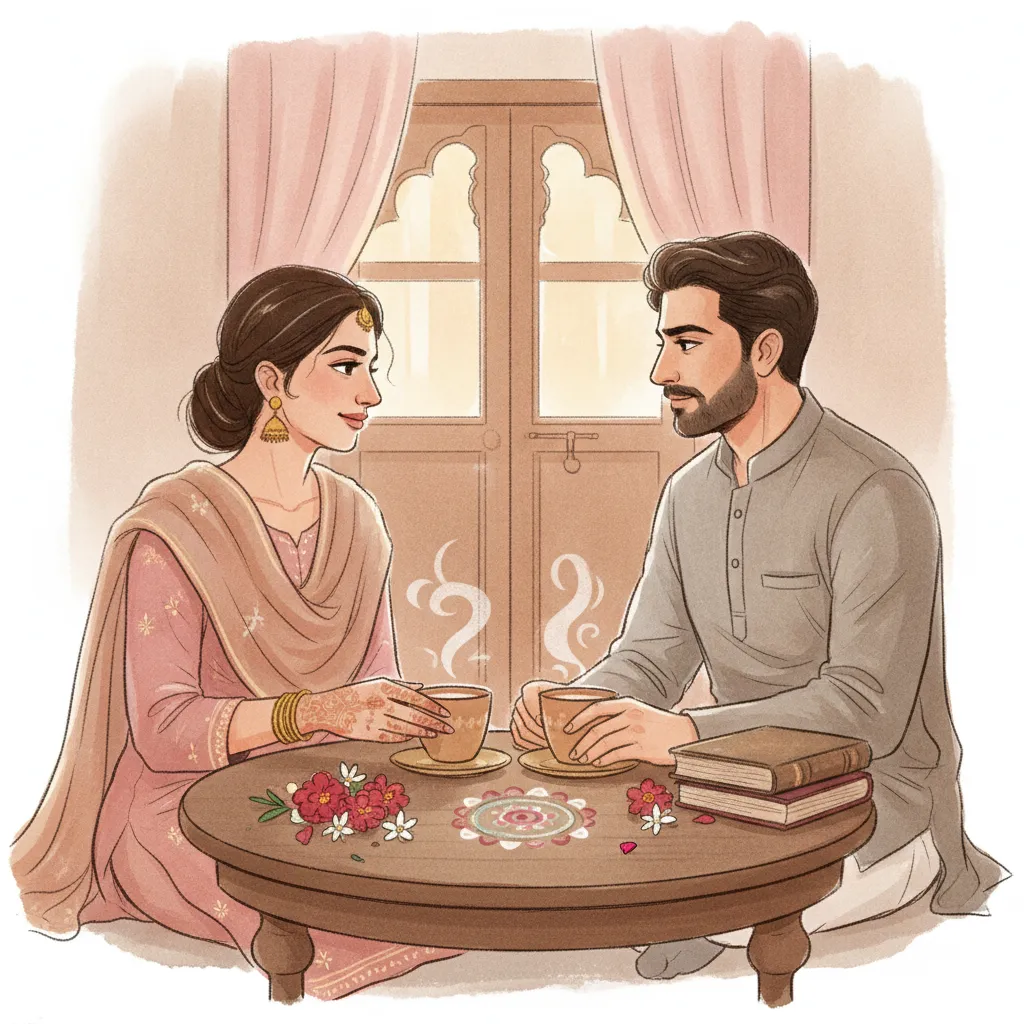
During a conversation, find a natural point to introduce a minor difference of opinion on a neutral topic. An exact question you can ask: "You mentioned your family always goes to the mountains for holidays. I've always been more of a beach person myself. If we were planning our first holiday, how would we decide?"
Now, listen carefully. You are not listening for the answer, but for the process embedded in the answer.
-
A partnership answer sounds like a human negotiation: "Ha, good question. I'd probably push for the beach, but you could try to convince me otherwise. We'd have to figure it out."
- What this shows: She has a preference and assumes you do too. She sees disagreement as a normal conversation where two people advocate for their choices and find a way forward. The process is collaborative, even if the answer is undecided.
-
An evasive answer sounds like abdication or avoidance: "Honestly, I'm happy with either as long as we get to go away. You can choose." Or more revealingly, "My father thinks beaches are too crowded, so we always went to the mountains."
- What this shows: The first answer sounds accommodating, but it's a subtle refusal to participate in the decision. By offloading the choice onto you, she avoids the potential for even minor conflict. The second answer is the most telling: she defaults to a parent's preference, revealing that her framework for making decisions is still based on her family of origin's rules, not on building new ones with you. A partner who can't navigate a hypothetical disagreement about a vacation will not be able to navigate a real one about your finances. For more on this, see What Matrimonial Questions Reveal & What Silence Hides.
The Choice You Are Actually Making
In the pressure of the matrimonial search, it's easy to focus on the wrong things: their job, their family's status, how pleasant the first few meetings are. But you are not marrying their resume or their family's social standing. You are marrying the person who will be sitting across the table from you in year seven, when you've had a terrible week at work, the baby has a fever, and you disagree fundamentally about whether to borrow money from your parents to fix the roof.
Crucially, you must turn the analysis on yourself. What operating system do you run on? If you were raised in a ‘Battlefield’ family where everyone shouted, the quiet of a ‘Silent Truce’ family might seem like a peaceful sanctuary. But the clash of styles—your need to have it out, her need to pretend nothing is wrong—can be more destructive than two partners from the same, dysfunctional system. Compatibility is not about finding a "good" system; it's about finding a system that can work with yours.
When you sit at her family's table, you must weigh two potential errors. You could misread a quiet, respectful family as a conflict-avoidant one and walk away from a perfectly good match. That would be a loss. Or, you could misread total conflict avoidance as a sign of an "adjusting," peaceful nature and walk into a marriage where resentment builds in silence for years before the foundation cracks. This is the more common, and more devastating, mistake.
The goal isn't to find a perfect family. It's to find a partner who has, through observation or deliberate effort, built a toolkit for disagreement that allows two people to face problems together, as a team. That is the only foundation that lasts.