More Than a Biodata: What a Healthy Indian Marriage Actually Looks Like
Spend any time on a matrimonial platform, and you’ll be handed a map of hazards. You’re told what to watch out for: the red flags, the deal-breakers, the family dynamics to avoid. Your well-meaning relatives give you a checklist: salary, location, community, family status. It’s a search defined by elimination, by what you don’t want.
But what about what you do want?
Beyond the biodata and the brief, formal meetings, what are you actually building? Imagine a couple, five years into their marriage. It’s a Tuesday night. They aren’t on a grand holiday; they’re just sitting on their balcony after dinner. He’s telling her about a frustrating meeting at work, and she’s really listening, not just waiting for her turn to talk. She tells him about a funny thing their niece said on a video call. There’s an easy silence between them, filled not with awkwardness, but with the quiet comfort of five years of shared Tuesdays. They are a team.
This is what a healthy marriage looks like up close. It’s not a flawless, conflict-free fantasy. It’s a living, breathing partnership built on a foundation of small, repeatable patterns.
Most advice tells you what to run from. This article is about what to run toward. It’s a guide to the daily, achievable reality of a happy Indian marriage, so you can recognise the green flags in a potential partner and know what to start building from day one. Because you don’t just deserve to avoid a bad match; you deserve a vivid, hopeful picture of a genuinely good one.
The Patterns of Deeply Connected Couples
A strong marriage isn't luck; it's a set of skills and habits. Happy couples, observed over years, aren't magical. They just practice certain patterns more consistently than others. Here are the core patterns you can learn to recognise and, more importantly, to build.
1. The Daily Ritual of Turning Toward
In a world of constant distraction, the most valuable gift you can give your partner is your undivided attention. Happy couples have small, consistent rituals for connection. These aren’t grand, romantic gestures. They are the simple, powerful acts of turning toward each other instead of turning away. This could be a five-minute check-in before sleeping, a shared cup of morning chai before the day’s chaos begins, or an evening walk. The ritual itself matters less than its consistency. It’s a signal that says, "In the middle of everything, we are a priority."
- Mini-Scenario: A 35-year-old couple in Bengaluru has a non-negotiable rule: a 20-minute walk around their neighbourhood after dinner, without their phones. Some nights they talk about big dreams or worries. Other nights, they just comment on the neighbour's new car or the blooming bougainvillea. It's not about the depth of the conversation every single time. It's about carving out a small, sacred space for "us" every single day. This is the bedrock of their connection.
Patterns to recognise:
- When you talk, they put their phone down and make eye contact.
- They ask follow-up questions ("And then what happened?") instead of just waiting for their turn to speak.
- They remember small details you mentioned days ago and bring them up later ("How did that presentation you were worried about go?").
- They create small routines for connecting, even if it's just a "how was your day?" that they actually listen to the answer to.
2. The Art of the Repair Attempt
Every couple fights. Conflict is inevitable when two lives intertwine. The difference between a marriage that thrives and one that withers isn't the absence of arguments, but the ability to repair the connection after an argument. A "repair attempt" is any gesture—verbal or non-verbal—that a partner makes to de-escalate tension and reconnect. It’s saying “I’m sorry,” using humour to break the tension, or simply reaching for a hand and saying, “Okay, we’re getting heated. Let’s take a break.” The willingness to make and accept these bids for repair is a powerful indicator of a resilient partnership.
- Mini-Scenario: A couple in Mumbai has a sharp disagreement over a weekend plan involving their in-laws. Voices are raised. One partner retreats into silence. After ten minutes, the other comes into the room with two glasses of water and says, "That came out all wrong. I’m not mad at you, I’m just stressed about the timeline. Can we try that conversation again?" This isn’t about winning the argument. It’s about saving the connection.
Patterns to recognise:
- They can apologise without defensiveness or adding "...but you also..."
- They can acknowledge your perspective even if they don't agree with it ("I can see why you feel that way").
- They are willing to circle back to an issue when you are both calm, rather than insisting on resolving it in the heat of the moment.
- They value the relationship more than their own ego or the need to be "right."
3. Financial Transparency as a Team Sport
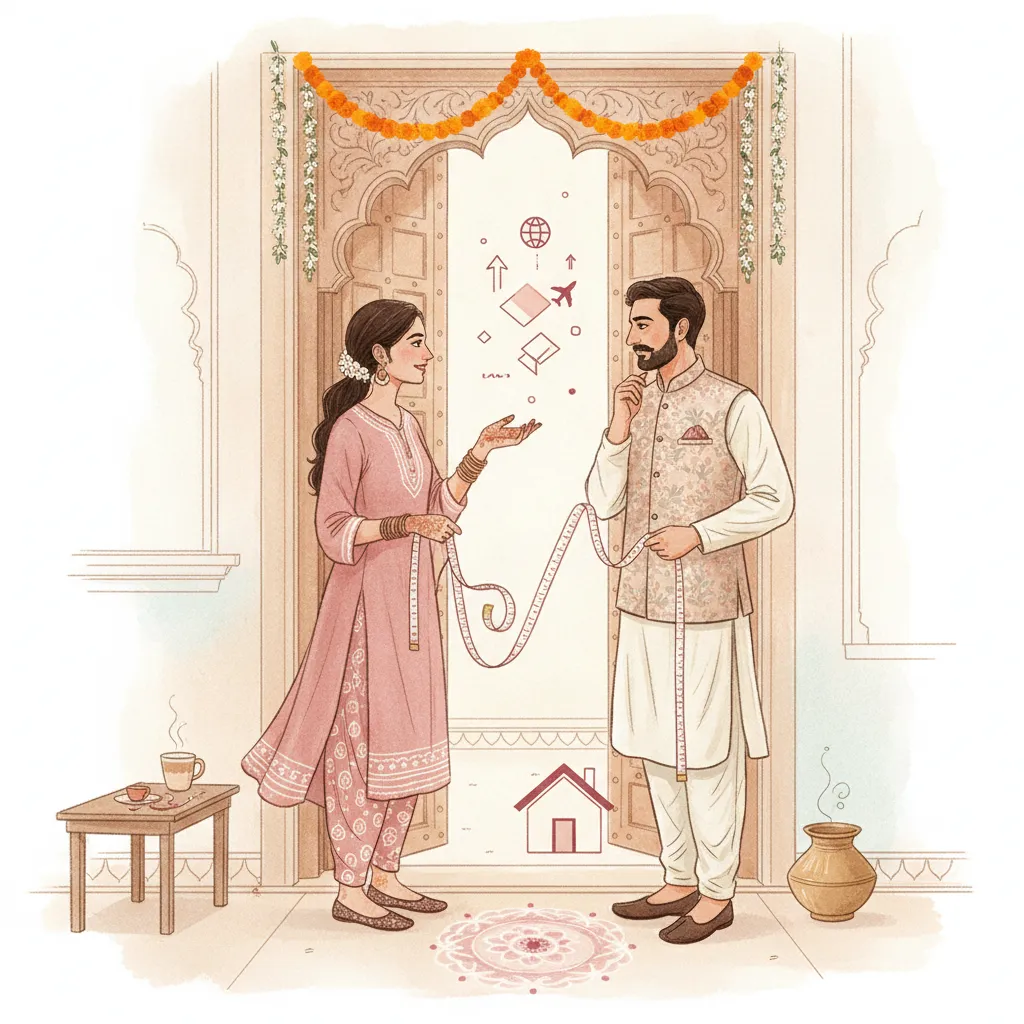
Money is one of the biggest sources of conflict and stress in a marriage. In healthy partnerships, money isn’t a source of power or secrecy; it’s treated as a shared resource for building a shared life. This doesn't necessarily mean every single rupee is in a joint account. It means there is open, honest, and regular communication about earnings, debts, spending habits, and future goals. They operate like the co-founders of a start-up called "Our Life."
This includes a deep, foundational respect for each partner's financial autonomy, especially a woman's stridhan (her own absolute property received before, during, or after marriage). A healthy partner sees her financial independence not as a threat, but as a strength for the entire family unit.
- Mini-Scenario: A couple in Hyderabad has a "money date" for 30 minutes every Sunday morning. Over filter coffee, they look at a shared spreadsheet. They track their monthly budget, review progress toward their goal of buying an apartment, and plan upcoming big expenses. There's no blame or shame—just pragmatic, forward-looking teamwork. This proactive habit prevents small financial misunderstandings from escalating into major resentments.
Patterns to recognise:
- They are transparent about their salary, investments, and any debts early in the conversation. There are no financial secrets.
- They use "we" and "our" when discussing financial goals.
- They can discuss big purchases and financial decisions respectfully, without one person dominating the conversation.
- They show genuine respect for your career and financial independence, viewing it as a contribution to the team's success.
4. The Unseen Labour of an Equitable Home
A home doesn't run itself. There is a constant, often invisible, current of "mental load"—remembering to pay the bills, scheduling a service for the AC, knowing when the groceries are running low, coordinating social plans. In many households, this load falls disproportionately on one partner. In a truly equitable partnership, both partners see the running of the home as a shared responsibility. This isn't about a perfect 50/50 split of every single task. It's about a mutual recognition of the work involved and a conscious effort to share it fairly, without one person having to act as the "manager" of the other.
- Mini-Scenario: A 30-year-old couple in Pune both have demanding jobs. They use a shared digital calendar not just for appointments, but for household tasks. He’s in charge of the weekly vegetable shopping and paying the utility bills. She manages the cleaning help and coordinates medical appointments for their aging parents. They’ve had explicit conversations about who does what, acknowledging the skills and preferences of each. He doesn't need to be reminded; it's his domain. She doesn't have to delegate; it's her domain. It's a system born of respect for each other's time and energy.
Patterns to recognise:
- They talk about domestic work as a shared responsibility ("How will we manage the cooking?").
- They demonstrate proactive initiative at home, doing things without being asked or prompted.
- They value your rest and leisure time as much as they value their own.
- They speak of their parents and your parents with equal respect and a sense of shared duty.
5. Being Each Other's Biggest Supporter
A life partner isn’t just a roommate or a co-parent. They are your primary champion. In a healthy marriage, partners actively support and celebrate each other's personal and professional ambitions. Your growth doesn't threaten them; it excites them. They see your success not as a competition, but as a win for the entire team. They are willing to make short-term sacrifices to help you achieve a long-term goal, knowing you would do the same for them.
- Mini-Scenario: A woman in Chennai is preparing for a major professional exam that could lead to a promotion. For two months leading up to it, her husband adjusts his work schedule to be home earlier, handles the kids' homework and dinner, and fiercely protects her study time on weekends. He’s not doing it begrudgingly; he’s an active participant in her success. When she passes, he’s the first to start planning a celebration, telling everyone, “We did it.”
Patterns to recognise:
- They listen with genuine curiosity when you talk about your work, hobbies, and goals.
- They speak about your accomplishments with pride to others.
- They don’t make you feel guilty for the time you invest in your career or personal growth.
- They offer practical help—not just empty encouragement—to help you reach your goals.
6. Protecting the "Us" Within the "We"
In the Indian context, marriage is often a union of two families, not just two individuals. While strong family bonds are a source of immense support, it's crucial for the couple to have a distinct identity. Healthy couples understand this. They are skilled at creating and protecting a boundary around their partnership. This means making major life decisions together first before involving wider family, presenting a united front, and intentionally carving out time for just the two of them, away from family obligations.
- Mini-Scenario: A couple lives in a joint-family setup in Delhi. While they enjoy the closeness, they’ve established a small tradition: every Saturday morning, they go out for breakfast, just the two of them. It's their time to talk freely, be silly, and connect as a couple, not as a son and daughter-in-law. This small, protected space recharges their partnership and allows them to navigate the complexities of joint-family life as a stronger, more united team.
Patterns to recognise:
- When discussing a future life, they use "we" and talk about the kind of home they want to build.
- They can respectfully disagree with their own family to support you or a decision you've made together.
- They prioritise creating time for the two of you, even when family and social calendars are packed.
- They never use information you shared in confidence as a weapon or share it with their family without your consent.
From Patterns to Practice
Knowing these patterns is one thing; putting them into practice is another. A great marriage isn't a prize you win at the end of your search. It’s a garden you and your partner decide to tend together, every single day. The small rituals, the repair attempts, the money dates—these are the seeds.
When these seeds are planted and nurtured, they grow into something deeply resilient. The couple who takes a walk every evening for five years builds a language of non-verbal understanding that can weather any storm. The couple who learns to repair after a fight in their first year of marriage can navigate the profound challenges of raising children or caring for aging parents in their tenth year. The couple who budgets for an apartment together in their thirties builds the trust required to plan for retirement in their fifties.
This is the long-term payoff. It’s a partnership that feels less like a contract and more like a home.
Ask Yourself This Week
As you continue your search and have conversations, move beyond the standard checklist. Try to get a glimpse of these patterns in action.
- Look for curiosity: In your next conversation with a potential match, do they ask you questions about your day, your work, or your passions with genuine interest? Do they ask follow-up questions?
- Imagine a conflict: Can you picture yourself having a disagreement with this person? Do you believe they would prioritise the connection over being right?
- Talk about teamwork: Ask a question like, "What does a good weekend look like to you?" or "How do you and your family handle big decisions?" Listen for whether their language is about collaboration and shared effort.
You are not looking for a perfect person who has already mastered all these skills. You are looking for a willing partner—someone who sees these patterns, values them, and is ready to start building them alongside you. That is the true foundation of a lifetime of shared Tuesdays. That is a match worth making.