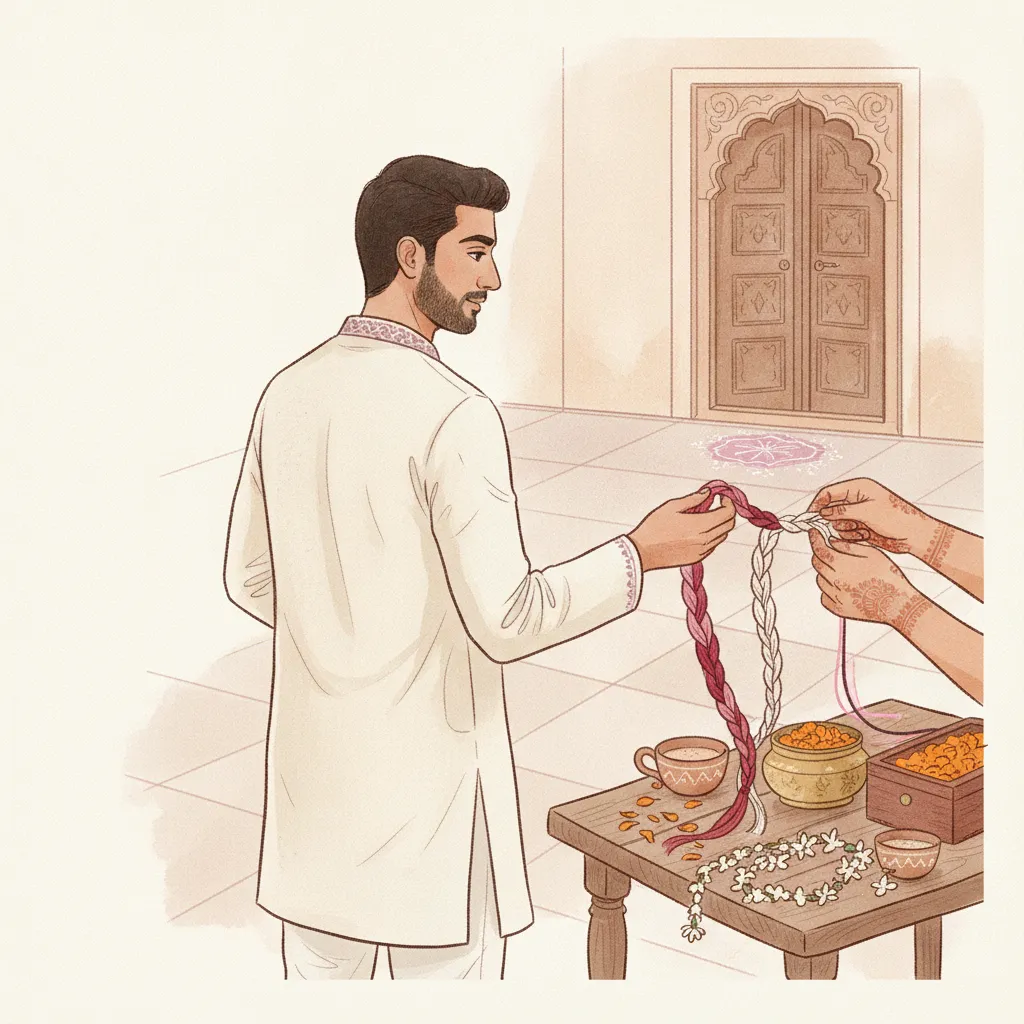
Deciding to marry someone is deciding to share a future. Not just the highlight reel of that future—the travel, the promotions, the festivals—but the ordinary, unglamorous Tuesdays of it. It’s the life of budgets, of tired evenings, of caring for ageing parents, and of navigating health. It is this last part, the conversation about health, that feels the most fraught in a matrimonial search. Disclose too early, and a medical condition can eclipse your entire identity. Disclose too late, and what was a fact about your life becomes a betrayal.
This is not about confessing your every flu and failed fitness resolution. It is about understanding the line between what is private and what is secret. A privacy is a part of your past you are not obligated to share. A secret is a present reality that will inevitably become part of your partner’s life, and to hide it is to deny them the ability to truly consent to the future you are offering. This article will help you find that line, give you the words to use when you get there, and teach you how to listen when your potential partner does the same.
The Line Between Privacy and a Secret
The question is not "What is wrong with me?" but "What will we have to manage together?" This is the clearest distinction between a personal medical history and a relevant health disclosure. Anything that will require your partner’s active participation, understanding, or resources to manage belongs in the conversation before you commit to marriage.
This includes:
- Chronic conditions: Diabetes, autoimmune disorders like Crohn's disease, epilepsy, or well-managed hypertension. These are part of the daily or weekly fabric of life.
- Mental health history under active management: Bipolar disorder, clinical depression, or an anxiety disorder that requires ongoing therapy or medication is a shared reality. A partner will see the good days and the hard ones; they deserve to know what that landscape looks like.
- Fertility challenges or decisions: If you know you have a condition affecting fertility, like PCOS or low sperm motility, or if you have made a firm decision not to have children, this is fundamental to building a life.
- Genetic carrier statuses for conditions that could affect future children.
What falls into the realm of privacy? A past event that is resolved and has no bearing on your present or future functioning. A course of therapy you took for work stress five years ago. A minor surgery you had as a teenager. A bout of depression in college that was situational and has not recurred. You are not obligated to present a complete medical file for inspection. You are obligated to present an honest picture of the life you are inviting someone to join.
Consider Divya, a 39-year-old schoolteacher in Jodhpur. She has managed Crohn's disease with medication since her late twenties. For her, it’s a non-negotiable disclosure. Her future husband will need to understand her dietary needs, why she sometimes has to cancel plans due to fatigue, and the rhythm of her specialist appointments. It is part of their shared Tuesday. By contrast, that she once sprained her ankle badly during a trek is her story, not a condition of their partnership. The first requires a partner's collaboration; the second does not.
The Timing of the Tell
In the compressed timeline of a matrimonial search, "when" is as important as "what." The wrong timing can turn a straightforward conversation into a crisis.
The first meeting, whether over coffee or with families present, is almost never the right time. That meeting is for establishing a baseline of connection and compatibility. Bringing up a serious health condition then forces a decision based on a label, not a person. You are more than your diagnosis, and you deserve the chance to show that first.
The wrong time is also after a roka or when the wedding date is on the calendar. At that point, families are intertwined and expectations are set. A late disclosure, no matter how well-intentioned, feels like a deception. It forces the other person to question not just the new information, but everything that came before it.
The right time is in the space between. It’s when you’ve had a few substantive conversations, when the connection feels real, and when you are both genuinely considering a future. This is usually after the third or fourth meaningful interaction. The disclosure then becomes an act of trust, a signal that you are taking this potential partnership seriously.
Opening the conversation can be direct and calm. You don't need a heavy preamble.
You: "I'm really enjoying getting to know you, and because I'm taking our conversations seriously, there's something about my health I want to share."
(Share the information clearly and concisely. Focus on how you manage it.)
You: "It's a part of my life, and it felt important for you to know as we think about what's next. I'm happy to answer any questions you have, now or whenever you've had some time to think."
Notice what this does. It frames the conversation in the context of a potential future, not as a confession of a flaw. It also gives them space to process. To invite them to share their own story, without demanding it, you can add: "I'm an open book about this, and I'm here to listen if there's anything you'd like to share about your own journey."
Over these early weeks, pay attention to what is consistently not being said. If a potential partner deflects every attempt at a deeper conversation, steering it back to logistics like property or timelines, that is information. A person who never creates an opening for vulnerability is showing you that such openings may not exist in the marriage, either.
How to Hear Hard News
Most advice focuses on the person disclosing. But the person receiving the information has an equally critical role. Your response in the first ten minutes will shape the future of the relationship, whether it moves forward or not.
Your first job is not to have an answer. It is to listen. The person in front of you has likely rehearsed this conversation in their head a dozen times, fearing judgment. Your immediate reaction tells them if that fear was justified.
A decent response has three parts:
- Acknowledge the trust. Start with, "Thank you for telling me. I know that must have taken courage." This simple sentence validates their risk and honours their honesty.
- Give yourself time. You are allowed to be surprised or uncertain. Instead of a snap judgment, say, "That's a lot to process, and I appreciate you sharing it with me. I'd like to take a little time to think about it." This is infinitely better than a false, immediate "it's no problem at all," which can sound dismissive.
- Ask questions of curiosity, not inspection. The goal is to understand their life, not to audit their condition.
- Good questions: "What does managing it look like for you in a typical week?" or "What kind of support is helpful for you?" or "How does this affect how you think about your work and future?" These are questions about their lived experience.
- Poor questions: "What are the chances of passing this to our kids?" or "How much will your treatment cost us?" or "Are you sure you can't be cured?" These questions, especially in the first moment, turn the person into a set of liabilities to be assessed. There is a time for practicalities, but it is not in the first ten minutes.
While you are listening, run this check in your own mind: Am I reacting to the person I've been getting to know, or am I reacting to a word I just heard? Separate the individual from the diagnosis. You are not marrying a condition; you are marrying a person who lives with one.
From Concern to Control
Sometimes, a family’s or a potential partner’s response moves from understandable concern to a demand for proof. This shift is subtle but significant, and it is often where a healthy dynamic can turn into a controlling one.
The most common form this takes is the demand for medical records. After you’ve shared something personal, Ajay, a 32-year-old from Nashik, might seem understanding. But a few days later, he calls back. "My parents are a little worried," he says. "They think it would be best if we could just see your medical file, to put their minds at ease."
This request, however politely phrased, fundamentally changes the dynamic. It is no longer a conversation between two people building trust; it is a one-sided audit where you are the subject being evaluated. Agreeing to it sets a powerful precedent that your privacy is conditional and their anxiety grants them the right to investigate you. The swap here is essential—whether it's Ajay asking Fatima for her records, or Fatima asking Ajay for his, the mechanism is about establishing who has the power to demand and who has the obligation to comply.
An anxious family wanting reassurance is normal. But their anxiety does not give them a right to your private medical history. The truly constructive counter is not a flat refusal, but a proposal that reframes the situation from inspection to partnership. You can say: "I completely understand why your family is concerned. My health is something we would manage together, as a couple. I'm not comfortable sharing my past private records, but I am fully open to building a transparent future. Once we are sure we want to move forward, let's both get a comprehensive health check-up, and we can go over the results together."
This response holds a firm boundary while demonstrating a commitment to a shared future. It changes the question from "What are you hiding?" to "How will we care for each other?" Someone who is genuinely interested in partnership will see the wisdom in this. Someone whose primary motivation is control will resist, insisting on their original demand. Their reaction to this fair, collaborative offer tells you everything you need to know about how setting boundaries early earns long-term respect.
Signals in the Questions
Pay close attention to the nature of the follow-up questions you or your family receive. They contain more data than the answers.
- The financial audit: Are the questions almost exclusively about cost? "How much are your medicines per month?" "Will this affect your earning capacity?" While finances are a real part of marriage, a relentless focus on cost frames you as a balance sheet liability.
- The demand for guarantees: Questions like, "Can your doctor guarantee this won't get worse?" or "Is there a 100% chance this won't be passed on to children?" seek an impossible certainty. A partner for life understands that life comes with no guarantees; they are signing up to face the uncertainty with you.
- Using the disclosure as leverage: Be wary if the health information is suddenly used to renegotiate other aspects of the match. "Given your condition, it's probably not a good idea for you to keep working after marriage," or "With this new information, my family feels it would be better if we lived with them, so they can help." This is not care; it is opportunism.
- Dismissing your reality: The opposite of an overreaction can be just as telling. A response like, "Oh, everyone has anxiety these days, you just need to be positive," is not reassurance. It is a refusal to see or respect your specific reality. It communicates that your experiences will be minimized in the future as well.
The Shared Picture as the First Act of Partnership
Ultimately, navigating health disclosures is not a test to be passed. It is the first, most authentic opportunity to see how you will function as a team. Life will inevitably present you both with challenges far more complex than a managed health condition. The way you handle this conversation—with respect, honesty, and a focus on collaboration—is a preview of how you will handle all of it.
If you are approaching the point of commitment, and this conversation is on your mind, there is one concrete action you can propose that cuts through all the anxiety and suspicion.
Suggest a joint pre-marital health screening.
Frame it not as a test, but as your first joint project in building a long and healthy life. Say, "As we get serious about marriage, I think we should both get a comprehensive health check-up. We can review the results with a doctor together. This way, we start our life with a clear, shared picture of our health and know how to best support each other."
This simple act is profoundly powerful. It replaces the dynamic of one-sided inspection with one of mutual care and shared responsibility. It communicates, far better than words, that your health is my concern, my health is your concern, and our future health is our project. A person who enthusiastically agrees to this is signalling their readiness for a true partnership. A person who insists on seeing your past records while refusing to participate in a shared screening is telling you they are more interested in auditing a potential spouse than in building a life with a partner. And that information, freely given, is the most valuable health report you could ask for.