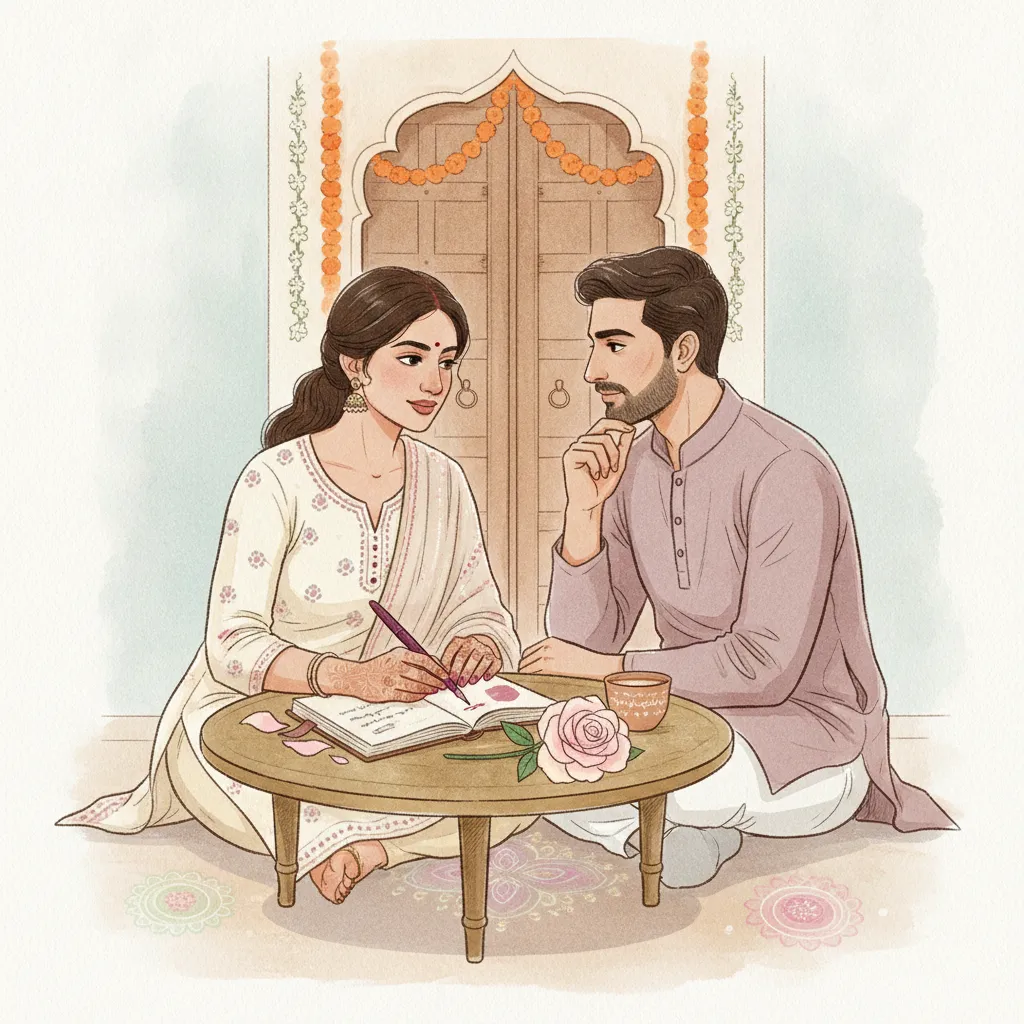
Imagine a couple, five years married, sitting on their balcony on a Tuesday evening. The day’s heat has faded. He’s telling her a long, winding story about a problem at work, and she’s listening, really listening, occasionally interrupting with a question that shows she remembers the names of his colleagues. They aren’t talking about bills or children or chores. They are just… talking. Later, they’ll laugh uncontrollably at a silly video one of them found online. There’s no grand romantic gesture, no candlelit dinner. There is something quieter, deeper, and far more durable: the gentle, steady hum of a great friendship.
This is the picture of a marriage that is not just surviving, but thriving. In the whirlwind of the Indian matrimonial search—with its biodatas, family meetings, and compressed timelines—it’s easy to focus on the checklist: education, career, family background, looks. These things matter, but they are the frame, not the painting. The single quality that quietly outperforms almost every other predictor of long-term marital happiness is this: the couple genuinely considers each other their best friend.
This isn’t about abandoning romance. It’s about building a foundation so strong that the romance has a safe place to live, evolve, and return to, year after year. This is a guide for the two of you on how to deliberately build that foundation—the friendship that will make your marriage a true home.
The Best Friend Advantage: More Than Just Love
We all know couples who were swept away by a tidal wave of attraction. Their courtship was a breathless romance, full of grand gestures and intense chemistry. But chemistry is a firework: brilliant, dazzling, and short-lived. A marriage, on the other hand, is a long journey on foot. You need a walking companion, not just a firework display.
A partner who is also your best friend is that companion.
When couples say they married their best friend, they aren’t just using a cliché. They’re describing a specific dynamic. It’s the difference between loving someone and liking them. Love can be intense, possessive, and sometimes blind. Liking is about genuine appreciation for who the person is, day in and day out. It’s enjoying their company when you’re doing absolutely nothing. It’s feeling seen, heard, and accepted, even when you’re in a bad mood or talking about something boring.
So, what does a "best friend" in a partner actually look like?
- Your Go-To Person: They are the first person you want to tell when you get good news, and the first person you turn to when you have bad news. Their opinion and comfort matter most.
- The Safe Zone: You can be your unedited self with them. You don’t have to perform or pretend. You can be grumpy, silly, tired, or anxious without fear of judgment.
- A Shared Sense of Humour: You laugh at the same ridiculous things. You have inside jokes that no one else understands. This shared humour is a powerful shock absorber for life’s difficulties.
- A Champion, Not a Competitor: They celebrate your successes without a hint of envy. They see your win as their win. They believe in you, especially when you stop believing in yourself.
Imagine a 32-year-old software engineer in Hyderabad. He’s been working for months on a difficult project. He comes home, exhausted. One partner might say, "Don't worry, just relax." A partner who is also a friend might say, "Tell me what happened with that difficult API call you mentioned last week. Did you finally crack it?" The second response shows listening, memory, and a genuine investment in his world. It says, "Your life, your struggles, your victories—they are interesting to me." That feeling is the bedrock of a lasting connection.
The Friendship Habits Most Couples Forget
Friendships aren't built on grand declarations; they are woven from thousands of tiny, consistent threads of attention and care. In the rush of a romance or the formality of an arranged match, these simple habits are often the first things to be overlooked. The good news is that you can start building them right now, before the wedding planning takes over your lives.
Ask About the Day—With Real Curiosity
Most couples fall into the robotic ritual of "How was your day?" "Fine, yours?" This is a transaction, not a connection. Friends dig deeper. They know the cast of characters in each other's lives (the annoying boss, the supportive colleague, the client who never pays on time) and they ask specific questions.
- Instead of: "How was work?"
- Try: "What was the most challenging part of your presentation today?" or "Did you manage to sort out that issue with the vendor?"
Habit to build now: Once a day, ask a follow-up question about your partner's day that proves you were listening yesterday. It transforms a routine into a moment of genuine interest.
Celebrate the Small Wins
Getting a promotion or buying a house are big, obvious wins. But life is mostly made up of small victories. Finishing a tough workout, fixing a leaky faucet, getting a rare compliment from a critical relative, or cooking a new dish that turns out perfectly. Friends notice and celebrate these things. It creates a culture where you both feel seen and appreciated for your daily efforts.
Habit to build now: Make a point of acknowledging one small success your partner had this week. It could be as simple as sending a text saying, "Heard you handled that difficult family call really well. Proud of you."
Remember the Little Details
A best friend remembers that you hate coriander, that your favourite childhood movie was Mr. India, or that you get anxious in large crowds. These aren't trivia points; they are evidence of attention. When your partner remembers a small detail you shared weeks ago, it sends a powerful message: "You matter. I listen when you speak."
Habit to build now: The next time your partner tells you a story, make a mental note of one specific detail. A name, a place, a feeling. Bring it up gently a few days later. "I was thinking about that story you told me about your college friend, Rohan. It sounds like he was a real character."
Accept a Bad Mood Without Taking It Personally
This is a superpower in any long-term relationship. When your partner is quiet, irritable, or withdrawn, the instinctive romantic reaction is often, "What did I do? Are you mad at me?" A friend’s reaction is different. It’s to give space, offer quiet support, and understand that not everything is about them. They trust the connection enough to know that a bad mood is just a temporary state, not a threat to the relationship.
Habit to build now: The next time your partner is clearly having a bad day, resist the urge to immediately try and "fix" it or make it about you. Instead, try saying, "It looks like you've had a rough day. I'm here if you want to talk about it, but no pressure. Can I get you some chai?"
Find the Joy in the Mundane
Romance is about exciting dates. Friendship is about finding companionship while doing the washing up. The vast majority of a marriage is spent on boring, everyday tasks: grocery shopping, paying bills, commuting, cleaning. Couples who are friends find ways to make these moments shared experiences. They turn a trip to the supermarket into a chance to chat, or fold laundry while listening to music together.
Habit to build now: Pick one boring chore you both have to do this week. Decide to do it together. Put on some music, chat while you do it, and turn a task into a point of connection.
The 3-Meeting Challenge: Finding Friendship in a Formal Search
This all sounds wonderful, but how on earth do you assess friendship potential in the high-pressure, low-time environment of a typical Indian matrimonial search? When you have only a handful of meetings, often with family present, it’s easy for both of you to slip into "interview mode." You ask and answer the standard questions, presenting the best, most polished version of yourselves. But that polished version isn’t who you’ll be married to on a lazy Sunday.
The key is to change the environment. A friendship signal shows up far more clearly during a simple, neutral activity than at a candlelit dinner.
Suggest doing something together that isn’t a formal "date." This isn't about creating a high-stakes test; it's about creating a low-pressure space where your real personalities can emerge.
- Go for a walk: A simple walk in a park or a quiet neighbourhood allows for more natural conversation than sitting face-to-face across a table.
- Run a simple errand: Something like finding a specific book in a bookstore or picking up a unique ingredient for a recipe. It gives you a small, shared goal. You get to see how you make decisions together.
- Do something hands-on: Visit a nursery to look at plants, or even attempt a simple cooking class. How do they handle a small mistake? Can they laugh at themselves? Are they collaborative?
Consider a 28-year-old woman in Bengaluru, meeting a prospective match for the third time. Instead of another coffee shop, she suggests they visit a local board game café. Over a game of Jenga, she learns more about him than in the previous two hours of conversation combined. She sees his playful side, how he handles a bit of friendly competition, and whether he can laugh when the tower tumbles. She's not just evaluating a biodata; she's getting a glimpse of a potential friend.
Patterns to Recognise
During these informal meetings, pay less attention to the "right" answers and more to the dynamic between the two of you.
- Easy Laughter: Does it feel natural and unforced? Do you find yourselves smiling at the same small things?
- Give and Take: Is the conversation a monologue or a dialogue? Does he/she ask you questions about your life and seem genuinely interested in the answers?
- Comfort in Silence: Can you be quiet together for a moment without it feeling awkward? Comfortable silence is a hallmark of a deep connection.
- How They Treat Others: Pay close attention to how they interact with waiters, drivers, or shopkeepers. Kindness and respect to everyone is a powerful green flag.
- Collaborative Spirit: When faced with a small decision (e.g., "Which way should we walk?"), do they dictate or do they ask, "What do you think?"
Conversely, be mindful of patterns that suggest a lack of friendship potential: constantly checking their phone, talking only about their own achievements, being dismissive of your opinions, or treating the meeting like a checklist they need to get through.
The Compounding Interest of a Lifelong Friendship
Here is the ultimate truth of a long marriage. The exhilarating passion of the early days will soften. Your looks will change. Careers will rise and fall. Children, if you have them, will grow up and leave home. The grand adventures will become fond memories.
What will be left?
The two of you, sitting across a table.
Thirty years from now, the couple who built their marriage on intense but fleeting chemistry might find they have little to say to each other. They fulfilled their roles as spouses, parents, and family members, but they forgot to nurture the connection with the person at the centre of it all.
The couple who intentionally built a friendship, however, will find their investment has compounded. They are the ones still sharing inside jokes. They are the ones who can anticipate each other’s thoughts. They are the ones who still genuinely want to hear about each other’s day. Their shared history isn't just a collection of photo albums; it’s a rich tapestry of conversations, small kindnesses, and unwavering support. The romance may now be a quieter flame, but the warmth of their friendship fills the entire home.
Building a great marriage isn’t a lottery you win by finding the "perfect" person. It's a craft you build, brick by brick, with the person you choose. And the strongest, most enduring mortar you can use is genuine, deep-seated friendship.
Ask Yourselves This Week
As you continue on your journey together, take a moment to reflect. This isn't a test, but a starting point for a conversation.
- For each of you to consider privately: "Aside from our romantic connection, what is one thing I genuinely like and admire about this person's character?"
- To discuss together: "What is a small, fun, low-pressure activity we can do together this week that isn't a formal 'date'?" (e.g., visit a street food stall you've been curious about, try to solve a crossword together, go for a walk without a destination).
- To ask each other: "Tell me a story about yourself from before we met that you think I would find interesting or funny." Then, just listen.
Don't just search for a spouse you can live with; commit to building a friendship with someone you can’t imagine living without. That is the secret to a love that truly lasts a lifetime.