Listen — audio overview
Choosing a life partner is one of the most significant decisions you will make, impacting your daily life, your family dynamics, and your long-term happiness. In the Indian matrimonial landscape, where timelines can feel fast and family expectations are paramount, it’s easy to focus on tangible checklists: education, income, family background. While these are important, TrueSoulMatch encourages you to look deeper – into the very fabric of personality.
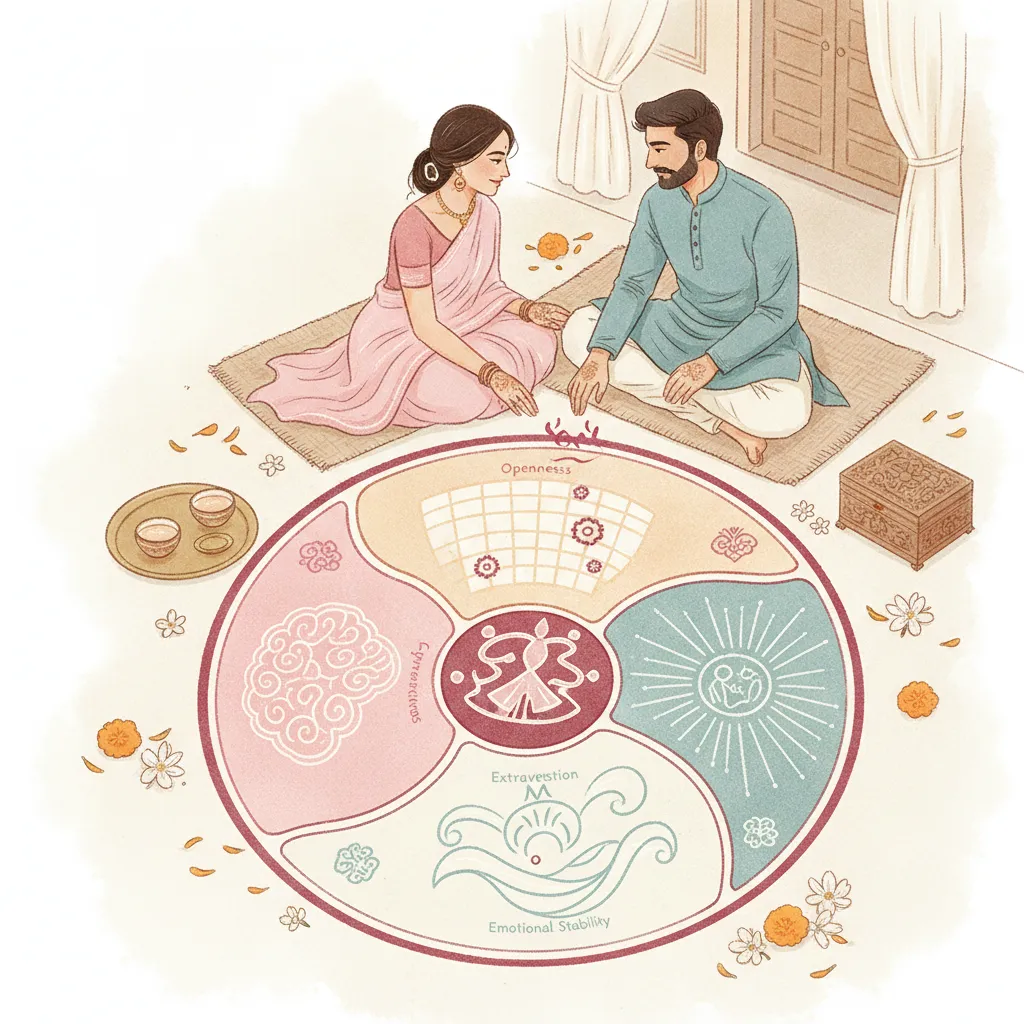
This article will introduce you to the "Big Five" personality traits: Openness to Experience, Conscientiousness, Extraversion, Agreeableness, and Emotional Stability. By understanding these core aspects of human behaviour, you’ll gain a powerful lens through which to assess potential partners and reflect on your own nature. You'll learn to recognise which personality pairings tend to thrive, which might face specific challenges, and which are often unsustainable. This isn't about finding a perfect match, but about seeking a fitting one – someone whose inherent style complements yours, or whose differences you can appreciate and navigate together. You’ll be better equipped to ask insightful questions, observe subtle cues during arranged meetings, and make a more informed decision for a lasting union.
Understanding the Five Core Traits for Partnership
These five traits are considered fundamental building blocks of personality, present in everyone to varying degrees. They don’t define you entirely, but they describe stable patterns in how you think, feel, and behave.
Openness to Experience
This trait describes how curious, imaginative, and open-minded someone is.
- High Openness: You enjoy new ideas, travel, art, philosophy, and questioning traditions. You might love trying new cuisines, exploring different cultures, or discussing abstract concepts.
- Low Openness: You tend to be more practical, conventional, and prefer routine. You find comfort in familiar traditions, clear rules, and established ways of doing things. You might prefer a quiet evening at home over an experimental play.
Imagine a 28-year-old woman in Bengaluru who loves attending improv comedy shows, spending weekends learning a new language, and debating social issues. She likely scores high on Openness. In contrast, a 30-year-old man in Chennai who finds comfort in his daily temple visits, prefers traditional family gatherings, and isn't interested in travel beyond annual pilgrimages would likely score lower on Openness.
Conscientiousness
This trait reflects how organised, disciplined, and responsible someone is.
- High Conscientiousness: You are typically well-organised, punctual, reliable, and goal-oriented. You plan ahead, pay attention to detail, and follow through on commitments. You might be the person who always has their finances in order and keeps their home impeccably tidy.
- Low Conscientiousness: You tend to be more spontaneous, flexible, and sometimes disorganised. You might be less concerned with deadlines, prone to clutter, and prefer to go with the flow rather than stick to a strict schedule. You might enjoy an unplanned outing more than a meticulously planned itinerary.
Consider a 32-year-old man from Mumbai who meticulously plans his investment portfolio, always arrives early for family functions, and keeps his wardrobe in perfect order. He demonstrates high conscientiousness. On the other hand, a 29-year-old woman in Delhi who often misplaces her keys, leaves her chores for the last minute, and embraces spontaneous plans, even if it means disrupting a schedule, would likely be lower on conscientiousness.
Extraversion
This trait describes how outgoing, energetic, and socially engaged someone is.
- High Extraversion: You are energised by social interaction, enjoy being the centre of attention, and often have a wide circle of friends. You’re typically talkative, assertive, and enthusiastic. You might thrive at large family weddings and social gatherings.
- Low Extraversion (Introversion): You gain energy from solitude and quiet reflection. You prefer smaller, intimate gatherings, deeper conversations, and might feel drained by too much social stimulation. You are not necessarily shy, but you prefer quality over quantity in social interactions.
Think of a 27-year-old woman in Hyderabad who is the life of every party, loves hosting friends, and actively participates in community events. She exhibits high extraversion. Meanwhile, a 31-year-old man in Pune who prefers reading a book in quiet solitude, enjoys deep conversations with a few close friends, and finds large family events overwhelming might be an introvert.
Agreeableness
This trait measures how compassionate, cooperative, and kind someone is.
- High Agreeableness: You are typically empathetic, trusting, helpful, and eager to cooperate. You value harmony, avoid conflict, and are concerned with the well-being of others. You might be the person who always volunteers to help with chores or mediate family disputes.
- Low Agreeableness: You tend to be more skeptical, competitive, and direct. You might be less concerned with pleasing others, more willing to challenge opinions, and sometimes perceived as blunt or less empathetic. This isn't necessarily negative – it can mean you're good at asserting boundaries or advocating for yourself.
Imagine a 26-year-old man in Lucknow who consistently prioritises his family’s needs, avoids arguments, and offers help before being asked. He is highly agreeable. Conversely, a 33-year-old woman in Kolkata who frequently expresses strong opinions, isn’t afraid to disagree with elders if she believes she’s right, and struggles to see things from another person's perspective might be lower in agreeableness.
Emotional Stability (vs. Neuroticism)
This trait refers to how well someone manages their emotions, stress, and mood. It’s often referred to as the opposite of Neuroticism.
- High Emotional Stability: You are generally calm, resilient, secure, and cope well with stress. You tend to have a positive outlook and recover quickly from setbacks. You don't get easily flustered by unexpected challenges.
- Low Emotional Stability (High Neuroticism): You might experience more anxiety, worry, mood swings, and difficulty bouncing back from stress. You might be prone to feeling easily overwhelmed, frustrated, or insecure. Small setbacks can feel like major crises.
Consider a 30-year-old woman in Ahmedabad who remains composed during a family crisis, handles professional pressure with grace, and rarely seems anxious or overwhelmed. She displays high emotional stability. In contrast, a 28-year-old man in Chandigarh who frequently expresses worry about minor issues, reacts strongly to criticism, and struggles with persistent low moods might score lower on emotional stability.
Navigating Personality Pairings: What Works and What Doesn't
When considering a life partner, it's not about finding someone identical to you. A healthy partnership often thrives on a blend of similarity and complementary differences. However, extreme mismatches in certain areas can become significant challenges.
Openness: Shared Horizons vs. Different Paths
- Complementary Differences: A moderate difference in Openness can be enriching. A partner higher in Openness might introduce the other to new experiences, expanding their world, while the less open partner might provide a sense of stability and groundedness. For instance, an open partner might encourage trying a new, unusual restaurant, while the less open partner ensures there's always a comforting home-cooked meal option.
- Potential Struggle: If one partner is extremely high in Openness (constantly seeking novelty, embracing radical change) and the other is extremely low (highly traditional, resistant to any change), they might struggle to find common ground for shared activities or life decisions. One might feel bored and stifled, the other overwhelmed and insecure by the constant desire for newness. This can lead to different visions for family life, travel, or even how children are raised, especially in a joint-family setting where traditions are often paramount.
Conscientiousness: Order and Organisation
- Compatibility is Key: While moderate differences can exist, similar levels of Conscientiousness often create a smoother domestic life. If both are highly conscientious, they'll likely manage finances well, keep a tidy home, and respect commitments. If both are more spontaneous, they might navigate disorganisation together, or find solutions like hiring help for certain tasks.
- Extreme Mismatch Struggles: This is one area where extreme differences can lead to significant friction. A highly conscientious individual might feel burdened and frustrated by a partner who is consistently disorganised, late, or unreliable, especially when it impacts shared responsibilities like managing household expenses, childcare, or caring for elders. Conversely, a very spontaneous person might feel constantly controlled or criticised by an overly rigid partner.
What to look for: Patterns to recognise
- Highly Disorganised Partner:
- Consistently late for meetings or appointments, even family functions.
- Frequently forgets important dates, bills, or errands.
- Their personal space (room, desk) is habitually chaotic to the point of being dysfunctional.
- Struggles to follow through on commitments, even small ones.
- Shows little concern for planning or future-oriented tasks like saving or investment.
- Extremely Rigid Partner:
- Becomes highly anxious or irritable if plans deviate even slightly.
- Insists on their way of doing things, even for minor tasks.
- Constantly critiques any perceived lack of organisation in others.
- Struggles to adapt to unexpected changes or spontaneous suggestions.
Extraversion: Social Butterflies and Homebodies
- Complementary Differences: A moderate difference can work beautifully. An extroverted partner might encourage an introverted one to socialise a bit more, while the introverted partner might provide a grounding force, offering quiet time and deep connection. They can balance each other, ensuring a rich social life without constant exhaustion. For example, one might handle the extensive guest list and elaborate preparations for a family festival, while the other ensures moments of quiet reflection and conversation.
- Potential Struggle: An extreme mismatch can lead to tension. If one partner needs constant social stimulation and feels lonely at home, while the other feels drained by even moderate socialising, they may struggle to find common ground for leisure and social activities. One might feel neglected, the other constantly pressured. This is particularly relevant in the Indian context, where family and community events are frequent and often non-negotiable.
Agreeableness: Harmony and Understanding
- High Agreeableness is Generally Desired: Couples where both partners score high or moderately high on Agreeableness often experience less conflict and greater harmony. They are empathetic, cooperative, and quick to resolve disputes.
- Low Agreeableness on Either Side: This is a significant red flag. A partner who is consistently low in Agreeableness might struggle with empathy, be overly critical, prone to conflict, or be unwilling to compromise. This can lead to a relationship filled with arguments, resentment, and a lack of emotional support. While some directness can be useful, a consistent lack of warmth, compassion, or a tendency to be dismissive of your feelings is a serious concern.
What to look for: Patterns to recognise
- Low Agreeableness Behaviours:
- Consistently dismisses or invalidates your feelings and opinions.
- Shows a lack of empathy when you are upset or struggling.
- Is frequently critical, sarcastic, or puts others down (including you or your family).
- Struggles to compromise or see situations from another's perspective.
- Prioritises their own needs or desires above others, even in significant decisions.
- Has a history of contentious relationships or difficulty maintaining friendships.
- Expresses contempt or disrespect towards service staff, strangers, or even family members when they are not around.
- Becomes argumentative or confrontational over minor disagreements.
If you recognise multiple patterns of low agreeableness, especially alongside controlling behaviours, it is crucial to approach with caution. Leaving a relationship where safety is a concern can be the most dangerous time. If you find yourself in such a situation, confide in trusted friends or family members and seek professional support before taking action. Never feel you need to face such challenges alone.
Emotional Stability: Calm in the Storm
- High Emotional Stability is Ideal: Two partners with high emotional stability create a calm, secure, and resilient foundation for their relationship and family life. They handle stress well, communicate calmly, and provide mutual support without being overwhelmed by their own anxieties.
- One Stable, One Less Stable: A stable partner can offer significant support to a less emotionally stable one, providing a calming presence and helping to navigate stress. However, this can be a heavy burden over time, requiring immense patience and resilience from the more stable partner. It's important for the less stable partner to be actively working on their emotional well-being and open to support.
- Low Emotional Stability on Both Sides: This pairing can be highly volatile and challenging. Both partners might struggle with anxiety, mood swings, and overreacting to stress, leading to a turbulent environment. This can be particularly difficult in a joint-family setup, where interpersonal harmony is crucial.
Your Self-Assessment: Reflecting on Your Traits
To help you understand your own personality, answer the following 8 statements by considering how much you agree or disagree, or how frequently these descriptions apply to you. Be honest with yourself – there are no right or wrong answers.
- I often look for new experiences and enjoy trying things I haven't done before, even if they are unconventional.
- (Strongly Disagree / Disagree / Neutral / Agree / Strongly Agree)
- I am usually well-organised, pay attention to details, and finish tasks I start without needing reminders.
- (Strongly Disagree / Disagree / Neutral / Agree / Strongly Agree)
- I feel energised after spending time in large groups or social gatherings, and I enjoy being the centre of attention.
- (Strongly Disagree / Disagree / Neutral / Agree / Strongly Agree)
- I genuinely care about others' feelings and try my best to be cooperative and avoid arguments, even if it means compromising my own desires.
- (Strongly Disagree / Disagree / Neutral / Agree / Strongly Agree)
- I generally remain calm and composed even in stressful or chaotic situations, rarely feeling overwhelmed or anxious.
- (Strongly Disagree / Disagree / Neutral / Agree / Strongly Agree)
- I prefer a consistent routine and familiar activities over sudden changes or unpredictable adventures.
- (Strongly Disagree / Disagree / Neutral / Agree / Strongly Agree)
- I often put off tasks until the last minute and might sometimes forget small responsibilities.
- (Strongly Disagree / Disagree / Neutral / Agree / Strongly Agree)
- I tend to worry a lot about various things and can sometimes feel easily upset or moody.
- (Strongly Disagree / Disagree / Neutral / Agree / Strongly Agree)
Interpreting Your Answers (A General Guide):
- Openness: Agreement with #1 and disagreement with #6 suggests higher openness.
- Conscientiousness: Agreement with #2 and disagreement with #7 suggests higher conscientiousness.
- Extraversion: Agreement with #3 suggests higher extraversion.
- Agreeableness: Agreement with #4 suggests higher agreeableness.
- Emotional Stability: Agreement with #5 and disagreement with #8 suggests higher emotional stability.
This quick self-assessment is a starting point. The goal is to encourage reflection, not to give a definitive diagnosis.
Taking Action in Your Search
Understanding personality traits can transform your matrimonial search. Here’s how to apply this knowledge:
During Arranged-Match Meetings:
- Observe, Don't Interrogate: In initial meetings, observe subtle cues. Does the person ask many questions about your interests (Openness)? Are they punctual and prepared (Conscientiousness)? Do they engage easily with others present (Extraversion)? Do they speak respectfully of their family and show warmth (Agreeableness)? Do they handle unexpected changes gracefully (Emotional Stability)?
- Ask Open-Ended Questions: Instead of asking "Are you organised?", ask "How do you typically manage your day-to-day schedule and responsibilities?" or "What's your approach to planning family events?" For Extraversion, "What does your ideal weekend look like?" or "How do you relax after a busy week?" For Openness, "What new things have you tried recently, or what would you like to learn?"
- Engage with Family: Family members often have insightful observations about a candidate's personality that can corroborate or challenge your initial impressions. Discuss these traits with your own family, especially those who have interacted with the potential match.
Beyond the First Meeting:
- Look for Consistency: True personality traits are stable over time. If you have multiple interactions, observe if the patterns you noticed in the first meeting hold true.
- Prioritise Substance Over Speed: The arranged-match process often encourages quick decisions. However, a lifetime commitment warrants thorough consideration. Don't rush into an engagement without enough time to observe these deeper personality aspects. Your TrueSoulMatch verification confirms identity, but true character reveals itself through consistent interaction.
- Discuss Expectations Openly: If you identify a potential mismatch in a key area, like conscientiousness, have an honest conversation. Can you both adapt? Can you find strategies to manage the difference, especially in a joint-family setup where roles and responsibilities might be shared? For instance, if one person is highly spontaneous and the other needs structure, can they agree on areas where structure is vital (finances) and where spontaneity is welcome (leisure)?
What to actually do this week: Take your self-assessment results and reflect on which 1-2 traits you feel are most crucial for your happiness and harmony in a life partnership. Is it a shared love for exploration (Openness)? A mutual commitment to order (Conscientiousness)? Or perhaps a deeply compassionate and cooperative nature (Agreeableness)? Use this clarity to frame your observations and questions in your next interaction with a potential match.
Choosing a life partner is not about finding someone who ticks all boxes, but someone with whom you can build a fulfilling life. Understanding personality traits provides a valuable map to navigate this journey. It empowers you to seek not just a partner, but a true companion whose inner world resonates with yours, fostering a union built on understanding and genuine compatibility.